Best 10-Inch Dual Bevel Miter Saws: Top 9 Picks (November 2026)
The best 10-inch dual bevel miter saws include the SKIL 10" Dual Bevel Sliding Compound Miter for most woodworking projects, the Makita LS1019L 10" Dual-Bevel Sliding Compound Miter for compact sliding setup, and the DEWALT 12-Inch Miter Saw for larger cross cuts.
On this page (4 sections)
The best 10-inch dual bevel miter saw for most woodworkers is the SKIL 10-inch Dual Bevel Sliding Compound Miter Saw. It combines dual bevel stops, a 2x12 capacity at 90 degrees and an LED shadow line, while the Makita is a stronger choice for compact sliding and the Evolution suits multi-material work.
Dual bevel matters because it lets you tilt the saw head left or right. That means you can cut opposing bevels without repeatedly turning over the workpiece.
It also matters for how you plan a run of trim. A workpiece that is already shaped or finished on one face can stay in a natural position while you change direction.
This roundup includes true 10-inch dual bevel models and several useful alternatives. The alternatives are clearly marked because a larger blade, lower weight, cordless operation or multi-material cutting may matter more than dual bevel movement.
A single bevel saw can still cover a lot of weekly work. Square cuts, deck work and one-direction trim cuts do not always need left and right head tilt.
Blade size is another place where the best choice depends on your bench. A 10-inch blade keeps the saw more manageable, while a 12-inch blade can widen cross-cut reach for larger boards.
Weight changes how you use a saw day to day. A lighter model is easier to carry to a jobsite, store in a shed and set up on a temporary stand.
Cordless models remove the cord from the equation. They suit work away from an outlet, but battery management becomes part of the routine.
Multi-material models suit mixed tasks. One saw may handle wood and plastic or metal, which can save space when you do not want separate tools for each material.
Read the capacity figures against your own boards before you decide. Fence height, slide travel and crown molding capacity shape what a saw can do in practice.
If you need a wider overview, compare these picks with our guide to the best dual bevel miter saw options. For sliding capacity, see the best sliding miter saw roundup.
Our picks at a glance
-
1
 Best for most woodworking projects
SKIL 10" Dual Bevel Sliding Compound Miter
9.5/10 our score
See it on Amazon -
2
 Best for compact sliding setup
Makita LS1019L 10" Dual-Bevel Sliding Compound Miter
9.4/10 our score
See it on Amazon -
3

- 4
 Best for a lighter single-bevel optionCheck it
- 5
 Check it
Metabo HPT 10-Inch Compound Miter Saw
Best for lightweight workshop use - 6
 Check it
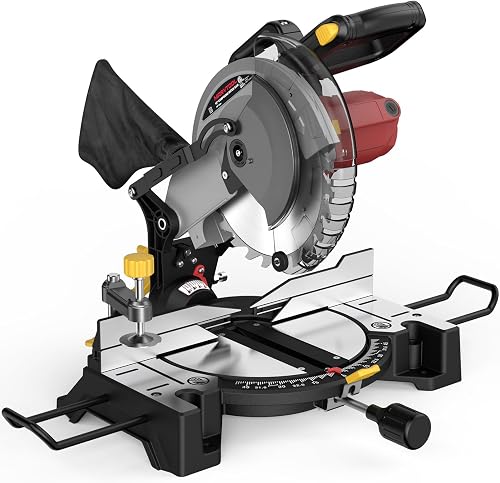
MarvTool 10-inch Compound Miter Saw
Best for basic multi-material cutting - 7
 Check it
DEWALT 20V MAX* 7-1/4-Inch Miter Saw
Best for cordless portability - 8
 Check it
Evolution Power Tools R255SMS-DB+ 10-Inch Dual Bevel
Best for wood and metal work - 9
 Check it
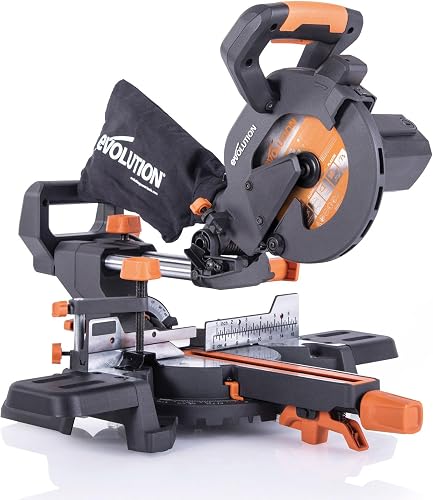
Evolution Power Tools R185SMS+ Sliding Miter Saw
Best for compact multi-material jobs
Which 10-inch dual bevel miter saw is best?
The SKIL is the best overall match for common woodworking because it pairs a 15-amp motor with 2x12 capacity at 90 degrees and a dual bevel design. The Makita follows closely for buyers who need a compact rail system and 6-5/8-inch nested crown capacity.
We compared blade size, bevel direction, miter range, cutting capacity, motor details, portability and material range. Our score weighs specs, features and buyer feedback against what you're shopping for.
Those comparisons matter because a headline blade size can hide real limits. Two saws with the same blade diameter may differ in how wide they cut, how tall a fence they offer and how they handle nested crown molding.
Bevel direction is a simple detail with a large effect on workflow. Dual bevel movement saves repeated flipping of a workpiece, while single bevel movement asks you to reposition material for opposing angles.
Miter range also deserves a close look. Common angles are quick to set when positive stops are present, but extra range can help with unusual corners and custom frames.
Capacity figures should be checked at the angle you will actually use. A saw that handles wide lumber at 90 degrees may have tighter limits at 45 degrees, and trim height can matter just as much.
Portability affects where the saw lives. Weight, folded size and footprint decide whether it fits a small garage, a truck bed or a fixed bench in a larger shop.
Material range divides the group more than blade size alone. Some models are aimed at wood trim and framing, while others list plastic or mild steel among their stated uses.
Motor speed is worth noting, but it is not the whole story. Power delivery, blade tooth count and the quality of the fence and detents also shape the finish you get.
The DEWALT 12-inch model ranks highly for its larger blade and cross-cut capacity, but it is single bevel. The smaller DEWALT and Metabo HPT models are also single bevel, so they are alternatives for buyers who value weight or speed over opposing bevel cuts.
That trade-off is honest and practical. If your projects rarely need opposing bevels, a lighter or larger single bevel saw may serve you better than a dual bevel model.
For the difference between a standard compound design and a sliding compound design, read what is a compound miter saw. If you need 12-inch reach with dual bevel movement, compare the best 12 dual bevel sliding compound miter saw options.
| Product | Best for | Blade | Bevel | Power | Our score |
|---|---|---|---|---|---|
| SKIL 10" Dual Bevel Sliding Compound Miter | most woodworking projects | 10 in, high-speed steel, 40 teeth | 48 degrees left, 45 degrees right | Corded electric, 15 A | 9.5 |
| Makita LS1019L 10" Dual-Bevel Sliding Compound Miter | compact sliding setup | 10 in, high-speed steel, 60 teeth | 9.4 | ||
| DEWALT 12-Inch Miter Saw | larger cross cuts | 12 in, stainless steel, 80 teeth | 0 to 48 degrees left, 0 to 3 degrees right | Corded electric, 15 A | 9.6 |
| DEWALT Miter Saw | a lighter single-bevel option | 10 in, stainless steel, 80 teeth | 0 to 48 degrees left, 0 to 3 degrees right | Corded electric, 15 A | 9.4 |
| Metabo HPT 10-Inch Compound Miter Saw | lightweight workshop use | 10 in, tungsten carbide, 40 teeth | 0 to 45 degrees left | Corded electric, 15 A | 9.3 |
| MarvTool 10-inch Compound Miter Saw | basic multi-material cutting | 10 in, alloy steel, 36 teeth | 9.0 | ||
| DEWALT 20V MAX* 7-1/4-Inch Miter Saw | cordless portability | 7-1/4 in, high-speed steel, 60 teeth | Battery powered | 9.2 | |
| Evolution Power Tools R255SMS-DB+ 10-Inch Dual Bevel | wood and metal work | 10 in, alloy steel, 80 teeth | Corded electric | 8.3 | |
| Evolution Power Tools R185SMS+ Sliding Miter Saw | compact multi-material jobs | 7-1/4 in title size, tungsten carbide, 60 teeth | Corded electric, 10 A | 8.9 |
The best 10-inch dual bevel miter saws by use
The SKIL is the strongest all-purpose choice, while the Makita and Evolution models target more specific cutting patterns. The remaining picks are useful alternatives when capacity, weight, cordless work or price tier matters more than dual bevel operation.
SKIL 10" Dual Bevel Sliding Compound Miter: Best for most woodworking projects
- 15-amp motor
- 4,800 RPM
- Dual bevel with 4 positive stops
- 2x12 capacity at 90 degrees
- LED shadow line
The SKIL combines dual bevel movement, sliding capacity and an LED shadow line in a 39.4 lb saw. Its 2x12 cross-cut capacity at 90 degrees suits common trim and framing work.
Pros
- 2x12 capacity at 90 degrees
- 50-degree miter range left and right
- LED shadow line
Cons
- Corded operation
- Heavier than the lightest saws here
The SKIL MS6305-00 is the clearest match for a general woodworking bench. Its 15-amp motor reaches 4,800 RPM, and the sliding design cross-cuts lumber up to 2x12 at 90 degrees or 2x8 at 45 degrees.
Its dual bevel has positive stops at 48 and 45 degrees left, 0 degrees and 45 degrees right. The miter table reaches 50 degrees left and right, with 11 positive stops at common angles.
The LED shadow line helps show the cut position without relying on a traditional laser. A quick work clamp secures the material, while the tall sliding fences support 4-1/2-inch base molding vertically and 6-1/4-inch crown molding vertically nested.
At 39.4 lb, it is portable enough to move between a shop and a jobsite, though it is not the lightest saw in this roundup. Choose it when you want a balanced mix of capacity, dual bevel control and clear cut positioning.
Makita LS1019L 10" Dual-Bevel Sliding Compound Miter: Best for compact sliding setup
- Linear ball bearing system
- Single slide-glide operation
- 6-5/8 in nested crown capacity
- Laser
- Direct drive gearbox
The Makita LS1019L uses a single slide-glide operation and a two-steel-rail design that can work flush against a wall. Its 6-5/8 in nested crown capacity gives it reach beyond its blade size.
Pros
- Compact rail design
- 6-5/8 in nested crown capacity
- Laser and electric brake
Cons
- Heaviest product in this roundup
- Lower stated speed than several corded picks
The Makita LS1019L suits careful trim work where rail placement matters. Its two-steel-rail design uses a single slide-glide operation, which allows the saw to operate flush against a wall and reduces the space needed behind it.
The 6-5/8-inch nested crown capacity gives this 10-inch saw reach associated with larger saws. Its direct drive gearbox and linear ball bearing system are designed around smooth sliding and accurate cuts.
The saw includes a laser, a 60-tooth blade, a vertical vise, a triangular rule, a hex wrench and a bag. Its stated speed is 3,200 RPM, and its listed weight is 72.8 lb, so the compact rail design does not make it a lightweight carry.
Choose the Makita when a wall-friendly sliding layout and crown capacity matter more than easy lifting. Measure your work area and doorway before selecting it because the stated dimensions and weight call for careful setup planning.
DEWALT 12-Inch Miter Saw: Best for larger cross cuts
- 15-amp motor
- 14 stainless-steel detent stops
- 5-1/2 in vertical base support
- 2x8 capacity at 90 degrees
- Single bevel
This DEWALT uses a 12-inch blade and supports 2x8 dimensional lumber at 90 degrees. It is not a dual bevel saw, but its larger cutting format makes it useful when cross-cut capacity matters more than flipping bevel direction.
Pros
- Largest blade here
- 14 positive miter stops
- Vertical fence support
Cons
- Single bevel
- Less suited to repeated opposing bevel cuts
The DEWALT DWS715 is the larger-capacity alternative for buyers who do not need dual bevel movement. Its 12-inch blade and 15-amp motor support cross cuts up to 2x8 dimensional lumber at 90 degrees and 2x6 at 45 degrees.
The stainless-steel miter detent plate has 14 positive stops. A precise miter system, machined base fence support and tall sliding fence support repeatable work, including 5-1/2-inch base vertically.
Its single bevel tilts from 0 to 48 degrees left and from 0 to 3 degrees right. That makes it less convenient for opposing bevels than the SKIL or Makita, but it gives you a larger blade format for broad cross cuts.
The DWS715 includes a 12-inch carbide-tipped blade, wrench, dust bag and vertical clamp. Choose it when cross-cut reach is the priority and your projects do not require left and right bevels from the same setup.
DEWALT Miter Saw: Best for a lighter single-bevel option
- 15-amp motor
- 5,000 RPM
- 14 stainless-steel detent stops
- 31 lb weight
- 2x6 capacity at 90 degrees
The 31 lb DEWALT DWS713 is a portable 10-inch compound saw for buyers who can work with a single bevel. Its 5,000 RPM motor and 2x6 capacity at 90 degrees cover many general wood-cutting tasks.
Pros
- 31 lb weight
- 5,000 RPM
- 14 positive miter stops
Cons
- Single bevel
- Smaller capacity than the 12-inch DEWALT
The DEWALT DWS713 is a lighter single-bevel alternative with a 10-inch blade. Its 31 lb weight makes it easier to move than the 12-inch DEWALT, while its 15-amp motor reaches 5,000 RPM.
It supports 2x6 dimensional lumber at 90 degrees and 2x4 at 45 degrees. The stainless-steel detent plate has 14 positive stops, and the tall sliding fence supports 4-1/4-inch base vertically.
The bevel range runs from 0 to 48 degrees left and from 0 to 3 degrees right. As with the larger DEWALT, you would need to turn or reposition the workpiece for opposing bevel work.
The saw includes a 10-inch carbide-tipped blade, wrench, dust bag and vertical clamp. Choose it for portable wood cutting when a single bevel is enough and the 10-inch format fits your materials.
Set it on a stable stand and use the clamp to hold smaller trim pieces steady. Keep longer boards supported so they do not pull the cut out of line.
That setup suits homeowners and general builders who move between jobs. It is less suited to repeated crown work that needs frequent left and right bevel changes.
Metabo HPT 10-Inch Compound Miter Saw: Best for lightweight workshop use
- 15-amp motor
- 5,000 RPM
- 24.2 lb weight
- 0 to 52 degree miter range
- 0 to 45 degree left bevel
At 24.2 lb, the Metabo HPT is one of the easiest saws here to move and store. It is single bevel, but its 52-degree miter range and large work table give it useful adjustment room.
Pros
- Lightest corded 10-inch saw here
- 52-degree miter range
- 5-year tool body warranty
Cons
- Single bevel
- No dual bevel movement
The Metabo HPT C10FCG2 is the lightest corded 10-inch option in this group at 24.2 lb. It uses a 15-amp motor that reaches up to 5,000 RPM and has a large work table for material support.
Its miter range runs from 0 to 52 degrees left and right. The bevel adjusts from 0 to 45 degrees left, so it is a single-bevel saw rather than a dual-bevel model.
A vise clamping system holds the workpiece, and the saw includes a wrench. The 10-inch tungsten carbide blade has 40 teeth, and the saw is designed for wood surfaces.
Choose it when carrying and storing the saw matters more than dual bevel movement. The 52-degree miter range gives you broad miter adjustment, but opposing bevel cuts need a different setup from the dual-bevel picks.
The wide miter range can help with angled corners that fall outside common stops. Test the setting on scrap first so the workpiece orientation is clear.
Its light body makes jobsite moves less of a chore. You will still want a firm stand and good side support for longer lengths.
MarvTool 10-inch Compound Miter Saw: Best for basic multi-material cutting
- 15-amp motor
- 5,000 RPM
- Transparent blade guard
- Vise clamp
- Dust collection bag
MarvTool gives you a 10-inch compound saw with a 15-amp motor and a stated 0 to 45 degree range for miter and bevel cuts. Its 20.5 lb weight favors storage and transport.
Pros
- 20.5 lb weight
- Vise clamp and dust bag
- Wood, plastic and soft metal use
Cons
- Not dual bevel
- 36-tooth blade is less fine than several picks here
MarvTool is a compact compound saw for buyers who need wood, plastic and soft-metal cutting in a small package. The 20.5 lb body is easy to move, and its 15-amp motor reaches up to 5,000 RPM.
Its miter angle runs from 0 to 45 degrees, and the bevel range also runs from 0 to 45 degrees. The product is single bevel, so it does not provide the left and right head movement that defines a dual bevel saw.
A transparent blade guard provides a clear view of the cutting area. The saw also has a vise clamp and dust collection bag, and its listed equipment includes a 36-tooth blade, 2 extension tables and an Allen key.
Choose MarvTool for basic multi-material work and easy storage. It is less suited to fine trim work that benefits from a higher tooth count or repeated opposing bevel cuts.
The extension tables help support longer pieces on a compact saw. Use them when the workpiece extends past the main table.
Its small size suits a crowded shop or a mobile kit. Confirm the blade is appropriate for the material before starting, and keep soft metal cuts slow and controlled.
DEWALT 20V MAX* 7-1/4-Inch Miter Saw: Best for cordless portability
- 20V MAX battery and charger
- 183 average 2x4 pine cuts
- 11 positive miter stops
- Integrated cut line system
- 31.6 lb stated weight
The cordless DEWALT is the portability pick, with a 20V MAX battery and charger included. Its smaller 7-1/4-inch blade and single bevel format make it a jobsite convenience choice rather than a direct 10-inch dual bevel substitute.
Pros
- Cordless operation
- Battery and charger included
- Integrated cut line system
Cons
- 7-1/4-inch blade
- Not dual bevel
The cordless DEWALT DCS361M1 is the portability pick. It uses a 20V MAX battery pack, and the package includes the battery, charger, carbide blade, user guide, blade wrench and material clamp.
Its integrated cut line cross-cut positioning system helps show the cut without a separate adjustment. The adjustable stainless-steel detent plate has 11 positive stops, and the oversized bevel scale makes angle changes easier to read.
This model uses a 7-1/4-inch blade rather than a 10-inch blade. It also has a single bevel design, with a stated capacity for 3-5/8-inch nested crown and 3-1/2-inch base vertically.
DEWALT states an average of 183 cuts of 2x4 pine or 275 cuts of 3-1/4-inch pine baseboard with the DCB204 battery. Choose it when cordless work and transport matter more than the wider capacity and dual bevel range of the SKIL.
Battery choice shapes the day. Keep the charger near the work area and plan heavy cutting blocks around the charge state.
The smaller blade keeps the saw compact for trim and punch-list work. For wide lumber or full-size crown runs, a larger corded model will feel less limiting.
For buyers who want cordless operation with dual bevel movement, compare the best cordless dual bevel miter saw options separately.
Evolution Power Tools R255SMS-DB+ 10-Inch Dual Bevel: Best for wood and metal work
- 45-degree dual bevel left and right
- 50-degree miter left and right
- Multi-material blade
- Cuts wood, plastic and mild steel
- Virtually no sparks in mild steel cutting
The Evolution R255SMS-DB+ adds dual bevel movement to a multi-material saw that cuts wood, plastic and mild steel. Its 45-degree bevel range in both directions helps with opposing bevels, while the 2,600 RPM speed suits its stated cutting approach.
Pros
- Dual bevel left and right
- Multi-material cutting
- 50-degree miter range both ways
Cons
- Lower stated speed
- Heavier than the lightest 10-inch options
The Evolution R255SMS-DB+ is the best fit here for buyers who want dual bevel movement with multi-material cutting. Its 45-degree bevel range works left and right, and its miter range reaches 50 degrees in both directions.
With one multi-material blade, it cuts wood, wood with embedded nails, composite decking, mild steel and plastic. Evolution also states that mild-steel cuts produce virtually no sparks and leave a cool, instantly workable finish.
The saw runs at 2,600 RPM and weighs 44.8 lb. Its 10-inch alloy-steel blade has 80 teeth, and the package includes the R255SMS-DB+ saw and one multi-material blade.
Choose it when your work moves between wood, plastic and mild steel. For mostly clean wood trim, the SKIL offers a stronger stated wood-cutting capacity and faster motor speed.
The lower speed reflects its multi-material approach. Let the blade do the work and avoid forcing the cut through harder stock.
Dual bevel range helps when matching parts need opposite tilts. That makes it a practical pick for mixed-material projects where flipping pieces is awkward.
Evolution Power Tools R185SMS+ Sliding Miter Saw: Best for compact multi-material jobs
- Multi-material cutting
- 45-degree bevel
- 50-degree miter
- 210 mm slide
- Blade and dust bag included
The Evolution R185SMS+ is a smaller sliding multi-material saw for work that spans wood, plastic and metal. It has a 45-degree bevel, a 50-degree miter and a 210 mm slide, but it is not a 10-inch dual bevel model.
Pros
- Multi-material cutting
- 210 mm slide
- Blade and dust bag included
Cons
- Not 10 inches
- Not dual bevel
The Evolution R185SMS+ is a smaller sliding multi-material saw for buyers who cut wood, plastic and metal. Its title gives a 7-1/4-inch size, a 210 mm slide, a 45-degree bevel and a 50-degree miter.
The included blade and dust bag support a straightforward setup. Evolution describes the saw as suitable for multi-material cutting, while the product data also identifies a 10-amp corded motor and 3,700 RPM speed.
This is not a 10-inch dual bevel saw, so it cannot replace the SKIL, Makita or R255SMS-DB+ for that exact need. Its value is the combination of sliding movement and material range in a smaller format.
Choose it when compact multi-material work is the priority. Choose the R255SMS-DB+ when you need a 10-inch blade and dual bevel movement.
The slide adds reach for wider pieces without a larger blade. Check the full footprint so the rails have room to move.
It suits repair work and mixed tasks in a tight shop. For full-size trim sets, the larger dual bevel models offer more headroom.
How to choose a 10-inch dual bevel miter saw
Choose the SKIL for the broadest woodworking fit, the Makita for a compact sliding layout, and the Evolution R255SMS-DB+ for multi-material work. Check bevel direction, cross-cut capacity and work area before comparing motor speed.
Does dual bevel matter for your cuts?
Dual bevel matters most when a project has matching left- and right-hand bevels. You can tilt the head in either direction instead of turning the workpiece around or changing its orientation.
The SKIL provides positive bevel stops at 48 and 45 degrees left, 0 degrees and 45 degrees right. The Evolution R255SMS-DB+ provides 45 degrees left and right.
The Makita is also a dual-bevel sliding compound saw, while the DEWALT and Metabo HPT alternatives in this roundup are single bevel. If your work is mostly square cross cuts and one-direction trim, a single-bevel saw may still meet your needs.
How much cutting capacity do you need?
Cutting capacity determines the width and thickness of material you can cut in a stated position. The SKIL reaches 2x12 at 90 degrees and 2x8 at 45 degrees, which gives it a strong fit for common dimensional lumber.
The DEWALT 12-inch reaches 2x8 at 90 degrees and 2x6 at 45 degrees. The Makita focuses on crown molding, with 6-5/8-inch nested capacity and a compact slide design.
Compare the capacity with your actual boards and trim. A 10-inch blade does not automatically tell you how wide a saw can cut because fence design, slide travel and cut angle also matter.
Should you choose a sliding saw?
Choose a sliding saw when you need more cross-cut width than a fixed-head saw can provide. The SKIL and Makita both add slide movement, while the Evolution R185SMS+ specifies a 210 mm slide.
Sliding rails need room behind or around the saw, unless the design is made for close-wall placement. The Makita's two-steel-rail system is designed to operate flush against a wall, which can help in a small shop.
Check the full footprint, not just the blade size. Leave space for the workpiece, fence, extensions and safe handle movement.
How should you set up and care for one?
Set the saw on a stable support, secure the material with the supplied or compatible clamp, and keep the blade path clear before powering on. Use the miter and bevel stops as repeatable starting points, then confirm the cut angle on a scrap piece.
Keep the workpiece supported on both sides when its length makes that necessary. Use the dust bag where included, and clean the table, fence area and visible dust paths according to the tool instructions.
Before cutting, confirm the blade is suitable for the material and that the guard moves freely. Unplug a corded saw or remove the battery before changing a blade or clearing material near the blade.
Best 10-inch dual bevel miter saw verdict
The SKIL 10-inch Dual Bevel Sliding Compound Miter Saw is the best 10-inch dual bevel miter saw for most woodworking because it combines dual bevel stops, sliding capacity, a 15-amp motor and an LED shadow line.
Pick the Makita if you need compact wall-friendly sliding and nested crown capacity. Pick the Evolution R255SMS-DB+ if one saw needs to handle wood, plastic and mild steel.
Pick the DEWALT 12-inch if larger cross cuts matter more than dual bevel operation.
Those choices cover the main ways buyers split. Capacity, bevel direction, material range and portability each pull the decision in a different direction.
Measure your boards and your space before you commit. A saw that fits your trim and your bench will get more use than one chosen on blade size alone.
Set up with a stable stand, a clamp and good support for long pieces. Check the angle on scrap, keep the blade path clear and clean the table and fence area after cutting.
For a smaller blade and more portability, compare the best 10 inch sliding miter saw options before choosing your final setup.
Our top 3 picks at a glance
-
1
Best for most woodworking projects
SKIL 10" Dual Bevel Sliding Compound Miter
9.5/10 our score
See it on Amazon -
2
Best for compact sliding setup
Makita LS1019L 10" Dual-Bevel Sliding Compound Miter
9.4/10 our score
See it on Amazon -
3
Frequently asked questions
What is the best 10-inch dual bevel miter saw?
The SKIL 10-inch Dual Bevel Sliding Compound Miter Saw is the best fit for most woodworking projects in this group. It combines a 15-amp motor, 4,800 RPM, dual bevel stops, a 2x12 cross-cut capacity at 90 degrees and an LED shadow line.
Choose the Makita LS1019L when compact sliding operation matters more, or the Evolution R255SMS-DB+ when multi-material cutting is useful.
What does dual bevel mean on a miter saw?
Dual bevel means the saw head tilts left and right for bevel cuts. You can cut opposing bevels without repeatedly turning over the workpiece.
That saves setup time on trim, frames and other parts that need matching angled edges.
The actual angle range and positive stops vary by saw, so check those details before choosing.
Is a 10-inch dual bevel miter saw better than a 12-inch saw?
A 10-inch dual bevel saw is usually the better match when you want opposing bevel cuts and a manageable blade size. A 12-inch saw can offer more cross-cut reach, but the DEWALT 12-inch pick here is single bevel.
Choose by the cuts you make most often, not blade size alone.
Can a dual bevel miter saw make compound cuts?
Yes. A compound cut combines a miter angle with a bevel angle.
A dual bevel saw lets the head tilt in either direction, which helps when matching left- and right-hand parts.
For a quick explanation of the two angles, read what is the difference between a bevel cut and a miter cut.
Do you need a sliding miter saw for 10-inch lumber?
A sliding model helps when the workpiece is wider than the saw can cross-cut in one pass. The SKIL reaches 2x12 at 90 degrees, while the Makita offers 6-5/8 inches of nested crown capacity.
Compare those capacities with your trim or lumber before deciding between a sliding and fixed saw.


