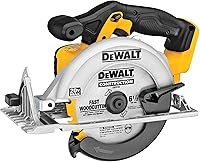
How to Use a Compact Circular Saw
Use a compact circular saw by supporting the work, setting the blade depth, aligning the shoe with your mark, and guiding the saw at a steady pace. Keep both hands clear of the blade path and wait for the blade to stop before setting the saw down.
On this page (7 sections)
- How do you set up a compact circular saw?
- How do you mark and support a straight cut?
- How do you make the cut without forcing the saw?
- How do you make a bevel cut with a compact saw?
- How do you choose a compact saw for the work?
- What should you do after cutting?
- How to use a compact circular saw for accurate small cuts
Use a compact circular saw by supporting the work, setting the blade depth, aligning the shoe with your mark, and guiding the saw steadily. Keep hands away from the cut path, and let the blade stop before you put the saw down.
A compact saw is useful for short cuts and smaller pieces, but a smaller body doesn't remove the need for careful setup. Read the manual for your model, including its blade, depth, bevel, and safety instructions.
How do you set up a compact circular saw?
Secure the work, check the blade, and set the cut depth before connecting power or installing the battery. Keep the saw unplugged or its battery removed while you inspect or adjust it.
Use a stable surface and support the material on both sides of the cut. The offcut needs room to fall without pinching the blade.
Keep the saw's base plate, or shoe, flat on the work, and make sure the blade guard moves freely as the manual describes.
Set the blade depth only as far as needed to pass through the material. Check that the blade and its direction match the saw's instructions, and use eye and hearing protection.
Clear loose objects and keep the cord or battery out of the cutting path.
If you are deciding which size suits your work, compare the options in our best compact circular saw guide.
How do you mark and support a straight cut?
Mark the cut on the face of the material, then support the piece so it cannot shift or sag. A straightedge or compatible saw guide can help you follow a long line, while a square is useful for crosscuts.
Measure from a consistent edge and mark both ends of the cut. Check whether the blade will remove material on the waste side of the line, then align the shoe accordingly.
Don't aim the blade through the center of the mark if that would remove material you need to keep.
Clamp the work when practical, placing clamps where the saw won't hit them. Avoid holding a small piece by hand close to the blade.
For a long cut, support the full length so the boards don't close around the blade.
A rail system can offer a different way to guide a cut. See how a track saw differs from a circular saw with a guide before choosing a setup.
How do you make the cut without forcing the saw?
Let the blade reach full speed, start with the shoe flat, and guide the saw forward at an even pace. Keep a firm grip and watch the cut line without reaching across the blade.
Stand to one side of the saw's path rather than directly behind it. Keep both hands on the handles when the manual calls for it, and don't put a hand beneath the work.
Don't pull the saw backward through a running cut.
If the saw slows, binds, or the material shifts, release the trigger and hold the saw still until the blade stops. Disconnect power before checking for a trapped offcut or other obstruction.
Restart only after the work is stable and the blade is clear.
How do you make a bevel cut with a compact saw?
Set the bevel angle while the saw is disconnected from power, then confirm the shoe locks securely before cutting. Check your model's manual for the adjustment and the material thickness it can cut at that angle.
Beveling changes how the shoe sits on the work, so support the piece carefully and use a guide suited to the angle. Make a test cut on scrap when you need to confirm the angle or mark placement.
Don't assume every compact saw has the same bevel range or capacity. The DEWALT 20V MAX Circular Saw Cordless has a 0–50° bevel capacity, while the DEWALT ATOMIC model has a bevel lever for 45° cuts.
Verify the manual for the saw you own.
How do you choose a compact saw for the work?
Choose a saw whose blade size, cut capacity, power source, and controls match the material and cuts you plan to make. A compact saw can suit short cuts, but larger or repeated cuts may call for a different tool.
For cordless use, compare the best mini circular saw cordless options and the best cordless circular saw choices. If you prefer a corded setup, see the best corded compact circular saw options.
The SKIL 15 Amp 7-1/4 Inch Circular Saw has a 15-amp motor, a 51° bevel capacity, and a dust blower that keeps the line of cut clear. Its larger blade format may suit work where a compact 4-1/2 in saw is too limited.
A circular saw and a table saw handle work differently. Read the difference between a circular saw and a table saw if you are choosing between portable cuts and a fixed saw setup.
What should you do after cutting?
Release the trigger, keep the saw steady until the blade stops, then set it down on a stable surface. Disconnect power or remove the battery before changing a blade, clearing debris, or storing the saw.
Check the cut edge and the material for loose splinters. Brush away dust only after the blade has stopped, and follow the manual's cleaning and storage steps.
Keep blades protected and use only blades approved for your saw and material.
A compact circular saw is for the materials and blades its manual allows. Don't use a wood-cutting blade on masonry or other material unless the saw and blade are rated for it.
For masonry work, learn how to choose a circular saw diamond blade.
How to use a compact circular saw for accurate small cuts
For accurate small cuts, choose a saw that fits the cut, secure the work, mark the waste side, and guide the shoe steadily. Stop if the blade binds or the piece moves, then correct the setup before continuing.
A compact saw can be useful for portable work, while a larger saw may better suit repeated or deeper cuts. If the job needs repeatable cuts on a fixed surface, compare a best 10 inch portable table saw to see whether a table saw fits the task.
Frequently asked questions
How deep should a compact circular saw blade be set?
Set the blade just deep enough to pass through the material, following the saw manual for the exact adjustment. A shallow setting limits exposed blade below the work.
Unplug the saw or remove its battery before adjusting, and check the depth again after changing the material thickness.
How do you keep a compact circular saw cut straight?
Mark the cut clearly, align the saw's shoe to the correct side of the line, and keep the shoe flat against the work. Clamp a straightedge or use the saw's guide when appropriate.
Let the blade reach full speed before entering the material and guide the tool without forcing it.
Can a compact circular saw cut a 2x4?
Some compact saws can cut 2x material at 90 degrees, but capacity varies by model and blade. Check the saw's manual and cutting depth before starting.
Support the board on both sides of the cut, keep the offcut from pinching the blade, and make multiple passes only if the manual allows it.
Should you push a circular saw through the cut?
Guide the saw forward at a steady pace and let the blade do the cutting. Pushing hard can slow the blade, worsen the cut, or increase the chance of binding.
If the saw bogs down, release the trigger, hold the tool still until the blade stops, then check the setup and material.