9 Best Compact Reciprocating Saws (November 2026)
The best compact reciprocating saws include the DEWALT 20V MAX Reciprocating Saw for flush cutting flexibility, the DEWALT 20V MAX Cordless Reciprocating Saw for confined spaces, and the DEWALT ATOMIC 20V MAX* Reciprocating Saw for one-handed overhead work.
On this page (6 sections)
The best compact reciprocating saw for most buyers is the DEWALT 20V MAX Cordless Reciprocating Saw, with a 14-inch length, 1-1/8-inch stroke and LED light for confined work. Choose the ATOMIC for one-handed use, Milwaukee for an M18 setup, or WORX when you also need jigsaw mode.
Compact reciprocating saws are useful when a full-size tool is awkward between studs, above your head or inside a narrow opening. They are also handy when you need to start a cut, then change position without moving to a different saw.
The right choice depends on body length, stroke, speed, grip style, battery platform and whether you need a bare tool or a complete kit. A shorter body is not always better, since blade reach and balance still matter for the job in front of you.
Think about where you will cut most often before you compare specs. Framing work between studs calls for a different layout than pruning, pipe work or rough demolition in a tight corner.
Battery fit is a practical starting point for many buyers. If you already own batteries from one of these platforms, a matching bare tool may cost less to add than a new kit.
If you want a wider look at battery platforms, compare these best cordless reciprocating saw options. Buyers who need a battery in the box can also review the best cordless reciprocating saw with battery.
Our picks at a glance
-
1
 Best for flush cutting flexibility
DEWALT 20V MAX Reciprocating Saw
9.7/10 our score
See it on Amazon -
2
 Best for confined spaces
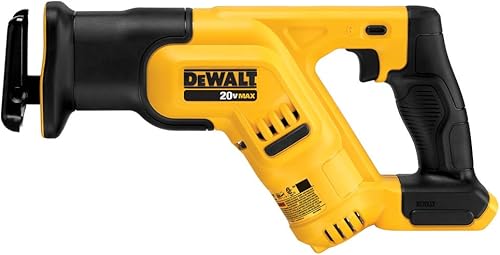
DEWALT 20V MAX Cordless Reciprocating Saw
9.6/10 our score
See it on Amazon -
3
 Best for one-handed overhead work
DEWALT ATOMIC 20V MAX* Reciprocating Saw
9.5/10 our score
See it on Amazon
- 4
 Check it
Milwaukee 2625-20 M18 18-Volt Lithium-Ion Cordless Hackzall
Best for Milwaukee M18 owners - 5
 Check it
RYOBI ONE+ 18V Cordless Reciprocating Saw
Best for high stated speed - 6
 Check it
RYOBI ONE+ HP 18V Brushless Compact One-Handed
Best for ONE+ overhead cuts - 7
 Check it
CRAFTSMAN V20 Reciprocating Saw
Best for V20 system users - 8
 Check it
WORX Cordless Reciprocating Saw & Jigsaw
Best for two saw modes - 9
 Check it
DEWALT 20V MAX XR Compact Reciprocating Saw
Best for a complete starter kit
The best compact reciprocating saws for tight spaces
The DEWALT DCS387B is the best all-around compact choice, while the DEWALT ATOMIC and Milwaukee Hackzall are better when one-handed control is the main need. The remaining picks trade body size, battery coverage, included equipment or extra cutting modes.
DEWALT 20V MAX Reciprocating Saw: Best for flush cutting flexibility
- 3,000 SPM variable-speed trigger
- 1-1/8 in stroke length
- 4-position blade clamp
- Pivoting adjustable shoe
The DCS380B combines a long 1-1/8-inch stroke with a 4-position clamp and pivoting shoe. It suits buyers who need cutting control and several blade positions.
Pros
- Fast 3,000 SPM speed
- 4-position blade clamp
- Pivoting adjustable shoe
Cons
- Battery and charger sold separately
- Not the shortest saw here
The DEWALT 20V MAX Reciprocating Saw is the highest-scoring pick because it combines a 1-1/8-inch stroke with a variable-speed trigger reaching 3,000 SPM. That pairing gives you a long blade travel and control over the cutting rate.
Its 4-position blade clamp supports flush cutting and different blade positions. The clamp changes blades without a tool, while the pivoting adjustable shoe gives the blade a point of contact and lets you control cutting depth.
The rubber overmolded grip is suited to jobs where hand position and control matter. It can help when you need to rotate the saw slowly or hold a steady angle through a cut.
A double oil-sealed shaft is designed to resist contamination, and DEWALT provides a 3-year limited warranty. That seal matters in dusty work, where debris can shorten the life of moving parts.
This is a tool-only saw, so plan for a compatible battery and charger. Choose it when versatility matters more than the shortest body.
For set-up, check the blade is seated in the position you want before you start. Let the shoe sit flat on the work, then ease into the trigger so the blade settles before you add speed.
DEWALT 20V MAX Cordless Reciprocating Saw: Best for confined spaces
- 14 in total length
- 2,900 SPM variable speed
- LED light
- 4-position blade clamp
The DCS387B focuses on compact access between studs and in dark work areas. Its 14-inch length, LED and pivoting shoe make it a strong general pick.
Pros
- Compact 14-inch length
- LED for dark spaces
- 4-position clamp
Cons
- Battery and charger sold separately
- Plastic handle material
The DEWALT 20V MAX Cordless Reciprocating Saw is the best match for confined spaces between studs. Its 14-inch total length is shorter than a traditional full-size layout, while the 1-1/8-inch stroke supports fast cutting.
The variable-speed trigger reaches 2,900 SPM, letting you begin more slowly when the blade needs to settle into the cut. That control is useful on wood, where a hard start can make the blade jump or wander.
A bright LED helps illuminate dark work areas, which is useful when the opening blocks room light. Inside a wall cavity, that light can show the cut line and the edge of the material more clearly.
The 4-position blade clamp allows flush cutting and tool-free blade changes. Its pivoting shoe adds contact while cutting, and the tool-only format keeps the initial setup focused on the saw itself.
Pick the DCS387B when access and visibility are your main concerns. For more DEWALT comparisons, see which DEWALT reciprocating saw is best.
DEWALT ATOMIC 20V MAX* Reciprocating Saw: Best for one-handed overhead work
- 12.5 in front-to-back length
- Brushless motor
- LED light
- Two blades and belt hook included
The DCS369B is the shortest DEWALT option here and is built around one-handed use. Its pivoting shoe and variable-speed trigger support controlled cuts overhead or in narrow spaces.
Pros
- 12.5-inch compact body
- One-handed design
- Two blades included
Cons
- Battery and charger sold separately
- Smaller body may favor access over reach
The DEWALT ATOMIC 20V MAX Reciprocating Saw is the best compact choice for one-handed overhead work. Its 12.5-inch front-to-back length is the shortest stated body dimension among the DEWALT compact picks here.
The brushless motor, variable-speed trigger and LED are aimed at controlled cutting in dark or awkward spaces. Its pivoting shoe provides more points of contact than a fixed shoe, which can help you keep the tool settled against the work.
This model includes two blades and a belt hook. The belt hook is a small detail that can help on a ladder or when you need to move between cuts without setting the saw down.
The battery and charger are sold separately, so it fits best when you already use the DEWALT 20V MAX platform. That platform fit is worth checking before you buy, since a bare tool still needs power to work.
Choose the ATOMIC when reach and one-handed handling matter more than the broader positioning options of the DCS380B. Its compact design is especially relevant for overhead cuts where a longer saw can feel difficult to place.
Milwaukee 2625-20 M18 18-Volt Lithium-Ion Cordless Hackzall: Best for Milwaukee M18 owners
- One-handed design
- Anti-vibration handle
- LED lighting
- M18 battery compatibility
The 2625-20 Hackzall is a one-handed M18 tool for tight spaces and overhead work. Its anti-vibration handle, LED and QUIK-LOK clamp add control during repeated cuts.
Pros
- M18 compatibility
- Anti-vibration handle
- One-handed compact design
Cons
- Battery and charger sold separately
- 3/4-inch stroke is shorter than several DEWALT picks
The Milwaukee 2625-20 M18 Hackzall is the best compact reciprocating saw for Milwaukee M18 owners. Its one-handed design is built for tight conditions, and its compact size also suits overhead work.
The saw reaches up to 3,000 SPM and uses a 3/4-inch stroke. That stroke is shorter than the 1-1/8-inch length on several DEWALT picks, but the Hackzall adds an anti-vibration handle intended to reduce fatigue during heavier lumber cuts.
Its QUIK-LOK blade clamp supports tool-free blade changes, and the built-in LED lights the work surface. The LED is most useful in dark cavities, where you need to see the blade and the material before the cut gets underway.
It works with M18 lithium-ion batteries, including M18 XC high-capacity and compact batteries. Battery choice can change the balance of the tool, so a compact pack may be easier to hold overhead.
The 2625-20 is a bare tool. Choose it when your battery shelf is already M18 and you value one-handed control over the longest stroke.
RYOBI ONE+ 18V Cordless Reciprocating Saw: Best for high stated speed
- 3,400 SPM stated speed
- 1 in stroke length
- 18V cordless design
- Tool only
The PCL515B pairs a stated 3,400 SPM speed with a 1-inch stroke. It suits an existing ONE+ owner who values cutting speed and wants a tool-only purchase.
Pros
- Highest stated SPM here
- 1-inch stroke
- ONE+ 18V platform
Cons
- Battery not included
- Compact dimensions are not confirmed here
The RYOBI ONE+ 18V Cordless Reciprocating Saw is the pick for a ONE+ owner who wants the highest stated speed in this group. Its title gives a speed of 3,400 SPM and a 1-inch stroke length.
A 1-inch stroke sits between the 3/4-inch and 1-1/8-inch options in this roundup. The higher stated SPM may suit buyers who want fast blade movement, but speed alone does not decide how a saw handles a material.
Blade choice, material thickness and steady shoe contact all shape the result as much as the headline speed. A faster cycle can help in rough cuts, yet control still matters when the blade first enters the work.
The PCL515B is a tool-only model, and the title states that the battery is not included. That makes it most useful when you already have the matching ONE+ 18V battery system.
The available product information does not confirm a compact body dimension or blade-change system. Choose it for its stated speed and platform fit, then match the blade to the material and cut.
RYOBI ONE+ HP 18V Brushless Compact One-Handed: Best for ONE+ overhead cuts
- Brushless motor
- Up to 3,000 SPM
- Compact one-handed design
- Compatible with over 300 ONE+ batteries
The PSBRS01B is a compact one-handed saw for tight spaces and overhead applications. Its brushless motor and rapid blade change system suit renovation work across wood, metal and plastic.
Pros
- Brushless motor
- One-handed compact design
- Broad ONE+ battery system
Cons
- Battery and charger sold separately
- Product dimensions are not confirmed here
The RYOBI ONE+ HP 18V Brushless Compact One-Handed Reciprocating Saw suits overhead renovation cuts in the ONE+ system. Its compact one-handed design is intended for tight spaces, while the brushless motor reaches up to 3,000 SPM.
The saw is described for cutting wood, metal and plastic. Its rapid blade change system supports tool-free swaps when the job moves between materials.
That quick swap can save time during renovation work, where one wall may mean timber, fixing slides, then plastic pipe. Keeping the right blade fitted for each material helps the saw cut more cleanly.
Compatibility is a major part of this choice. RYOBI states that the tool works with over 300 ONE+ batteries, while the battery and charger are sold separately.
Choose the PSBRS01B when your existing ONE+ batteries matter and you want a one-handed format. The available information does not confirm a body length, so measure your work area before relying on a specific clearance.
CRAFTSMAN V20 Reciprocating Saw: Best for V20 system users
- 14.5 in compact size
- 3,000 RPM variable speed
- 1 in stroke length
- Tool-free blade release
The CMCS300B gives V20 users a 14.5-inch saw with variable speed and a 1-inch stroke. Its contoured overmolded handle is suited to different cutting orientations.
Pros
- V20 system compatibility
- 14.5-inch compact size
- One blade included
Cons
- Battery and charger sold separately
- Heavier than the smallest listed options
The CRAFTSMAN V20 Reciprocating Saw is the best fit for V20 system users who want a compact body and familiar controls. Its 14.5-inch size fits the confined-space focus of this roundup.
The high-performance motor uses a 1-inch stroke, and the variable-speed trigger reaches 3,000 RPM. A tool-free blade release makes blade changes quick, while the contoured overmolded handle supports different cutting orientations.
One 6-inch reciprocating blade is included. The battery and charger are sold separately, and the tool is part of the CRAFTSMAN V20 cordless system.
That included blade gets you started, but you will still want blades matched to your usual materials. Wood, metal and demolition work each call for a different tooth pattern.
Choose the CMCS300B when you already own V20 batteries or want the system's wall-organization compatibility. Its 4.4-pound listed weight is heavier than the 16-ounce DEWALT ATOMIC specification, so balance may matter for long overhead cuts.
WORX Cordless Reciprocating Saw & Jigsaw: Best for two saw modes
- 20V 2-in-1 design
- Jigsaw and reciprocating modes
- Four blades included
- Pivoting head and LED
The WX550L.9 combines jigsaw and reciprocating saw modes in one 20V tool. It suits buyers who value flexibility and need four included blades for different materials.
Pros
- Two saw modes
- Four blades included
- Built-in blower and LED
Cons
- Battery not included
- 3/4-inch stroke
The WORX Cordless Reciprocating Saw & Jigsaw is the best choice when one compact tool needs two saw modes. The WX550L.9 switches between jigsaw and reciprocating saw functions, so it can handle straight cuts and curved or detailed woodworking cuts.
Its reciprocating mode has a 3/4-inch stroke. A pivoting head, tool-less blade change, variable-speed trigger and built-in LED add control, while the built-in blower helps keep the cut visible.
Four blades are included: one wood-cutting reciprocating blade, one wood-cutting jigsaw blade, one metal-cutting jigsaw blade and one aluminium-cutting jigsaw blade. That range helps you switch tasks without buying a full blade set at once.
The tool is part of the WORX PowerShare system, but the battery is not included. PowerShare fit matters here, since the same battery platform is meant to cover other WORX tools.
Choose it when flexibility matters more than the focused cutting layout of a dedicated reciprocating saw. It weighs 4.2 lb with the battery according to the product description.
DEWALT 20V MAX XR Compact Reciprocating Saw: Best for a complete starter kit
- 5.0 Ah battery and charger included
- 14.5 in length
- 1-1/8 in stroke
- 2,900 SPM variable speed
The DCS367P1 includes the saw, a 5.0 Ah battery, charger and kit bag. It suits a new DEWALT buyer who needs a complete setup rather than a bare tool.
Pros
- Battery and charger included
- Compact 14.5-inch length
- Brushless motor
Cons
- Highest score is reserved for other feature combinations
- 5 lb tool-only weight
The DEWALT 20V MAX XR Compact Reciprocating Saw is the best option for a complete DEWALT starter kit. The DCS367P1 includes the saw, a 5.0 Ah battery, charger and kit bag, so you do not need to assemble a bare-tool setup first.
Its 14.5-inch length fits between studs and other tight spots. The brushless motor is paired with a 1-1/8-inch stroke and variable speed up to 2,900 SPM, while the 4-position clamp supports flush cutting.
A bright LED illuminates dark work areas. The tool-only weight is 5 lb, which is worth considering if you expect long overhead sessions.
The included kit bag can help with storage and transport between jobs. It also keeps the battery and charger together, which is useful if you need a ready to use set on site.
Choose this kit when the included battery and charger offset the higher tool weight. If you already own DEWALT 20V MAX batteries, one of the bare-tool picks may be a better match.
How we compared compact reciprocating saws
The score weighs specs, features and buyer feedback against what you're shopping for. For this topic, compact access, one-handed control, overhead handling, blade changes, visibility and battery-platform fit matter more than a long list of extra functions.
Body length is the clearest starting point. The DEWALT ATOMIC is 12.5 inches front to back, the DEWALT DCS387B is 14 inches total, and the CRAFTSMAN and DEWALT XR models are 14.5 inches.
Those figures help you plan for narrow openings, but leave room for the blade and your hand.
Stroke length describes the blade's travel. The 1-1/8-inch models may cover more travel per cycle than the 3/4-inch Milwaukee and WORX options, while the RYOBI PCL515B uses a 1-inch stroke.
Speed is separate from stroke, so compare both numbers.
A one-handed body can help in overhead or awkward work, but it does not remove the need to support the tool and secure the material. The DEWALT ATOMIC, Milwaukee Hackzall and RYOBI ONE+ HP make that format central to their designs.
Which battery platform fits a compact reciprocating saw?
The best compact reciprocating saw is often the one that matches the batteries you already own. DEWALT uses the 20V MAX platform, Milwaukee uses M18, RYOBI uses ONE+ 18V, CRAFTSMAN uses V20 and WORX uses PowerShare.
Bare-tool pricing is not included here, so compare the full setup you need. Most picks require a battery and charger separately, while the DEWALT XR DCS367P1 includes a 5.0 Ah battery, charger and kit bag.
Brushless motors appear in the DEWALT ATOMIC, RYOBI ONE+ HP, CRAFTSMAN and DEWALT XR product information. To understand the term before comparing tools, read what brushless means on a cordless saw.
Platform fit affects more than the first purchase. It shapes which batteries you can share across tools, how many spares you keep in the case and how you plan for future additions.
A bare tool can be good value when you already own the right battery. It can also leave you short if the battery you own is small, old or shared across several tools on the same job.
Battery size can change how a compact saw feels in use. A larger pack may add runtime, yet it can also add weight and shift the balance during overhead cuts.
Charger fit matters too, especially on site where time between jobs may be short. Check that your charger matches the battery system before you order a bare tool.
For renovation work, platform choice is often about speed of set-up. Having the right battery charged and ready can matter more than a small gap in stated stroke or speed.
If you are new to a platform, a kit may be simpler to start with. The DCS367P1 shows that route clearly, since it covers the saw, battery, charger and bag in one box.
For existing owners, the bare tool route avoids paying twice for power. That logic only holds when your current batteries suit the work you plan to do.
Look at the whole kit you will carry, not just the saw body. Battery, charger, blades and storage all affect daily use as much as the motor specs.
That is why platform fit should come early in the shortlist. It can save money, reduce clutter and make the saw easier to use from the first cut.
How should you use a compact reciprocating saw?
Start by choosing a blade for the material and checking that the blade is locked before the cut. Keep the shoe against the work when possible, begin with a controlled trigger press, and let the blade do the cutting rather than forcing the body through the material.
Secure loose work before cutting. For overhead work, plan your stance and keep the tool's weight close to your body.
A shorter saw may improve access, but it still needs a stable cutting position and a clear path for the blade.
Use a slower trigger setting when starting a cut or when you need more control. Increase speed only when the blade is tracking properly and the material allows it.
Clean the tool after dusty work, inspect the blade before reuse and change it when it no longer cuts cleanly. Follow the instructions for the battery system and keep the work area clear of the cut-off piece.
Is a compact reciprocating saw good for demolition?
A compact reciprocating saw can handle many demolition cuts, but a short body favors access and control over the reach of a larger saw. For heavier removal work, compare the blade, stroke, battery system and grip before choosing.
The DEWALT DCS380B and DCS387B offer 1-1/8-inch strokes with variable speed. The Milwaukee Hackzall adds an anti-vibration handle, while the RYOBI ONE+ HP is described for demolition and renovation projects.
If demolition is your main task, see our guide to the best reciprocating saw for demolition. It can help you decide whether compact access or a more substantial cutting setup matters more.
Demolition work puts extra strain on the blade and the shoe. The shoe needs steady contact, and the blade needs to be firm in the clamp before you start.
A compact saw can be easier to place in a tight wall or under a floor, yet that same short body may need more passes on thicker material. Plan for that trade-off when you set out the job.
Grip matters during repeated cuts, since vibration and fatigue can affect accuracy. A rubber overmolded grip or an anti-vibration handle can help, but secure support for the work still matters.
Blade choice is central to demolition performance. The right blade for timber will not always suit pipe, plasterboard fixings or mixed material, so keep spares close by.
Speed control also helps in demolition, since a slower start can keep the blade tracking. You can raise speed once the cut is established and the material is responding well.
Overhead demolition needs a clear stance and a safe way to catch or avoid the falling piece. A shorter saw helps with placement, but it does not remove the need for support.
Battery capacity matters when cuts come one after another. A bare tool may need a larger pack for this kind of work, so check your set-up before you start.
Renovation jobs often mix demolition with repair cuts. In those cases, a compact one-handed saw can move between tasks without a tool change.
That mix is where models like the RYOBI ONE+ HP and Milwaukee Hackzall can earn their place. Their layouts suit awkward access, even if a larger saw might reach further.
For full demolition, still weigh whether compact access is the true need. If reach and power matter more than tight placement, a standard reciprocating saw may be the better fit.
Compact reciprocating saw verdict
The DEWALT 20V MAX Cordless Reciprocating Saw is the best compact reciprocating saw for most confined-space work because its 14-inch body, 1-1/8-inch stroke, LED and 4-position clamp cover the main needs.
Pick the DEWALT ATOMIC for the shortest one-handed DEWALT format, the Milwaukee Hackzall for an M18 battery system, or the RYOBI ONE+ HP for a compact brushless ONE+ tool. Choose the WORX if switching between reciprocating and jigsaw modes matters more than dedicated saw design.
For a platform-specific comparison, browse our guide to the best Makita reciprocating saw. For deal checks, use the page on the best reciprocating saw on sale.
Body length should be your first filter for tight work. Measure the opening, then allow room for the blade, your hand and the battery at the rear.
Next, compare stroke and speed together rather than alone. A 1-1/8-inch stroke with variable speed gives a different feel from a 3/4-inch stroke at a similar SPM.
Grip style is the next check, since compact saws are often used overhead or at an angle. One-handed models can help, but balance and support still decide how steady the cut feels.
Battery fit can settle close calls between otherwise similar saws. A tool that matches your existing packs may be easier to keep running through a full day.
Bare-tool picks suit owners who already have the right battery and charger. A complete kit suits new buyers who want everything in one purchase.
That is why the DEWALT XR kit stands apart in this group. It removes the extra step of matching a battery to a bare tool.
For demolition, keep expectations in line with the compact format. These saws shine on access and control, not on the longest reach.
For renovation, the hybrid WORX option may suit mixed tasks. It covers straight cuts and curved work, yet a dedicated reciprocating saw remains more focused for rough cutting.
In short, start with the space you need to cut, then match platform, grip and stroke. That order will point you to the right compact saw faster than a spec list alone.
Our top 3 picks at a glance
-
1
Best for flush cutting flexibility
DEWALT 20V MAX Reciprocating Saw
9.7/10 our score
See it on Amazon -
2
Best for confined spaces
DEWALT 20V MAX Cordless Reciprocating Saw
9.6/10 our score
See it on Amazon -
3
Best for one-handed overhead work
DEWALT ATOMIC 20V MAX* Reciprocating Saw
9.5/10 our score
See it on Amazon
Frequently asked questions
What is the best compact reciprocating saw?
The DEWALT 20V MAX Cordless Reciprocating Saw is the strongest general choice here because it has a 14-inch total length, a 1-1/8-inch stroke, variable speed up to 2,900 SPM, an LED and a 4-position blade clamp.
Choose the DEWALT ATOMIC or Milwaukee Hackzall when one-handed control matters more.
Are compact reciprocating saws good for overhead work?
Yes. A shorter body and one-handed design can make overhead cuts easier to position, but the battery and blade still affect the tool's balance.
The DEWALT ATOMIC, Milwaukee Hackzall and RYOBI ONE+ HP are the most direct matches here because their descriptions focus on compact or one-handed use.
What does a reciprocating saw stroke length mean?
Stroke length is how far the blade moves during each reciprocating cycle. A 1-1/8-inch stroke, such as the length on several DEWALT picks, covers more travel per cycle than a 3/4-inch stroke.
Cutting results also depend on speed, blade choice, material and how firmly the shoe contacts the work.
Do compact reciprocating saws include batteries?
Most picks here are tool-only models, so you need the matching battery and charger separately. The DEWALT DCS367P1 is the clear kit option because it includes a 5.0 Ah battery, charger and kit bag.
The WORX model is also tool only, despite its four included blades.
Is a jigsaw the same as a compact reciprocating saw?
No. A reciprocating saw is usually chosen for fast rough cuts, pruning and demolition, while a jigsaw is better suited to guided curves and more controlled detail work.
The WORX WX550L.9 combines both modes.
For a fuller comparison, read what is the difference between a jigsaw and a reciprocating saw.