How to Choose a Flush Cut Concrete Saw
Choose a flush cut concrete saw by the clearance beside the cut, blade mounting, required depth and dust control. Match the tool to concrete or masonry work before considering products made for wood.
On this page (7 sections)
A flush cut concrete saw should be chosen by wall clearance, blade mounting, cutting depth, and dust control.
Those four points work together, and material comes before all of them. A tool label can describe shape without telling you what the tool may safely cut.
The first decision is the material, and it matters more than the shape of the tool. Concrete, masonry, and wood place very different demands on teeth, blade strength, and guard design.
Concrete needs a suitable masonry blade and a saw rated for concrete, while Japanese flush-cut hand saws are designed for wood. Treating those categories as interchangeable is where poor choices start.
A thin blade that lies flat against a wooden surface will not cut mineral material safely or cleanly. Hardness, abrasion, and dust all change what a blade and body must handle.
Measure the space beside the cut before comparing tools. That space must hold the guard, the body, and your hands at the same time.
A saw that reaches the required depth but cannot sit close enough to the wall will leave material behind. Depth on a specification sheet does not solve a clearance problem at the edge.
That leftover strip is often the whole reason for the job, especially at a curb, slab edge, or floor line. A small uncut section can mean returning with another method or accepting a rough finish.
Work out the obstruction first, then work out depth and blade choice. Baseboards, pipes, adjoining walls, and uneven surfaces all affect how close a tool can work.
Ask where the blade will enter, travel, and exit the cut. Each point needs room, and the exit point is easy to forget until work has started.
If the material turns out to be wood, a hand saw can be the simpler answer. Small trim and joinery cuts often need control and a clean finish more than speed.
If the material is concrete or masonry, stay with a powered tool built for that work. The right choice also needs a blade, guard, and dust plan suited to site conditions.
Separate the two jobs in your mind before you shop. That keeps wall clearance honest and avoids paying for depth or power the material does not need.
It also keeps a wood project from being slowed by equipment meant for heavy masonry work. Each category has real advantages when it matches the task in front of you.
Pick the tool by material first, then check clearance, mounting, depth, and dust control in that order. That order prevents a close-fitting blade from being asked to do the wrong job.
What makes a flush cut concrete saw different?
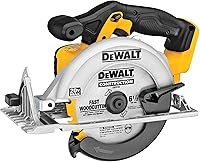
A flush cut concrete saw positions its blade close to an adjoining surface, such as a wall, curb, slab edge, or floor.
The key design detail is not only the blade diameter.
It is the distance from the blade's cutting path to the tool body, guard, and handle.
That offset decides how close the saw can work and how much room your hands need.
Look for a tool that supports the cut direction you need.
Some jobs require a blade parallel to a wall, while others need a small opening cut across a slab or masonry surface.
A powered concrete saw should also match the job's cutting method.
Dry cutting may create heavy dust, while wet cutting can reduce airborne dust but adds water management and cleanup.
Set-up starts with marking the line and confirming the guard can travel with the blade.
Care means keeping the blade clean and stopping when vibration or binding shows the cut is not tracking.
How much wall clearance do you need?
Start by measuring the distance between the intended cut and the nearest obstruction. Include the wall finish, baseboard, pipe, curb, or other surface that limits the saw body.
A flush cut saw for concrete needs enough room for the guard and operator's hands, even when the blade is close to the edge. Check the tool's body width and blade offset rather than assuming “flush” means zero clearance.
If the cut must meet a corner, plan where the blade can enter and exit. A tool may cut close along one face but still leave a small uncut section where the guard or motor housing reaches the corner.
Which blade mounting should you choose?
Choose the mounting system that holds the correct concrete blade securely and lets you set the blade at the required position.
Confirm the arbor size, blade diameter range, guard design, and mounting direction before buying.
Those details decide whether the blade you planned to use can actually be fitted and covered.
A larger blade can offer more depth, but it may also require more room around the saw.
Blade diameter and cutting depth are related, but they are not the same measurement.
Our guide to blade diameter and depth of cut explains the difference.
Depth is what the blade reaches below the surface under the guard.
Diameter is the size of the disc that makes that reach possible.
For concrete, use a blade intended for masonry or concrete rather than a wood-cutting blade.
Check the blade maker's material rating and the saw maker's limits together.
A blade may suit the material while the saw still lacks the depth, guard, or power for the task.
You can also compare the broader category in our guide to the best flush cut power saw before narrowing the choice to a concrete-rated model.
That comparison helps separate general flush-cut designs from tools built for masonry work.
Daily use depends on stable mounting, because a blade that shifts will wander from the mark.
Keep the mounting hardware clean, check tightness before each session, and follow the torque and fitting steps in the manual.
If a blade needs a different arbor or flange, change it as a set rather than forcing a fit.
Honest trade-offs appear here too, as compact tools are easier to place but often allow smaller blades and shallower cuts.
Choose the mounting that fits the material and the space, not the one that promises the deepest cut on paper.
How deep must the cut be?
Choose a maximum cutting depth greater than the material thickness, then set the actual depth to the smallest amount that completes the job.
This reduces unnecessary cutting and makes depth control easier.
A saw rated well beyond the slab may still be set too deep by mistake.
Set the depth, lock it, and check the setting again before the blade reaches the work.
Mark the cut line clearly and check both sides of the material when possible.
Concrete can contain hidden reinforcement, wiring, plumbing, or other obstacles, so a surface mark alone does not confirm that the path is safe.
Where access allows, look at the far side and plan the exit point before starting.
Make a shallow starter pass if the saw and blade instructions allow it.
A controlled first pass can help establish the line before deeper cutting, but follow the tool's operating instructions and do not force the blade.
Let the blade do the work at a steady pace, because pushing harder usually makes the cut drift.
Support the material so it does not close on the blade or break away early.
In daily use, depth control also protects nearby finishes, since an over-deep pass can damage what sits behind the cut.
If the required depth changes along the line, stop, reset, and mark the change rather than guessing.
Care after the cut includes clearing dust and slurry from the groove so the next pass starts clean.
Honest trade-offs mean a deeper setting can speed thick work, while a shallower setting gives better control near edges and corners.
Pick the smallest depth that finishes the job, then increase it only when the work proves it necessary.
What dust and safety features matter?
Dust control matters because concrete cutting can release fine mineral dust.
Choose a saw with the dust-control method required for your work area, and use the protective equipment and cleanup method specified for the tool and blade.
Dry cutting needs extraction or another approved method suited to the space.
Wet cutting can reduce airborne dust but adds water management and cleanup.
A guard should cover the blade as designed while allowing the tool to reach the intended cut.
Do not remove or modify the guard to gain a little more clearance.
That small gain is not worth the risk, and it can also break the tool's stated limits.
Keep the cord, hose, water line, and removed material away from the cutting path.
Plan where each line will lie before the first pass, so nothing crosses the blade path during the cut.
Stop if the blade binds, the saw shifts, or the cut no longer follows the mark.
Binding, noise changes, or a wandering line are signals to pause and check the setup.
For set-up, confirm the guard position, depth setting, and blade fit before power reaches the tool.
For care, clean dust and slurry from the guard and body after use, and store the blade dry.
Trade-offs are real, as wet cutting needs more setup and dry cutting needs stronger dust control.
Either method works when it matches the site, the blade, and the instructions for both.
Are these flush-cut hand saws suitable for concrete?
The products below are wood-cutting hand saws, not concrete saws. They are useful when the job changes from masonry work to trimming wood plugs, dowels, tenons, or other joinery close to a surface.
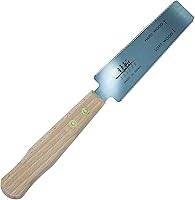
SUIZAN Flush Cut Saw 5"
The SUIZAN Flush Cut Saw 5" is for small wood flush cuts where a thin flexible blade needs to lie close to the surface. Its 5 in blade has no-set teeth, with 17 TPI for hardwood and 25 TPI for softwood, and the blade is 0.012 in thick.
Use the pull stroke with light pressure, then relax on the return stroke. Its fixed Japanese steel blade and beech handle suit precise wood repairs, furniture work, and small parts, but this is not a concrete-cutting tool.
For more wood-focused options, compare the best flush cut saw for woodworking.
RUITOOL Japanese Hand Saw 6 Inch Double
The RUITOOL Japanese Hand Saw 6 Inch Double uses a 6 in SK5 steel blade with two tooth patterns. One side has 17 TPI for hardwood and the other has 14 TPI for softwood, giving you a choice for different wood cuts.
Its flexible blade and beechwood handle fit joinery and finish cuts. The three-sided tooth grinding is intended to support sharp cutting and chip removal, but the saw remains a hand-powered wood tool rather than a flush cut concrete saw.
GARTOL Hand Saw for Wood Cutting
The GARTOL Hand Saw for Wood Cutting is a 2-piece set with a 6 in flush-cut saw and a double-edged Ryoba saw. The set uses flexible SK5 blades and wooden handles for woodworking, trim work, crafting, and carpentry.
The flush-cut saw is aimed at trimming dowels and tenons, while the Ryoba saw has separate rip-cut and crosscut edges. Choose it when your project includes several wood-cutting tasks, not when you need to cut concrete.
If your flush-cut job involves metal instead, see our best flush cut saw for metal guide. For wood cuts affected by the direction of the fibers, read How Does Wood Grain Direction Affect a Saw Cut?.
How should you choose between powered and hand tools?
Choose a powered concrete saw for thick material, long cuts, repeated work, or a need for controlled depth.
Choose a hand flush-cut saw only for materials and tasks its teeth are designed to cut.
That split keeps the tool matched to the work instead of to a label.
A concrete-rated tool should have a compatible blade, a suitable guard, enough cutting depth, and a dust-control plan.
A wood flush-cut saw should have a thin blade, suitable tooth pattern, and enough flexibility to rest near the surface.
Hand saws suit small trimming jobs where slow, light pull strokes give fine control.
Powered saws suit masonry where teeth, guard, and dust control must work together under load.
Do not use a general-purpose wood saw because its blade looks thin or because it is labeled flush cut.
The material rating is the deciding factor.
Set-up differs as well, because powered tools need depth checks, guard checks, and a clear path for cords or hoses.
Daily care differs too, since a thin hand saw blade needs gentle cleaning and careful storage to protect its edge.
A scroll saw for kids is a separate category for supervised, small wood projects and is not a substitute for either a concrete saw or a professional masonry tool.
Honest trade-offs favour the powered tool for speed and depth, and the hand saw for close work in small spaces.
Pick by material first, then by cut length, depth, and the room around the work.
Final decision: what should you buy?
Choose a flush cut concrete saw by material rating first, then compare wall clearance, blade mounting, depth, dust control, and handling.
Material rating decides the tool family, and every later check sits inside that choice. A wood hand saw and a powered masonry saw solve different problems in different ways.
Pick a concrete-rated powered saw for masonry, and reserve the SUIZAN, RUITOOL, and GARTOL options for flush-cut woodworking. Keeping that line clear prevents a close-fitting wood blade from being asked to do masonry work.
Those hand saws fit dowels, plugs, tenons, and other wood trim near a surface. Their thin flexible blades suit small joinery tasks where a light pull stroke and a flat rest against the surface matter.
They do not replace a masonry blade, a rated guard, or a dust-control plan for concrete. Concrete work still needs equipment built for abrasion, depth, guard coverage, and airborne dust.
If the job is near a wall or corner, measure the remaining clearance before choosing the blade size. Note the finish of the wall, the shape of the corner, and any pipes or fittings nearby.
Include the guard and your hands in that measurement, not just the blade. A blade may reach the line while the body still keeps the tool too far away.
Check blade mounting next, including arbor fit, flange fit, guard cover, and the direction of travel. A correct blade in the wrong mounting setup will still fail the job.
Set depth to the smallest amount that completes the cut, then confirm it again before starting. Extra depth can damage what sits behind the line and makes control harder near edges.
Plan dust control for the exact method you will use, whether dry or wet cutting. Each method needs its own extraction, water handling, cleanup, and protective equipment.
Think about set-up time as well as cutting time, especially on a small job. A powered masonry tool may need more preparation, while a hand saw can be ready for a quick wood trim.
Care also differs by category, so store and clean each tool by its own needs. Keep thin wood blades dry and protected, and keep masonry guards and blades free of slurry and building dust.
If the cut is in wood, match the tooth pattern and flexible blade to the trim or joinery task. Hardwood, softwood, grain direction, and surface finish all affect which edge gives the cleaner result.
For concrete, watch for binding, noise changes, and drift from the marked line. Those signs call for a pause and a fresh check of blade fit, depth, guard position, and clearance.
Walk the job once more before you buy or lift the tool. Confirm material, clearance, mounting, depth, dust plan, and safe handling in that order.
Frequently asked questions
What is a flush cut concrete saw?
A flush cut concrete saw is a tool designed to cut concrete or masonry close to a wall, slab, or other surface. Its blade position and guard must allow the tool to sit near the adjoining surface while still providing the required cutting depth, dust control, and operator clearance.
Can a flush cut saw for wood cut concrete?
No. A flush cut saw for wood uses teeth and a blade intended for wood.
Concrete requires a suitable masonry or diamond cutting blade and a saw rated for that work.
Do not use a wood hand saw for concrete simply because its blade can lie flat.
How deep should a flush cut concrete saw cut?
Choose a cutting depth slightly greater than the material you need to remove, while checking the saw's maximum depth at the intended blade size. A deeper rating does not replace accurate marking, safe clearance checks, or the correct blade for concrete.
Should I choose a hand saw or powered flush cut saw?
Choose a hand saw for small wood trimming tasks and a powered masonry saw for concrete cutting. A powered tool is usually the practical choice when the material is thick, the cut is long, or the job needs consistent depth and dust control.