Jigsaw vs Circular Saw: Which Should You Choose? (November 2026)
Choose a jigsaw for curved, detailed cuts and a circular saw for fast, straight cuts. Your material, cut shape, portability needs and preferred setup should decide between them.
On this page (10 sections)
- Jigsaw vs circular saw: what is the main difference?
- When should you choose a jigsaw?
- When should you choose a circular saw?
- Which saw makes cleaner curves and openings?
- Which saw is better for sheet goods?
- Which tool gives you more bevel options?
- What about portability and power?
- Is a jigsaw or circular saw easier to control?
- Can one saw replace the other?
- Which saw should you choose?
Choose a jigsaw for curved, detailed cuts and a circular saw for fast, straight cuts. In this jigsaw vs circular saw comparison, the right choice depends on the shape of the cut, the material, the depth you need and whether you want a corded or cordless setup.
Think about the line you have to follow before you think about power or brand. A straight line across a board and a curve around a marked pattern ask for different blade shapes and different kinds of control.
A jigsaw uses a narrow blade that moves up and down. That makes it useful for curves, openings and shorter cuts where a circular blade would be difficult to steer.
You can start a jigsaw cut inside a panel, and you can turn the tool while the blade is still in the wood. That suits sink openings, rounded corners, notches and shapes that need to change direction in the middle of a cut.
It also suits work where you need to slow down. Variable speed and a lighter touch give you more time to stay on a line, especially when the shape is tight or the material needs care near the edge.
A circular saw uses a round blade that spins through the workpiece. It suits long straight cuts in lumber and sheet goods, especially when you use a marked line or guide.
The shoe rests flat on the surface and helps the saw travel forward in a steady line. That makes it easier to make repeated cuts the same way, such as breaking down panels or trimming boards to length.
Depth matters too, and a round blade cutting forward will usually suit longer through cuts better than a narrow jigsaw blade. If your main work is length and speed along a straight path, this design fits that job more directly.
Setup is part of the choice as well. A corded tool needs outlet access and a clear cord path, while a cordless tool needs charged batteries and a plan for swaps during longer work.
Neither tool covers every cut well. Match the saw to the shape first, then check material, depth and power setup for the work you do most often.
Jigsaw vs circular saw: what is the main difference?
The jigsaw is the curve-cutting tool, while the circular saw is the fast straight-cutting tool. Their blade shapes and movement explain most of the difference.
A jigsaw's narrow blade can turn as you guide the tool. You can use it for curved patterns, notches and interior openings after making a starter hole.
Because the blade is narrow, it needs less room to change direction than a wide round blade. You can follow a pencil line around a bend, stop, adjust your grip and keep moving without lifting the tool out of the cut.
That freedom has a trade off. On a long straight line, a narrow blade can wander if you push too hard or lean the tool.
It needs a steady pace and a well supported workpiece to stay true.
A circular saw's round blade cuts as the tool moves forward. Its shoe rests on the workpiece, which helps you keep the cut moving along a straight path.
The wide shoe gives the saw a stable base, and the blade shape suits cuts that run from one edge to the other. It is built for momentum along a line, not for turning inside a tight shape.
That stability also has limits. A round blade cannot follow a tight curve, and starting an interior opening is not its strength.
Forcing a turn can bind the blade and leave a rough edge.
The distinction is similar to the difference between a detail tool and a production tool. A jigsaw gives you more freedom to change direction, while a circular saw covers long lines more quickly.
In daily use, that means you choose based on repetition. Curved layouts call for the jigsaw first, while panels, boards and repeated straight cuts call for the circular saw first.
Care follows the same split. Keep jigsaw blades sharp and matched to the material, and keep circular saw blades clean, square to the shoe and guides clear of dust.
When should you choose a jigsaw?
Choose a jigsaw when your project needs curves, cutouts or control around a marked shape. It is also useful when you need to start a cut inside a panel instead of cutting from an outside edge.
Jigsaws can use variable speed and orbital settings to change how the blade moves through the material. Slower settings can give you more control, while higher orbital action can support faster cutting in suitable softer materials.
The DEKOPRO Jig Saw Corded offers 6 variable speeds, 4 orbital settings and a 0° to 45° bevel range. Its tool-less blade clamp, parallel guide ruler and dust-blowing port adapter support common woodworking tasks.
For a cordless jigsaw option, the Best Cordless Jigsaws guide can help you compare battery-powered tools. If you need a jigsaw package with its battery and charger, see the best cordless jigsaw with battery and charger.
A jigsaw is not automatically the best tool for every small cut. Its blade can wander if you push too hard, and long straight cuts may take more time than they would with a circular saw and guide.
When should you choose a circular saw?
Choose a circular saw when you need long, straight cuts through lumber or sheet goods. It is the better match for breaking down panels, trimming boards and making repeated straight cuts.
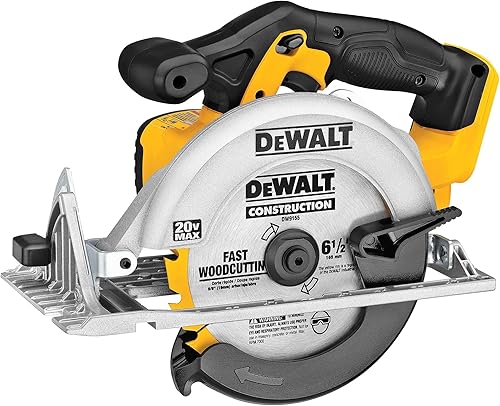
The DEWALT 20V MAX Circular Saw Cordless uses a 5150 RPM motor, a 6.5 in round blade and a 0–50° bevel capacity. Its battery-powered design suits work areas where you don't want a cord, but the battery and charger are sold separately.
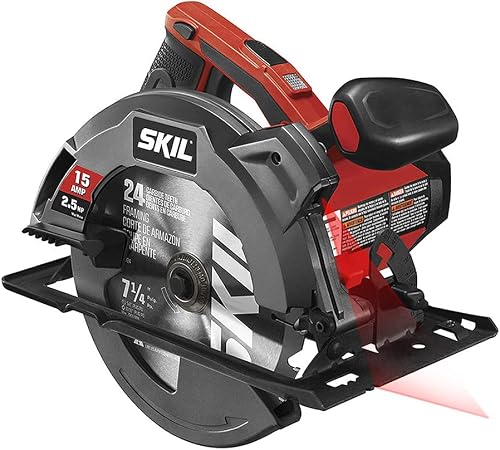
The SKIL 15 Amp 7-1/4 Inch Circular Saw uses a 15-amp motor, 5 300 RPM and a 7-1/4 in carbide-tipped blade. It includes a single-beam laser guide, dust blower, carry bag and wrench, with a 51° bevel capacity and a positive stop at 45°.
A circular saw needs a stable setup. Support the workpiece so the cutoff section doesn't pinch the blade, mark the cut clearly and keep the saw shoe flat as you move forward.
For a guide-based straight-cut comparison, read How Does a Track Saw Differ from a Circular Saw with a Guide?. A track saw is a different setup, but the same question applies: how much guidance do you need along a long cut?
Which saw makes cleaner curves and openings?
A jigsaw makes cleaner practical curves and openings because its narrow blade can turn inside the workpiece. Start with a hole large enough for the blade when the cut begins away from an outer edge.
Mark the cut line clearly, then drill a starter hole inside the waste area. Keep the shoe flat and let the blade do the cutting instead of forcing the tool around the curve.
Use a suitable blade for the material and choose a speed that gives you control. A fast setting can remove material quickly, but it may make it harder to stay on a tight line.
A scroll saw can be a better match for small, detailed work that needs bench-top control. Our guide explains how to choose a scroll saw for kids for an age-appropriate tool discussion.
The WORX Cordless Reciprocating Saw & Jigsaw offers jigsaw mode and reciprocating saw mode in one tool. It includes 4 blades, a battery and charger, plus a pivoting head, tool-less blade change, LED light, blower and variable-speed trigger.
The WORX weighs 4.6 lb and has a 3/4 in stroke. Its 2-in-1 design gives you flexibility, but a dedicated jigsaw or circular saw may be easier to choose when one cut type dominates your projects.
Which saw is better for sheet goods?
A circular saw is usually better for long sheet-good cuts, while a jigsaw is better for openings and curved layouts. Use the tool that matches the part of the panel you need to remove.
For a long rip or crosscut, support the panel and guide the circular saw along a straight line. The DEWALT's cordless design can help when the panel is away from an outlet, while the SKIL's laser guide can help keep the intended line visible.
For a sink opening, rounded corner or irregular shape, use a jigsaw. Drill the starting holes, stay inside the waste area and make several relief cuts if the waste section would otherwise bind the blade.
A circular saw can start at an outside edge, but it is not the right choice for a tight interior curve. A jigsaw can start at an edge or inside a panel after a starter hole.
Which tool gives you more bevel options?
Both tools can make bevel cuts, but their ranges and control feel different. Check the angle markings and keep the base stable before cutting.
The DEWALT offers a 0–50° bevel capacity, while the SKIL offers 51° with a positive stop at 45°. These ranges suit angled straight cuts when the saw remains supported and the cut line is controlled.
The DEKOPRO jigsaw has base positions at 0°, 15°, 30° and 45°. Those fixed positions give you clear choices for common bevel work.
Bevel cutting can expose more blade and change how the tool sits on the workpiece. Make a test cut in scrap material, confirm the angle and keep your hands away from the blade path.
What about portability and power?
Choose cordless when outlet access and cord management matter; choose corded when you want a ready-to-run tool without battery planning. The best setup depends on the work area and the tools you already own.
The DEWALT circular saw is battery powered, but its battery and charger are sold separately. The WORX includes a battery and charger and uses the WORX PowerShare system, which supports 20V, 40V and 80V tools with the same batteries and charger.
The DEKOPRO jigsaw is corded electric and has a 550W motor. The SKIL circular saw is also corded and uses a 15-amp motor.
Cordless tools reduce the need to work near an outlet, but you need charged batteries and a safe place to manage them. Corded tools avoid that battery step, but the cord must stay clear of the blade and cutting path.
Is a jigsaw or circular saw easier to control?
A jigsaw is easier to steer around curves, while a circular saw is easier to guide along a long straight line. Control comes from matching the tool to the cut rather than forcing either saw into the wrong job.
Keep both hands in safe positions and follow the tool manual. Clamp or support the workpiece so it cannot shift while the blade is moving.
For a jigsaw, avoid pushing into a curve faster than the blade can turn. For a circular saw, keep the shoe flat and move at a steady pace without twisting the blade.
The WORX includes a variable-speed trigger, LED light and built-in blower. The DEKOPRO includes variable speed, orbital settings and a dust-blowing port adapter, while the SKIL includes a laser guide and dust blower.
Can one saw replace the other?
Neither tool fully replaces the other. A jigsaw can cover some straight cuts, and a circular saw can make some short cuts, but each tool is strongest in a different cutting pattern.
Choose a jigsaw if your projects include curves, interior openings, notches and detailed shapes. Choose a circular saw if your projects include panels, boards, long crosscuts and repeated straight cuts.
If you also need fast cuts through materials such as metal, ceramic, tile, plastic or tree limbs, the WORX's reciprocating-saw mode adds another use. For a separate comparison, read What Is the Difference Between a Jigsaw and a Reciprocating Saw?.
A band saw can be another option for curved stock work on a bench. If that matches your shop layout, see the guide to Best Band Saw Stands.
Which saw should you choose?
Pick a jigsaw for curves and openings, and pick a circular saw for fast, straight cuts. The DEKOPRO suits corded beginner woodworking, the WORX suits cordless 2-in-1 flexibility, the DEWALT suits cordless straight cuts and the SKIL suits corded cutting power.
Choose the DEWALT 20V MAX Circular Saw Cordless when cordless straight-cut work and a 0–50° bevel range matter most. Choose the SKIL 15 Amp 7-1/4 Inch Circular Saw when you want a corded 15-amp circular saw with a larger blade, laser guide and 51° bevel capacity.
Choose the DEKOPRO Jig Saw Corded when curves, variable speed and 4 orbital settings are central to your projects. Choose the WORX Cordless Reciprocating Saw & Jigsaw when you want jigsaw and reciprocating-saw modes, 4 blades and a battery-and-charger package.
Before buying, draw the cuts you make most often. If most lines are long and straight, start with a circular saw.
If most shapes turn, open up panels or follow patterns, start with a jigsaw.
Frequently asked questions
Is a jigsaw or circular saw better for straight cuts?
A circular saw is usually better for fast, long straight cuts because its round blade and shoe guide the tool along the workpiece. A jigsaw can make straight cuts with a guide, but its narrow blade is better suited to curves, openings and shorter cuts.
Can a jigsaw replace a circular saw?
A jigsaw can handle some straight cuts, but it doesn't replace a circular saw for repeated long cuts through sheet goods or lumber. Choose a jigsaw for curves and cutouts, then choose a circular saw when speed, depth and long straight lines matter more.
Which is easier for a beginner, a jigsaw or circular saw?
A jigsaw is often easier for a beginner when the project needs curves or interior openings, because you can start inside a drilled hole and guide the narrow blade. A circular saw is the better choice when the main task is making controlled straight cuts with a guide.
Can a circular saw cut curves?
A circular saw isn't designed for tight curves. Its round blade and wide shoe work best when the saw moves forward along a straight guide, while a jigsaw's narrow reciprocating blade can follow a marked curve.


