Sheet Sander vs Random Orbital Sander: Which to Choose? (November 2026)
Choose a sheet sander for flat edges and corners, and a random orbital sander for faster removal across broad surfaces. The right choice depends on the shape of the work and how fine the finish needs to be.
On this page (9 sections)
- Sheet sander vs random orbital sander: which should you choose?
- Which sander works better for edges and corners?
- Which sander is better for a smooth finish?
- Which tool removes paint or material faster?
- How do dust collection and paper changes compare?
- What should you consider when choosing a random orbital sander?
- Which sheet sander should you consider for a small project?
- Can one sander replace the other?
- How do you choose between a sheet sander and a random orbital sander?
Choose a sheet sander for flat edges and corners, and a random orbital sander for faster removal across broad surfaces. The right choice depends on the shape of the work and how fine the finish needs to be.
A sheet sander uses a rectangular pad and typically sands in a regular back-and-forth motion. A random orbital sander uses a round pad that spins while moving in small orbits, which helps reduce visible sanding patterns when you keep it moving.
For many projects, the tools complement each other. Use the random orbital sander on the open surface, then switch to a sheet sander or hand sanding for edges and corners.


Sheet sander vs random orbital sander: which should you choose?
Choose a sheet sander for edges, square corners and steady finishing; choose a random orbital sander for broad surfaces and quicker material removal. The shape of the work often makes the choice clearer than the tool name.
A sheet sander holds a rectangular sheet of abrasive. Its flat front and sides can work close to an edge or inside a corner, though the pad may not reach every tight spot.
A random orbital sander holds a circular disc. Its combined spin and orbit suit broad panels, tabletops and other open surfaces, but the round pad cannot get into a square inside corner.
If you’re comparing the different types of sanders, start with the tool’s pad shape and sanding motion. Those features tell you where it can work and what kind of sanding job it suits.
What does “orbital sander” mean?
“Orbital sander” can mean a sheet sander or a random orbital sander, depending on how the term is used. Check whether the tool has a rectangular sheet pad or a round hook-and-loop disc.
A sheet sander’s pad vibrates in small circles without the same spinning action as a random orbital sander. That regular motion can leave a more visible pattern if you sand across the grain or linger in one spot.
A random orbital sander’s pad turns and orbits at the same time. This changing motion helps make its scratch pattern less obvious on a broad surface, but it doesn’t make careless sanding mark-proof.
What is a sheet sander?
A sheet sander uses a rectangular pad and standard sandpaper sheets, which makes it useful for flat faces, edges and near-corner work. The paper usually attaches with clamps or another holding system, depending on the model.
A quarter-sheet sander uses a quarter of a standard sheet; larger sheet sanders use more paper. If you’re unsure about the size, see what a 1/3 sheet sander is.
The rectangular shape makes the pad easier to guide along a straight edge. It also provides a broader, flatter contact area for smoothing doors, shelves and panels.
What is a random orbital sander?
A random orbital sander uses a round disc that both spins and moves in small orbits, making it a strong fit for broad surfaces and finish removal. Most models use hook-and-loop discs that are quick to change.
The pad’s motion reduces the chance of a repeated scratch pattern compared with a basic orbital motion. You still need to keep the tool flat, move at a steady pace and use suitable grits to avoid marks.
A 5-inch round pad is common, but its circular edge leaves a strip near square corners. Choose a sheet sander or hand sanding when those areas need a close finish.
Which sander works better for edges and corners?
A sheet sander is usually easier to guide along a straight edge or into a square corner. Its rectangular pad uses more of its abrasive near the front and sides than a round pad can.
A round random orbital pad may overhang an edge if you bring it too close. That can round over a sharp corner or create a shallow dip if you tilt the tool.
Keep the sander’s pad flat and avoid letting one edge do all the work. When the machine can’t reach the last bit of a corner, fold a piece of sandpaper and finish by hand.
Should you use a sheet sander along an edge?
Use a sheet sander for edge work when you can keep the whole pad supported and flat. Move in controlled passes, and avoid rocking the tool as it crosses the edge.
For a narrow edge, clamp the work securely and support it so the sander can’t tip. A sheet sander is heavier and broader than hand sanding, so check the fit before turning it on.
A quarter-sheet option can be useful when you need a smaller pad for limited areas. The guide on using a 1/4 sheet sander covers setup and motion.
Can a random orbital sander sand near an edge?
Yes, but keep the pad flat and stop before the edge makes the tool tip. The round pad can smooth near an edge, though it will not reach into a square corner.
If the workpiece has a crisp edge you want to preserve, don’t let the pad hang far over it. A few hand-sanding strokes can finish the narrow strip without rounding it.
Which sander is better for a smooth finish?
A random orbital sander is often the easier option for an even finish across a broad panel, while a sheet sander can do well on flat faces and edges. Good results depend on grit choice, sanding direction and steady movement.
Start with the least aggressive grit that will do the job. Work through progressively finer grits, remove dust between stages and inspect the surface in angled light.
Don’t skip grits if the previous scratches remain visible. A fine abrasive can polish the tops of deeper scratches without removing them quickly.
The best sheet sander for finishing guide can help if your projects call for a rectangular pad. For broad surfaces, use a random orbital sander and follow the finish maker’s preparation instructions.
How do you avoid swirl marks?
Avoid swirl marks by keeping the sander moving, using light pressure and removing deep scratches before moving to a finer grit. Heavy pressure can slow the pad and leave uneven marks.
Use a fresh abrasive and keep dust from building between the pad and workpiece. A stray grain of grit can scratch a surface you have already smoothed.
A pad-dampening system is designed to help reduce swirl marks, but it does not replace careful technique. Practice on scrap from the same material if the final surface will be highly visible.
Should you sand with or across the grain?
Finish sanding with the grain when the surface has visible grain, especially before applying a clear finish. A random orbital sander can work across the surface during earlier stages, but inspect for scratches running against the grain.
A sheet sander’s regular motion makes sanding direction more important. Guide it with the grain and avoid holding it in one place.
Which tool removes paint or material faster?
A random orbital sander is generally the better choice for removing finish across a large, flat area. Its round pad covers open surfaces efficiently, and many models offer variable speed to suit the task.
If you want a cordless model, compare cordless random orbital sanders.
A sheet sander is better suited to lighter smoothing and flat detail work. It can remove material, but it is not usually the first choice for stripping a large tabletop or door.
Use the coarsest grit needed to remove the finish, then move to finer grits to prepare the surface. Take extra care with veneer, thin stock and edges, where aggressive sanding can cut through quickly.
For shaping and stock removal, choose a tool made for that job. Neither of these sanders replaces a planer or a belt sander when you need to remove material quickly and evenly.
How do dust collection and paper changes compare?
Dust collection depends on the sander’s port, bag or canister and how well the setup fits your vacuum. A dust bag can catch some debris, but it won’t contain all fine dust.
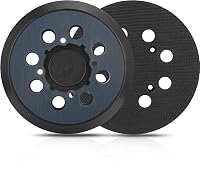
Many random orbital sanders use a round disc with matching dust holes. Check that the holes line up with the pad and dust ports when you attach a new disc.
Sheet sanders can use plain paper sheets, which you cut or clamp in place. That can make replacement abrasive easy to find, while hook-and-loop discs are usually faster to change.
Connect a compatible vacuum when the tool allows it, and keep dust ports clear. For a specific connection setup, see DeWalt orbital sander dust collection and the guide to drum sander dust collection.
Which sanders in this comparison include dust collection?
All 4 random orbital sanders here include a dust collection feature, though their setups differ. The SKIL has a cyclonic dust container, the DEWALT includes a dust bag, and the BLACK+DECKER includes a dust bag.
The Bosch includes a microfilter dust canister and a vacuum adapter. Its dust canister is designed to trap particles as small as a half micron.
A dust bag or canister helps manage debris, but it doesn’t guarantee a dust-free workspace. Use suitable protection and follow the sander and vacuum instructions.
What should you consider when choosing a random orbital sander?
Choose a random orbital sander by its power source, speed control, pad size and dust setup. Those details affect how easily it fits your work and the way you move around it.
The SKIL is corded and has variable speed control. Its maker describes a cyclonic dust collector with a transparent container and a compact size for tight spaces.
The DEWALT is battery powered and has a variable speed range of 8,000 to 12,000 OPM. Its battery and charger are sold separately, so account for those if you don’t already own compatible batteries.
The BLACK+DECKER is a corded 5-inch model with 12,000 OPM and a dust bag. The Bosch is also corded, with a variable speed range of 7,500 to 12,000 OPM, a microfilter dust canister and a vacuum adapter.
| Product | Best for | Pad size | Speed control | Dust collection | Our score |
|---|---|---|---|---|---|
| SKIL 5” Random Orbital Sander with Cyclonic | adjustable speed | 5 in | Variable | Transparent cyclonic dust container | 9.7 |
| DEWALT 20V MAX Orbital Sander | cordless work | 9.6 | |||
| BLACK+DECKER Orbital Sander | straightforward surface prep | 5 in | 9.5 | ||
| BOSCH ROS20VSC Palm Sander | fine finish control | 5 in | Microfilter canister and vacuum adapter | 9.1 |
SKIL 5” Random Orbital Sander with Cyclonic
Best for adjustable speed. The SKIL combines variable speed control with a cyclonic dust container, for broad sanding where you want to adjust the pace.
DEWALT 20V MAX Orbital Sander
Best for cordless work. The DEWALT is battery powered, with a variable speed dial and a 5-inch, 8-hole hook-and-loop pad.
BLACK+DECKER Orbital Sander
Best for straightforward surface prep. This corded 5-inch random orbital sander runs at 12,000 OPM and includes a dust bag and one sanding sheet.
BOSCH ROS20VSC Palm Sander
Best for fine finish control. The Bosch offers variable speed, a pad-dampening system designed to reduce swirl marks, a microfilter dust canister and a vacuum adapter.
Our scores weigh each sander’s features against the needs of someone comparing sheet and random orbital sanding. They reflect the fit of the stated features for these tasks.
Which sheet sander should you consider for a small project?
A 1/4 sheet sander can make sense for smaller work and spot sanding when you want a rectangular pad. It uses a quarter of a standard sheet, so you can cut ordinary abrasive paper to fit.
Before choosing one, consider how often you’ll sand corners and edges, and whether you need to cover a wide surface. For a larger workload, a bigger sheet sander may reduce the number of passes.
The best 1/4 sheet sander guide covers options for smaller sanding jobs. Keep the pad flat, use light pressure and match the abrasive to the finish you need.
Can one sander replace the other?
No single sander is ideal for both square corners and fast broad-surface work. A random orbital sander covers open panels well, while a sheet sander has a more useful shape for edges and corners.
If you sand a mix of furniture parts, doors and shelves, one tool may cover most tasks while hand sanding finishes the rest. If you often work on large panels and detailed edges, owning both can save time and help preserve the surface shape.
A random orbital sander is a practical first choice for general home projects because it suits many broad surfaces. Add a sheet sander when you regularly need its rectangular pad for flat detail work.
How do you choose between a sheet sander and a random orbital sander?
Pick a sheet sander for straight edges, square corners and controlled finish work; pick a random orbital sander for faster sanding across broad surfaces. Match the pad to the work, then use the right grit and light pressure.
Choose one of the random orbital models above if your main jobs involve tabletops, doors or large panels. A cordless model may suit work away from outlets, while a corded model avoids relying on a battery.
If you need to smooth edges or corners more often than open panels, look at a sheet sander. The key question in the sheet sander vs random orbital sander choice is where you need the pad to reach.
Frequently asked questions
Is a sheet sander or random orbital sander better for furniture?
A random orbital sander is often the more useful choice for broad furniture surfaces, while a sheet sander is handy for flat areas near edges and corners. Check the surface shape, then use a fine grit and light pressure as you approach the final finish.
Can a random orbital sander leave swirl marks?
Yes, swirl marks can appear if you press too hard, move too quickly, use a worn abrasive or leave coarse scratches before finishing. Let the sander move steadily, keep its pad flat and progress through suitable grits.
Test your process on scrap before sanding a visible surface.
Can a sheet sander get into corners?
A rectangular sheet sander can reach closer to square inside corners than a round random orbital pad. Its edges still may not fit every corner, so finish tight spots by hand with folded sandpaper or a detail tool.
Which sander removes material faster?
A random orbital sander is generally the quicker choice for broad surfaces and removing finish, while a sheet sander is suited to controlled, lighter sanding. Actual removal depends on the tool, abrasive grit, material and pressure, so start gently and check your progress often.
Do sheet sanders or random orbital sanders collect dust?
Many models include dust bags, canisters or vacuum connections, but collection varies by tool and setup. Connect a compatible extractor when possible, keep the ports clear and use suitable respiratory protection.
Fine sanding dust can spread beyond the immediate work area.