9 Best Hand Saws for Woodworking (November 2026)
The best hand saws for woodworking include the SUIZAN Flush Cut Saw 5" for flush cuts, the TOOLAN 8-In-1 Multi Blades Hand Saw for a mixed toolbox, and the REXBETI 11-Inch Folding Saw for outdoor wood cutting.
On this page (7 sections)
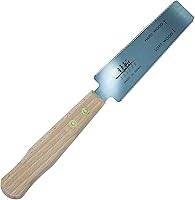
The best hand saw for woodworking is the SUIZAN Flush Cut Saw 5" when clean, controlled trimming matters most. Its no-set teeth and thin flexible blade suit dowels, plugs, trim and small wood parts.
That kind of flush work is easy to get wrong with a larger saw. A thick blade can mark the surface around a dowel or plug, while a bulky handle may not fit between finished parts.
Choose the TOOLAN if your toolbox needs several blade types in one handle. It covers drywall, wood, metal, wallboard, plywood, plastic and PVC, so it suits repairs that switch materials from job to job.
Pick the GARTOL set if you want both a flush-cut saw and a double-edged ryoba in one purchase. The pair gives a beginner a focused trimming saw plus a more general option for rip and crosscut work.
This guide compares manual wood cutting tools with two powered options for different workshop tasks. We checked blade styles, tooth patterns, handles, included parts and the kinds of cuts each tool is designed to make.
The goal is to match the tool to the cut rather than chase the longest blade or the most features. A small pull saw can give finer control for joinery, while a folding saw or mini chainsaw suits outdoor branches far better.
Technique also matters with Japanese saws. They cut on the pull stroke, so light pressure and a relaxed return stroke usually give a smoother result than pushing hard.
Set-up is simple with most manual saws here, and care mainly means keeping the blade dry, brushing off dust and storing teeth away from other tools. For powered picks, check the included batteries, chargers, guides and safety parts before you plan the job.
For a broader introduction to saw types and cutting fundamentals, start with the category guide before choosing a blade. It can help you tell a flush-cut saw from a ryoba, a pruning saw and a jigsaw before you compare models.
Use the picks below as short fits for real projects. If you know the cut, the material and the space you have to work in, the right saw usually becomes clear.
Our picks at a glance
-
1

-
2

-
3

- 4
 Check it
RUITOOL Japanese Hand Saw 6 Inch Double
Best for compact joinery - 5
 Best for fast branch cuttingCheck it
- 6
 Check it
GARTOL Hand Saw for Wood Cutting
Best two-saw woodworking set - 7
 Best for powered curvesCheck it
- 8
 Check it
SUIZAN Ryoba Double Edge Saw 7"
Best for rip and crosscuts - 9
 Best for long straight cutsCheck it
The best hand saws for woodworking
The best hand saw for woodworking is the one whose blade matches your cut, material and available space. Japanese pull saws lead this group for fine work, while longer conventional saws and powered tools suit different jobs.
Our score weighs specs, features and buyer feedback against what you're shopping for. The picks are arranged from highest score to lowest score.
| Product | Best for | Blade length | Blade material | Handle | Our score |
|---|---|---|---|---|---|
| SUIZAN Flush Cut Saw 5" | flush cuts | 5 in | Japanese steel | Beech | 9.7 |
| TOOLAN 8-In-1 Multi Blades Hand Saw | a mixed toolbox | 6 in | 9.7 | ||
| REXBETI 11-Inch Folding Saw | outdoor wood cutting | 11 in | 9.6 | ||
| RUITOOL Japanese Hand Saw 6 Inch Double | compact joinery | 6 in | SK5 steel | 9.6 | |
| Seesii Mini Chainsaw | fast branch cutting | 9.6 | |||
| GARTOL Hand Saw for Wood Cutting | two-saw woodworking set | Carbon steel | 9.5 | ||
| DEKOPRO Jig Saw Corded | powered curves | 9.4 | |||
| SUIZAN Ryoba Double Edge Saw 7" | rip and crosscuts | 7 in | Elastomer | 9.0 | |
| CRAFTSMAN Hand Saw | long straight cuts | 20 in | 8.1 |
SUIZAN Flush Cut Saw 5": Best for flush cuts
- 5 in Japanese pull saw
- 17 TPI hardwood edge
- 25 TPI softwood edge
- No-set teeth
The thin, flexible blade and no-set teeth suit dowels, plugs, trim and other cuts where the surrounding wood should stay clean.
Pros
- No-set teeth
- Two tooth edges
- Beech handle
Cons
- Fixed blade
- Designed for wood
The SUIZAN Flush Cut Saw 5" is the strongest choice for trimming wood parts without marking the surrounding surface. Its no-set teeth sit straight out from the blade, so the saw is designed to cut dowels, plugs, wedges, inlays and tenon ends flush.
The 5 in Japanese steel blade has two edges. The 17 TPI edge is for hardwood, while the 25 TPI edge is for softwood.
That gives you a simple way to match the tooth pattern to the material before cutting.
At 0.012 in thick, the blade leaves a narrow kerf and can flex to lie flat against the workpiece. The fixed blade sits in a beech handle, so this is a focused tool rather than a saw with interchangeable blades.
Use a light pull stroke and relax while pushing the saw back. If you often work on furniture, trim or small parts, this compact saw reaches places where a larger wood saw can be awkward.
TOOLAN 8-In-1 Multi Blades Hand Saw: Best for a mixed toolbox
- 8 blades
- Lockback mechanism
- TPR non-slip handle
- Manual operation
Eight blades make this a practical choice when one compact handle needs to cover different cutting tasks around a workshop or home.
Pros
- Eight included blades
- Compact design
- Quick blade changes
Cons
- Less specialized than a dedicated saw
- Blade fit depends on the locating hole
The TOOLAN 8-In-1 Multi Blades Hand Saw is the most flexible pick for a mixed toolbox. It includes 1 handle and 8 blades, with a lockback mechanism that secures the selected blade.
The handle uses TPR non-slip material and an ergonomic shape. The tool remains fully manual, with no motor, battery or charging parts, so it belongs in a basic workshop, home repair kit or compact toolbox.
The blades cover drywall, wood, metal, wallboard, plywood, plastic and PVC. The design supports blades with side locating holes or a middle hole, but the hole position must match the clamping structure.
Use a shorter blade for light work where the installation position allows it, and use the larger blade position for longer blades intended for lumber, drywall or steel. That split helps you match blade length to the job instead of forcing one blade through every material.
Check the locating hole before you start cutting. The correct fit helps the blade stay secure in the clamping mechanism and makes replacement blades easier to find later.
This is a useful generalist, though a dedicated Japanese saw gives more control for fine woodworking. For flush cuts, joinery and small wood parts, a purpose built pull saw will usually feel more precise.
REXBETI 11-Inch Folding Saw: Best for outdoor wood cutting
- 11 in folding blade
- 7 TPI staggered teeth
- SK-5 steel
- Rubber-coated polymer handle
The folding design and aggressive teeth make this a better fit for branches, green wood, firewood and outdoor work than fine joinery.
Pros
- Folding design
- Long blade
- Outdoor-focused tooth pattern
Cons
- Not a fine finish saw
- Larger than compact woodworking saws
The REXBETI 11-Inch Folding Saw is best for wood cutting outside the workshop. Its 7 TPI staggered teeth and SK-5 steel blade suit green wood, branches and firewood rather than delicate joinery.
The 11 in blade folds into the handle for carrying in a backpack, camping kit or survival bag. The rubber-coated polymer handle gives you a grippy surface for outdoor use in wet, cold or dry conditions.
REXBETI describes the saw for branches up to 6–7 inches in diameter. That makes it a strong choice for pruning and outdoor cutting, but its aggressive tooth pattern is not the first choice for flush cuts or fine furniture work.
Choose this saw when portability and branch cutting matter more than a narrow kerf. It is easier to carry than a fixed blade saw and ready to use whenever a branch needs trimming on a trip.
For a hand saw with a wood handle and a workshop focus, the Japanese models below are a closer match. Their thinner blades and finer teeth suit small parts, trim and controlled cuts on a bench.
Keep the blade clean and dry after outdoor use. Brushing off sap and dirt and storing the folded saw away from damp ground can help the teeth stay ready for the next job.
RUITOOL Japanese Hand Saw 6 Inch Double: Best for compact joinery
- 6 in double-edge blade
- 14 TPI softwood side
- 17 TPI hardwood side
- Beechwood handle
This compact ryoba-style saw gives woodworkers separate edges for softwood and hardwood while keeping the tool small enough for detailed work.
Pros
- Two tooth edges
- Flexible SK5 blade
- Beechwood handle
Cons
- Manual pull-saw technique takes practice
- Wood-only focus
The RUITOOL Japanese Hand Saw 6 Inch Double is a compact choice for joinery and finish cuts. Its 6 in SK5 high-carbon steel blade uses one 14 TPI edge and one 17 TPI edge.
The two edges let you switch between different cutting needs without carrying a second saw. The beechwood handle keeps the tool familiar and compact for beginners who want a hand saw for wood rather than a powered cutter.
Its flexible blade is designed for flush cutting, and the three-sided tooth grinding supports chip removal during the cut. Use the finer edge when you want more control, then keep the saw moving with light pull strokes.
The RUITOOL sits between the small SUIZAN flush saw and the longer SUIZAN ryoba. Pick it when you want a compact double-edge saw with a traditional wood handle.
At 6 in, it is small enough for tight work but long enough for small crosscuts and joinery tasks. That size can suit hobby projects where a full length ryoba feels oversized.
Keep pressure light and let the pull stroke do the work. A steady stroke helps a thin flexible blade follow your line without wandering or bending.
Seesii Mini Chainsaw: Best for fast branch cutting
- 6 in chain
- 900 W motor
- 29 ft/s chain speed
- Two 21 V 2000 mAh batteries
This cordless mini chainsaw suits branch trimming and thicker wood where a manual hand saw would take more time and effort.
Pros
- Cordless operation
- Two batteries
- Safety lock and chain guard
Cons
- Not a traditional hand saw
- Requires battery charging
The Seesii Mini Chainsaw is the fastest option here for branch trimming and thicker wood. It uses a 900 W motor, a 6 in chain and a chain speed of 29 ft/s.
This is a battery-powered tool, not a traditional hand saw. The set includes two 21 V 2000 mAh batteries, two chains with one pre-installed, a charger, gloves, a nut driver and a screwdriver.
The oil bottle is included, but oil is not. You will need to add oil for chain lubrication before regular use, and battery charging is part of the routine.
A double safety lock and chain guard are part of the design. Seesii gives the tool a 2-year after-sales service period, and the stated cutting uses include garden pruning, timber cutting, branch trimming and shrub trimming.
Choose it when manual sawing would be slow or tiring. The cordless format helps with overhead branches and repeated cuts where a hand saw would take much longer.
For joinery, flush cuts or quiet hand-tool work, choose one of the manual saws instead. A powered chain also calls for more careful handling, eye protection and a clear work area.
GARTOL Hand Saw for Wood Cutting: Best two-saw woodworking set
- Two 6 in Japanese saws
- Flush-cut saw
- Double-edged ryoba saw
- Wooden handles
The set covers flush trimming plus rip, crosscut and joinery work, giving beginners two useful hand saw formats in one compact group.
Pros
- Two saw types
- Wooden handles
- Compact storage
Cons
- More tools than a single-purpose buyer needs
- Manual cutting only
The GARTOL Hand Saw for Wood Cutting is the best two-saw set for a beginner building a woodworking toolbox. It includes a 6 in flush-cut saw and a double-edged ryoba saw, both with wooden handles.
The flush-cut saw is aimed at trimming dowels and tenons without damaging the surrounding surface. The ryoba has crosscut and rip-cut sides for work across and along the grain.
GARTOL describes the blades as flexible SK5 steel and the tooth options as coarse and fine. The set is compact enough for storage in a toolbox, while the two saw styles cover more tasks than a single specialized blade.
Pick this set if you want a hand saw with a wood handle and do not yet know which Japanese saw style you prefer. Trying both formats can make it easier to learn which cuts you do most often.
If you already have a general saw, the SUIZAN flush-cut model offers a more focused solution. A single purpose built tool can be simpler when your work is mostly dowels, plugs and trim.
Store both saws with blades protected from knocks. Keeping the teeth dry and clean helps each saw stay sharp for finish work and small joinery.
DEKOPRO Jig Saw Corded: Best for powered curves
- 550 W corded motor
- Six variable speeds
- Four orbital settings
- 45-degree bevel cutting
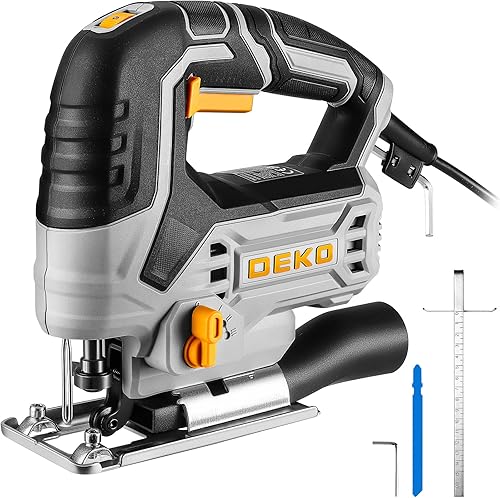
The DEKOPRO is a powered alternative for curved and bevel cuts, with variable speed and a parallel guide for woodworking projects.
Pros
- Variable speed
- Four orbital settings
- Tool-less blade clamp
Cons
- Needs a power cord
- Not a manual hand saw
The DEKOPRO Jig Saw Corded is the powered choice for curved cuts and adjustable bevel work. Its 550 W motor reaches up to 3,000 SPM, with six variable speeds and four orbital settings.
The metal base plate adjusts to 0, 15, 30 and 45 degrees. A tool-less blade clamp speeds blade changes, while the parallel guide helps with straight cuts.
The package includes a replaceable wood blade, guide ruler, dust-blowing port adapter, Allen wrench and user manual. That mix covers basic cutting, straight cuts and dust control when a vacuum hose is attached.
A vacuum hose can attach to the dust port adapter, but the hose is not included. The corded design gives consistent access to power, though it limits where you can work compared with a manual saw or cordless tool.
Higher orbital settings suit softer materials and faster cutting, while lower settings suit harder materials and slower cutting. Matching speed and orbital action to the wood can help the cut stay clean and controlled.
Choose this jigsaw when a hand saw cannot easily follow a curve or bevel line. It is not a substitute for a flush-cut saw or a fine pull saw.
SUIZAN Ryoba Double Edge Saw 7": Best for rip and crosscuts
- 7 in Japanese pull saw
- 7–11 TPI rip edge
- 19 TPI crosscut edge
- Replaceable blade
This ryoba combines rip and crosscut teeth in a longer blade, making it a strong general woodworking choice for joinery, trim and small projects.
Pros
- Rip and crosscut edges
- Replaceable blade
- Non-slip handle
Cons
- Needs pull-saw technique
- Bare tool
The SUIZAN Ryoba Double Edge Saw 7" is the best general manual saw for rip and crosscuts. Its 7 in blade has a 7–11 TPI rip edge and a 19 TPI crosscut edge.
The 0.02 in blade produces a narrow 0.03 in kerf for joinery, trim, molding and fine detail work. The elastomer handle provides a non-slip grip, and the blade can be replaced by loosening the handle screw and fitting a SUIZAN 7 in Ryoba replacement blade.
Use the rip side when cutting along the grain. Turn to the crosscut side when cutting across it.
A pull saw works best with a light stroke that lets the teeth do the cutting instead of heavy forward pressure.
This saw is a better all-around woodworking pick than the smaller flush saw when you need to make more than one type of cut. For a guide to grain direction, read how wood grain direction affects a saw cut.
CRAFTSMAN Hand Saw: Best for long straight cuts
- 20 in fine-finish blade
- Induction-hardened teeth
- Bi-material handle
- 45- and 90-degree features
The long blade suits broad straight cuts in wood, while the handle's square and miter features help mark 45- and 90-degree cuts.
Pros
- Long cutting length
- Fine-finish tooth geometry
- Built-in angle features
Cons
- Less compact
- Not a Japanese pull saw
The CRAFTSMAN Hand Saw is the best pick for long straight cuts in wood. Its 20 in fine-finish blade uses induction-hardened teeth and an exclusive tooth geometry for fast cutting.
The bi-material handle is designed for comfort and control. It also offers square and miter features at 45 and 90 degrees, which can help you mark or guide common cuts before the blade enters the wood.
This is a conventional push saw, so its technique differs from the Japanese pull saws in this guide. The longer blade can cover more material per stroke, but it takes more storage space than a 5 or 6 in Japanese saw.
Choose CRAFTSMAN when your projects include boards and longer straight cuts. The reach of a 20 in blade can make broad work faster than repeated strokes with a small saw.
For small parts, dowels or tight spaces, the compact Japanese saws are easier to control. A shorter pull saw can fit where a long conventional blade would be awkward to start or steer.
Support the workpiece well and mark the cut before sawing. That helps a long blade track straight and keeps the cut line visible through the full stroke.
How to choose a hand saw for woodworking
Choose a hand saw by matching the tooth pattern and blade shape to the cut. Flush-cut teeth suit trimming, rip teeth follow the grain, crosscut teeth cross the grain, and aggressive low-TPI teeth remove wood faster from branches.
A hand saw with a wood handle can feel familiar and balanced for workshop use. The RUITOOL and GARTOL saws use beechwood or wooden handles, while the SUIZAN flush saw uses beech and the SUIZAN ryoba uses elastomer.
Should you choose a pull saw or push saw?
Choose a pull saw for thin blades, narrow kerfs and controlled joinery cuts. Japanese models in this guide cut on the pull stroke, so keep the blade aligned and use light pressure.
Choose a conventional push saw when you want a longer blade for broader straight cuts. The 20 in CRAFTSMAN is the clearest example here, while the TOOLAN gives you a manual handle with several blade options.
What blade length works for small woodworking?
A 5–7 in blade works well for small parts, trim and joinery. The SUIZAN Flush Cut Saw has a 5 in blade, the RUITOOL has a 6 in blade, and the SUIZAN Ryoba has a 7 in blade.
A longer blade can cover more material per stroke, but it may be harder to control in tight spaces. Measure the work area and consider the full handle length, not just the blade.
How should you care for a hand saw?
Keep the blade dry, brush away wood dust after use and store it where the teeth cannot contact other tools. Replace a replaceable blade when the cut becomes difficult or the cut surface becomes rough.
If a handle becomes damaged or uncomfortable, see our guide to a hand saw replacement handle. Do not force a dull or damaged blade through wood, since extra pressure makes the cut harder to control.
Which hand saw is best for different materials?
Most picks here are designed for wood, but the TOOLAN covers more materials with its included blade set. It is the most practical option for a toolbox that also needs to cut drywall, plastic, PVC, plywood and metal.
For plastic work, compare our guide to the best hand saw for plastic. A wood-cutting tooth pattern is not automatically the right choice for every plastic sheet or pipe.
Can a hand saw cut branches?
Yes, but branch cutting calls for a different tooth pattern than fine joinery. The REXBETI has a folding 11 in blade with 7 TPI staggered teeth, while the Seesii uses a 6 in powered chain.
For small branches, a manual pruning saw gives you control without batteries or a cord. For thicker wood or repeated trimming, the Seesii can reduce manual effort, but it requires battery charging and safe chain-saw handling.
When should you choose an electric hand saw?
Choose a powered saw when the cut volume, wood thickness or curve makes manual sawing inefficient. The Seesii is for branch and timber cutting, while the DEKOPRO jigsaw is for wood cuts with variable speed, orbital settings and bevel angles.
For another cordless option, see best cordless electric hand saws. A cordless tool adds battery planning, while a manual saw is ready whenever you can mark and support the workpiece.
Which small saw is easiest to control?
The best small hand saw for woodworking is the SUIZAN Flush Cut Saw 5" when the job is trimming dowels, plugs or tenons. Its 5 in blade, no-set teeth and flexible 0.012 in thickness are built around flush work.
Small saws are easier to control in tight spaces because the handle stays clear of finished parts. A thin blade can also follow a line closely without gouging the surface around the cut.
The RUITOOL 6 in saw is better when you need two tooth edges in a compact format. Its 14 TPI and 17 TPI edges give more choice for different wood cutting needs in one tool.
The GARTOL set is better when you want both a flush saw and a ryoba instead of choosing only one style. That can suit beginners who are still learning which cuts they make most.
For coping cuts, compare the best coping saw for woodworking. A coping saw has a different blade shape and suits curved coping work rather than flush trimming.
Metal or plastic projects may need a different blade, so see the guides to the best coping saw for metal and the best coping saw for plastic. Choosing teeth for the material matters as much as choosing a small size.
How to use a hand saw safely and accurately
Mark the cut line clearly, support the workpiece on both sides of the cut and keep your free hand away from the teeth. Start with short, controlled strokes until a kerf forms, then use the full useful length of the blade.
For Japanese pull saws, pull lightly and keep the blade straight. Letting the teeth cut instead of forcing the handle helps you stay on the line and reduces the chance of bending a thin blade.
For a conventional saw, use a stable stance and steady strokes. The CRAFTSMAN handle includes 45- and 90-degree features, but you should still mark the cut and check the workpiece before sawing.
Wear eye protection when cutting wood, especially with powered tools. Follow the instructions for the DEKOPRO jigsaw and Seesii mini chainsaw, and keep guards and locks in place.
More guides on this topic
- Best Small Hand Saws
What is the best hand saw for woodworking?
Pick the SUIZAN Flush Cut Saw 5" for the cleanest solution to dowels, plugs, trim and small wood parts. Its no-set teeth and thin flexible blade are made to trim flush without scratching the surrounding surface.
Pick the TOOLAN when one compact handle needs several blade types. It suits a mixed toolbox for drywall, wood, metal, wallboard, plywood, plastic and PVC.
Choose the GARTOL set for two Japanese woodworking saw styles, the SUIZAN Ryoba for regular rip and crosscuts, and CRAFTSMAN for longer straight cuts. Each option fits a different balance of control, reach and tooth pattern.
Use the REXBETI or Seesii for branches, and the DEKOPRO when curves or bevels make a powered jigsaw more suitable. Outdoor pruning, fast branch cutting and curved work call for different tools than fine joinery.
For baseboard trim, see the guide to best coping saws for baseboards. Coping cuts need a shaped blade that a straight flush-cut or ryoba saw cannot match.
Match the saw to the cut, support the wood well and use the correct tooth edge before you begin. Light pull strokes for Japanese saws and steady strokes for conventional saws both work best when the workpiece is held firm.
If you are choosing for one main job, start there rather than buying the most versatile tool. A focused saw often gives a cleaner finish and is easier to learn on your first projects.
Our top 3 picks at a glance
-
1
-
2
-
3
Frequently asked questions
What is the best hand saw for woodworking?
The best hand saw for woodworking depends on the cut. Choose the SUIZAN Flush Cut Saw 5" for dowels, plugs and trim, the SUIZAN Ryoba for rip and crosscuts, or the CRAFTSMAN 20-Inch Hand Saw for longer straight cuts.
A specialized tooth pattern usually matters more than a large blade.
What is the difference between a rip cut and a crosscut?
A rip cut follows the wood grain, while a crosscut goes across the grain. The SUIZAN Ryoba has a rip edge and a crosscut edge, and the RUITOOL has separate 14 TPI and 17 TPI edges for different wood-cutting needs.
Keep the workpiece supported and mark the cut before sawing.
Are Japanese pull saws good for woodworking?
Japanese pull saws are useful for woodworking because they cut on the pull stroke and use thin blades for narrow kerfs. SUIZAN and RUITOOL models here use double edges for different cuts, while the flush-cut SUIZAN has no-set teeth for trimming.
Use light pressure on the pull stroke and avoid forcing the blade.
Can one hand saw cut hardwood and softwood?
Yes, a double-edge saw can cover both materials when each edge is intended for a different task. The SUIZAN Flush Cut Saw has 17 TPI teeth for hardwood and 25 TPI teeth for softwood, while the RUITOOL uses 17 TPI and 14 TPI edges.
Choose the edge before starting instead of changing pressure to compensate for the wrong teeth.