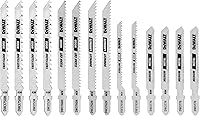
9 Best Saw Blade for Plywood (November 2026)
The best saw blades for plywood include the Revvstark 10 Inch 80T Table Saw Blades for table saw plywood work, the Ryltanks 5-1/2 Inch Circular Saw Blades for flexible compact saw work, and the Freud Diablo Finish Saw Blade for 7-1/4 in finish cuts.
On this page (7 sections)
- The best saw blades for plywood by saw fit
- How do tooth count and kerf affect plywood cuts?
- How do you choose a plywood blade for a table saw?
- What should you check before fitting a saw blade?
- Can these plywood blades work on other saws?
- How can you reduce veneer tearout?
- Best saw blade for plywood: the final choice
The best saw blade for plywood is the Revvstark 10 Inch 80T Table Saw Blades when your table or miter saw accepts a 10 in blade with a 5/8 in arbor. For compact circular saws, choose a blade that matches the tool's diameter and arbor before comparing tooth count and veneer tearout.
Plywood needs a blade that supports the face veneer instead of pulling it apart. Higher tooth counts usually favor smoother edges, while lower tooth counts remove material faster.
For a broader wood-blade comparison, see our guide to the best circular saw blades for wood. If you're considering Diablo, our are Diablo saw blades any good guide explains how its finish-focused features fit common cuts.
Our picks at a glance
-
1
 Best for table saw plywood work
Revvstark 10 Inch 80T Table Saw Blades
9.7/10 our score
See it on Amazon -
2
 Best for flexible compact saw work
Ryltanks 5-1/2 Inch Circular Saw Blades
9.6/10 our score
See it on Amazon -
3

- 4
 Best for 6-1/2 in trim sawsCheck it
- 5
 Check it
GRAFF 6 1/2 Inch Circular Saw Blade
Best for extra-fine compact cuts - 6
 Check it
Ryltanks 4-1/2 Inch Circular Saw Blade
Best for small saw blade variety - 7
 Check it
FOXBC 7-1/4" Circular Saw Blade Ultra Fine
Best for veneer plywood - 8
 Check it
FOXBC 4-1/2 Inch Circular Saw Blade
Best for small plywood trim saws - 9
 Check it
IRWIN Tools Classic Series Steel Corded Circular
Best for high-tooth steel blades
The best saw blades for plywood by saw fit
The best saw blade for plywood depends first on the saw, arbor and cutting job. The picks below are ordered by how well their stated size, tooth pattern and plywood use fit this search.
Our score weighs specs, features and buyer feedback against what you're shopping for.
Revvstark 10 Inch 80T Table Saw Blades: Best for table saw plywood work
- 10 in diameter
- 80 carbide teeth
- 5/8 in arbor
- 7,000 max RPM
The 80-tooth layout suits clean plywood work on compatible 10 in table and miter saws. Its thin kerf and heat-dissipation features support controlled cuts.
Pros
- 80 carbide teeth
- Thin kerf
- Works with plywood and panels
Cons
- Only fits compatible 10 in tools
- Not the fastest choice for rough ripping
The Revvstark is the strongest match for a table saw user who wants a high tooth count for plywood panels. Its 10 in diameter, 80 carbide teeth and 5/8 in arbor define the fit, so measure your saw before choosing it.
The thin laser-cut kerf is intended to reduce material loss while the tungsten carbide teeth suit wood, plywood, chipboard, panels and MDF. That mix suits sheet work where a clean edge matters and the panel will later be sanded or edged.
Noise-reducing perforations and thermal expansion grooves are useful design details for longer cutting sessions. They are meant to help manage sound and heat, which can make repeated cuts feel steadier.
Its 7,000 maximum RPM is lower than several compact blades in this group. That makes the saw's own speed limit important, especially if you also use a miter saw or another 10 in tool.
Care is simple but still matters in daily use. Keep the blade clean, check for pitch buildup, and store it flat so the teeth do not strike other tools.
Choose it when your saw accepts the stated diameter and arbor and you want one plywood blade for table saw work. The 80-tooth layout favors cleaner edges over fast rough ripping.
Ryltanks 5-1/2 Inch Circular Saw Blades: Best for flexible compact saw work
- 4 blades
- 10 mm arbor
- 24T, 36T, 48T and 130T options
- 10,000 max RPM
This 4-pack covers framing, ripping, crosscutting and fine plywood work in compatible 5-1/2 in circular saws. The 130-tooth blade is the finish-focused option.
Pros
- Several tooth counts
- Includes a 130-tooth blade
- Thin kerf
Cons
- Requires a 10 mm arbor
- Small diameter limits cutting depth
The Ryltanks 5-1/2 in set suits a compact circular saw user who wants several tooth patterns in one group. It includes 24T, 36T, 48T and 130T blades, all built around a 10 mm arbor.
Use the lower tooth counts for framing or faster ripping, then move to the 48T or 130T blade when plywood edge quality matters more. That range makes the set flexible for mixed jobs rather than a single repeated cut.
The 130-tooth blade is specifically suited to wood, plywood, OSB, paneling and vinyl siding. It is the clearest finish choice in the pack, while the other blades cover the rougher work.
The 0.063 in kerf on the 24T, 36T and 48T blades is thinner than the 0.079 in kerf on the 130T blade. A thinner kerf removes less material, but the kerf difference is small enough that tooth count will drive most day to day differences.
Each blade has a 10,000 maximum RPM, so the saw must match both the arbor and speed requirements. Check the guard and depth setting before fitting a smaller diameter blade.
Choose this pack when your 5-1/2 in saw uses a 10 mm arbor and your projects vary from rough cuts to fine plywood work. It suits a kit bag approach where one set covers several tasks.
Freud Diablo Finish Saw Blade: Best for 7-1/4 in finish cuts
- 40 ATB teeth
- 5/8 in arbor
- Thin laser-cut kerf
- 8,000 max RPM
This 7-1/4 in finish blade is suited to smooth plywood crosscuts and general wood work. Its coating and thin kerf address heat, gumming and material loss.
Pros
- 40 ATB teeth
- Perma-Shield coating
- Works on plywood
Cons
- Fewer teeth than fine-finish options
- Requires a compatible 7-1/4 in saw
The Freud Diablo Finish Saw Blade is a balanced 7-1/4 in choice for plywood crosscuts and general finish work. Its 40 ATB teeth, 5/8 in arbor and 8,000 maximum RPM fit compatible 7-1/4 in circular saws.
The thin laser-cut kerf helps reduce material loss, while the TiCo carbide teeth are designed for hardwood, softwood and plywood. That combination is aimed at controlled cuts rather than heavy stock removal.
The Perma-Shield coating addresses heat, gumming and corrosion during wood cutting. In practice, a non-stick surface can make pitch and resin easier to clean after repeated sheet cuts.
A 40-tooth pattern is less specialized than the 60T, 120T and 140T options here. That can be useful when one blade needs to handle both plywood and ordinary wood without making every cut a slow finish cut.
Check the diamond knockout and arbor fit before ordering for your exact saw. The stated 5/8 in arbor does not remove the need to confirm the blade seating and washer setup.
Choose it when you want a familiar 7-1/4 in format with a finish-oriented tooth pattern and a coating for cleaner blade care. It fits regular site and workshop plywood work well.
Diablo Finish Trim Saw Blade: Best for 6-1/2 in trim saws
- 40 teeth
- 5/8 in arbor
- Thin .059 in kerf
- 10,000 max RPM
The 6-1/2 in size fits compatible compact circular and miter saws. Its 40-tooth layout balances finish quality with a faster cut than very high-tooth blades.
Pros
- Thin kerf
- 40 teeth
- Perma-Shield coating
Cons
- Needs a 5/8 in arbor
- Not a universal fit for compact saws
The Diablo Finish Trim Saw Blade fits buyers who use a 6-1/2 in circular or miter saw with a 5/8 in arbor. Its 40 teeth and .059 in kerf balance a smooth plywood cut with a relatively fast feed.
Laser-cut stabilizer vents are designed to reduce noise and vibration, and the Perma-Shield coating helps resist gumming, rust and corrosion. Those details matter more during longer trim runs than on a single short cut.
The TiCo carbide is intended for hardwood, softwood and plywood. The 40-tooth count keeps the blade from feeling as slow as a very high-tooth finish blade.
Its 10,000 maximum RPM is a key setup detail. Check the saw's maximum speed and arbor before fitting the blade, and use the guard and manufacturer instructions for the tool.
Support matters with a compact saw because the sheet can flex more easily. Clamp or support the offcut side so the blade does not bind near the end of the cut.
Choose this blade for everyday plywood trim work when you want a 40-tooth option in a compact 6-1/2 in size. It suits users who value a balance and already own a compatible tool.
GRAFF 6 1/2 Inch Circular Saw Blade: Best for extra-fine compact cuts
- 140 teeth
- 5/8 in arbor
- Cuts plywood and laminate
- Expansion slots
The 140-tooth design favors smooth edges on plywood, laminate and other non-metallic materials. It suits buyers who value edge finish over rapid stock removal.
Pros
- Very high tooth count
- 5/8 in arbor
- Expansion slots
Cons
- May cut more slowly than lower-tooth blades
- Confirm compact saw clearance
The GRAFF blade is aimed at very smooth cuts on compatible 6-1/2 in saws. Its 140 teeth and 5/8 in arbor make it the fine-tooth choice among the compact blades in this roundup.
It is designed for wood, plywood, laminate, drywall and plastic, with expansion slots intended to reduce vibration, noise and heat. Those slots are a practical feature when cutting thin sheet goods that can chatter.
The carbon steel body gives the blade a different construction profile from the carbide-focused options. Compare that construction with your expected workload before treating it as a general replacement.
Many teeth can help support a clean edge, but they also make feed control more important. Let the saw maintain its speed instead of forcing the blade through the sheet.
A high tooth count can mean the blade needs a steady, unhurried pass. Stopping mid cut and restarting can leave marks, so plan the full cut before starting.
Choose it for delicate plywood or laminate work where edge finish matters more than fast stock removal. Confirm that your corded or cordless saw accepts this 6-1/2 in, 5/8 in format.
Ryltanks 4-1/2 Inch Circular Saw Blade: Best for small saw blade variety
- 6 blades
- 3/8 in arbor
- 24T, 40T and 120T options
- 13,000 max RPM
This 6-pack gives compact saw users framing, fine-finish and plywood-focused tooth counts. The 120-tooth blades are the most suitable for reducing veneer tearout.
Pros
- Six-blade set
- 120-tooth plywood option
- Thin kerf
Cons
- Requires a 3/8 in arbor
- Small diameter limits depth
The Ryltanks 4-1/2 in pack is for compact saw users who need several blade choices. It includes 24T, 40T and 120T options, with a 3/8 in arbor and a 13,000 maximum RPM.
The 120-tooth blades target plywood, OSB, paneling, plastic and vinyl siding. The 24T and 40T blades cover framing, ripping, crosscutting and fine finish work in compatible small circular saws.
The 0.063 in kerf applies to the 24T and 40T blades, while the 120T blade uses a 0.071 in kerf. Check the exact blade before cutting because the tooth count and kerf change how quickly the saw moves through plywood.
The small diameter makes this set a specialist tool rather than a full size replacement. It works best where access is tight or where a compact saw is already your main choice.
Label each blade in storage so you can find the right tooth count quickly. That small habit saves time when you swap between rough and fine work.
Choose this set when a 4-1/2 in saw with a 3/8 in arbor is your main tool and you want both rough and fine options. Confirm the 13,000 maximum RPM against your saw first.
FOXBC 7-1/4" Circular Saw Blade Ultra Fine: Best for veneer plywood
- 60 ATB teeth
- 5/8 in arbor
- .063 in kerf
- Corded and cordless saw use
The 60-tooth ATB pattern is aimed at clean crosscuts in veneer plywood, melamine and delicate molding. Its extra-thin kerf helps limit waste.
Pros
- 60 ATB teeth
- Designed for veneer plywood
- Thin kerf
Cons
- Confirm the saw's arbor and knockout fit
- Less suited to fast rough work
The FOXBC 7-1/4 in blade is a strong choice for veneer plywood and delicate molding. Its 60 ATB teeth, .063 in kerf and 5/8 in arbor put it between the 40-tooth finish blade and the very high-tooth options.
The tungsten carbide construction is intended for toughness and wear resistance. The blade is designed for crosscutting oak, pine, melamine and veneer plywood on corded and cordless circular saws.
An extra-thin kerf can help reduce waste, but it does not remove the need for proper support. Place the good face as your saw and cut setup require, secure the sheet, and let the teeth do the work.
The 60-tooth count is a useful middle ground for visible edges. It gives more finish control than a 40-tooth blade without the slower feel of a 140-tooth blade.
Watch for dullness by listening to the cut and checking the edge result. A blade that starts to push or tear the veneer may need cleaning or replacement.
Choose it when veneer tearout is your main concern and your 7-1/4 in circular saw accepts the stated arbor and knockout arrangement. Test the setup on an offcut first.
FOXBC 4-1/2 Inch Circular Saw Blade: Best for small plywood trim saws
- 120 teeth
- 3/8 in arbor
- 3-pack
- Cuts plywood, veneer and plastics
The 120-tooth layout targets smooth plywood, veneer and paneling cuts on compatible 4-1/2 in trim saws. Three blades make it useful for regular small-tool work.
Pros
- 120 teeth
- 3-pack
- Designed for plywood and veneer
Cons
- Requires a 3/8 in arbor
- Small diameter limits cutting depth
The FOXBC 4-1/2 in blade is designed for small trim saws that use a 3/8 in arbor. Its 120 teeth and 3-pack format suit repeated plywood, veneer, OSB, paneling and plastic cuts.
The high-speed steel body and precision-ground teeth support smooth cutting, while the thin kerf is intended to keep the cut fast. That design targets clean edges on smaller sheet work.
Three blades can make sense when a compact saw is used often or kept ready for different sheet materials. A spare blade also helps when one blade is being cleaned or replaced.
Its small diameter limits the depth compared with 7-1/4 in blades. Confirm the saw's arbor and guard clearance, then use the blade for work that fits the compact tool.
This is not the best choice for thick stock or deep rips. Keep the work within the depth the small saw and blade can handle safely.
Choose it for clean trim cuts in plywood and veneer when a 4-1/2 in saw is already part of your setup. The 3-pack format suits regular small tool use.
IRWIN Tools Classic Series Steel Corded Circular: Best for high-tooth steel blades
- 140 teeth
- 7-1/4 in diameter
- 5/8 in diamond arbor
- .08 in kerf
This 140-tooth steel blade is aimed at smooth, accurate cuts in compatible corded circular saws. It is a straightforward option when you want many precision-ground teeth.
Pros
- 140 precision-ground teeth
- 5/8 in diamond arbor
- Hardened steel plate
Cons
- Steel construction differs from carbide options
- Confirm corded saw compatibility
The IRWIN Tools Classic Series blade is a high-tooth steel option for compatible corded circular saws. It has 140 precision-ground teeth, a 7-1/4 in diameter, a 5/8 in diamond arbor and a .08 in kerf.
Its fully hardened plate is designed to run true, and the heavy-gauge high-carbon steel construction supports repeated basic wood cutting. The tooth count favors smooth, accurate cuts in plywood, OSB, veneer and plastic.
This blade differs from the carbide options because its cutting body is heavy-gauge high-carbon steel. Compare the stated material and kerf with your work rate, saw power and preferred maintenance routine.
Steel and carbide blades can suit different users in daily use. Carbide often suits users who want longer intervals between sharpening or replacement, while steel has a simpler profile.
The .08 in kerf is wider than some thin kerf options in this group. That means slightly more material loss and a different feel on smaller saws.
Choose it when you want a 140-tooth plywood blade for a compatible corded circular saw and value precision-ground steel teeth. Confirm the diamond arbor fit before fitting.
How do tooth count and kerf affect plywood cuts?
Higher tooth counts generally favor smoother plywood edges, while lower tooth counts usually remove material faster. Kerf controls how much material the blade removes, so a thinner kerf can reduce waste and may require less cutting power.
A 24T blade is better suited to framing and faster cuts than a 120T or 140T blade. For visible veneer, melamine or finished panels, compare the 60T, 80T, 120T and 140T options here.
Tooth count is not the only factor. Tooth shape, blade diameter, saw power, feed speed and sheet support all affect tearout.
A thin kerf can help, but it doesn't guarantee a chip-free edge. Keep the plywood supported, avoid twisting the saw, and replace or clean the blade when cutting becomes rough.
How do you choose a plywood blade for a table saw?
For a table saw, match the blade diameter and arbor first, then choose tooth count for the cut. The Revvstark 10 in blade has 80 carbide teeth, a 5/8 in arbor and a 7,000 maximum RPM.
That RPM limit is worth checking before you fit any 10 in blade. A saw that runs faster than the blade rating is not a safe match.
A table saw can give you stable sheet support, but large plywood panels still need outfeed support. Keep the sheet flat against the fence and use a safe feed rate that does not force the blade.
Use a push stick and keep hands clear of the blade path. Large panels can shift as weight moves past the blade, so plan where the offcut will go.
Tooth count then shapes the result. The 80-tooth layout is aimed at cleaner plywood edges than a low-tooth ripping blade, while still being a practical choice for panel breakdown.
If you are comparing tool types, read how a miter saw differs from a table saw. A miter saw is useful for crosscuts, while a table saw is generally better suited to controlled ripping and sheet breakdown with proper support.
For plywood, the table saw setup usually wins on control. The fence, support and feed path help keep long cuts straight.
What should you check before fitting a saw blade?
Check the blade diameter, arbor size, maximum RPM, guard clearance and the tool's instructions before installation. A 7-1/4 in blade with a 5/8 in arbor is not automatically compatible with every circular saw.
Diameter controls cutting depth as well as fit. A blade that is too large may not clear the guard, while a blade that is too small may not cut through the sheet.
The compact picks use different arbor sizes. The Ryltanks 5-1/2 in set uses a 10 mm arbor, while the 4-1/2 in Ryltanks and FOXBC sets use a 3/8 in arbor.
Those differences are easy to miss when shopping by diameter alone. Always read the arbor size on the blade and compare it with the saw manual.
Maximum RPM is another simple check that prevents problems. The blade rating and the saw speed both need to allow the combination you plan to use.
Guard clearance matters even when the blade fits the arbor. Some compact saws have tight guards, bevel limits or depth stops that change what will fit.
Use our guide on matching a saw blade to the tool and material for a checklist. Remove power before changing a blade, confirm the teeth face the correct direction, and make sure the blade is firmly secured.
Keep the washers, flange and bolt in good condition when fitting a new blade. A clean seat helps the blade run true and makes the cut more predictable.
Test the setup with a short cut in scrap material first. That check can reveal fit, direction or support problems before you cut the real panel.
Can these plywood blades work on other saws?
Some can, but compatibility depends on the exact diameter, arbor, guard and tool speed. A blade described for circular saws may also fit a miter saw or table saw only when the tool manufacturer allows that combination.
The Diablo Finish Trim Saw Blade is described for circular and miter saws. The Revvstark blade is described for 10 in miter saws, table saws and other 10 in circular saws.
A reciprocating saw uses a different blade style and cutting motion. For rough wood demolition, see the best reciprocating saw blades for wood instead of adapting a circular saw blade.
A router is also not a substitute for a plywood saw blade. If you need to shape an edge after cutting, learn how to use a Rockler router table and use a bit made for that tool.
How can you reduce veneer tearout?
Reduce veneer tearout by using a fine-tooth blade, supporting the plywood, securing the sheet and keeping the saw steady. The blade should be sharp and appropriate for the tool, with the finished face positioned according to the saw's cutting action.
Support is often the missing step. A sheet that flexes near the blade can vibrate and pull the veneer instead of slicing it cleanly.
The FOXBC 7-1/4 in blade has 60 ATB teeth and is designed for veneer plywood. The GRAFF and IRWIN options have 140 teeth, while the smaller FOXBC and Ryltanks options have 120 teeth.
Those higher tooth counts can help on thin veneer and laminated faces. They still need a steady feed, because forcing them can cause heat and rough edges.
Do not force a high-tooth blade through the panel. A controlled feed helps the teeth cut instead of pulling at the veneer, especially on thin sheets and laminated faces.
Clean the blade when pitch builds up or the cut starts to sound rough. A dirty blade can drag and mark the edge even if the teeth are still sharp.
Score or mask the cut line when the sheet is valuable and the edge risk is high. That extra step can protect the face veneer where the blade enters.
Check the back side of the cut as well as the top face. Tearout can appear on the exit side depending on the saw and tooth direction.
Practice on an offcut first when you are trying a new blade. A short test shows whether feed rate, support and face direction are working.
Best saw blade for plywood: the final choice
The best saw blade for plywood is the Revvstark 10 Inch 80T Table Saw Blades when your tool accepts a 10 in diameter and 5/8 in arbor. Choose the Ryltanks 5-1/2 in set for a compact saw with a 10 mm arbor and several tooth counts.
Pick the Diablo Finish Saw Blade for a 7-1/4 in, 40-tooth finish option. Choose the FOXBC 7-1/4 in blade for veneer plywood, or select a 120-tooth compact blade when your small saw uses a 3/8 in arbor.
For 6-1/2 in compact saws, the choice narrows to the Diablo Finish Trim blade or the 140-tooth GRAFF blade. The Diablo suits a faster balanced cut, while the GRAFF suits a finer edge.
For 4-1/2 in tools, the Ryltanks set gives more tooth choices and the FOXBC 3-pack focuses on 120-tooth sheet work. Both need a 3/8 in arbor.
Tooth count should follow the job, not the other way around. Rough framing needs fewer teeth, while visible veneer and laminate usually need more.
Always confirm the exact tool fit before ordering. Diameter, arbor, RPM and guard clearance matter just as much as tooth count.
Keep the blade clean and the sheet supported for the best result. That simple routine helps every blade in this list cut more cleanly.
Our top 3 picks at a glance
-
1
Best for table saw plywood work
Revvstark 10 Inch 80T Table Saw Blades
9.7/10 our score
See it on Amazon -
2
Best for flexible compact saw work
Ryltanks 5-1/2 Inch Circular Saw Blades
9.6/10 our score
See it on Amazon -
3