How to Cut Plywood with a Circular Saw
Support the full sheet, mark the cut, and guide the saw steadily to cut plywood accurately with a circular saw. A sharp blade and a shallow scoring pass can help reduce splintering.
On this page (8 sections)
- How do you set up plywood for a circular saw cut?
- Which face of plywood should face down?
- How do you mark a straight cut line?
- How should you set the blade depth?
- How do you cut plywood without splintering?
- How do you make the cut safely and accurately?
- Which guide fits the way you cut plywood?
- What should you check after the cut?
To cut plywood with a circular saw, support the sheet, mark the cut, and guide the saw at a steady pace. Use a sharp blade suited to plywood, set the depth just beyond the panel, and make a shallow scoring pass if reducing splintering is important.
A large sheet can sag or shift while you cut. Set up support first, then check that the cord, base plate, and blade path have room to move without catching.
How do you set up plywood for a circular saw cut?
Support the plywood on both sides of the cut and keep the waste side free to drop slightly. A level panel is less likely to bind the blade or break away at the end.
Use a sheet of rigid foam as a sacrificial base, or arrange supports so they hold the panel without closing the kerf. Check that the blade cannot reach the floor or a workbench, and secure the panel so it won't slide.
For a narrow strip, add support near the offcut so it doesn't tip as the cut finishes. Keep your hands away from the blade path and don't hold a loose offcut in place by hand.
Which face of plywood should face down?
On most standard circular saws, the blade teeth enter the top face and exit through the bottom. That means tear-out can be more visible on top, so place the better face down when the cut and setup allow it.
The cut direction can affect the edge, too. Grain and veneer orientation may change how fibers lift at the cut, as explained in how wood grain direction affects a saw cut.
Make a test cut on scrap from the same sheet before committing to a visible edge. If the panel has a marked front or back, plan the saw orientation and support around the face that matters most.
How do you mark a straight cut line?
Measure from a factory edge, mark both ends, and connect the marks with a straightedge. A clear line makes it easier to place the guide and check the saw's path.
Use a sharp pencil or a marking knife, depending on the finish you need. For a knife line, cut lightly along the waste side of the mark so the visible edge stays at the intended dimension.
Measure the distance between the saw blade and the edge of its base plate. This offset tells you where to place a clamped guide so the blade follows the cut line, rather than the guide sitting directly on it.
How can a guide rail or fence help?
A guide rail or fence keeps the saw base on a straight path for long cuts. A rail clamps along the panel, while a rip guide references an edge to set a parallel cut.
For a project that needs repeatable sheet cuts, compare the best circular saw guide rail options. If you want a fence that references the panel edge, see the best circular saw rip guide.
A guide only helps when it fits the saw and stays secure. Before cutting, check that the base rides smoothly and the blade will clear the clamps.
If you use a Makita saw, compare Makita circular saw guide rails for a compatible setup.
How should you set the blade depth?
Set the blade just deep enough to pass through the plywood. A shallow setting limits exposed teeth below the panel while still allowing a complete cut.
Unplug a corded saw or remove the battery before adjusting it, following the manual. Check the depth against the panel thickness at the cut area, since uneven support can change how far the blade extends.
Test the setting on scrap and confirm the blade clears the support underneath. Never reach beneath a panel while the saw is connected to power.
How do you cut plywood without splintering?
Use a sharp blade, steady feed, close support, and a shallow scoring pass when the finish edge matters. These steps can reduce veneer tear-out, though the result depends on the plywood, blade, and cut direction.
A fine-tooth plywood blade is often a good starting point. Check the saw and blade manuals for compatibility and installation instructions, and replace a blade that is damaged or dull.
Some saws allow a shallow first pass before the full-depth cut. For example, the Makita SP6000J1 has a built-in depth stop for a preliminary 1/16-inch cut.
If you use a circular saw and separate guide, work in two passes only if your saw's manual allows it. Keep the first pass shallow, then complete the cut without changing the guide position.
How do you make the cut safely and accurately?
Keep the saw base flat against the panel, start the saw clear of the edge, and move at a steady pace. Don't force the blade through a slow spot or twist the saw to correct its path.
Before powering on, check the blade guard, guide placement, cord or battery, and the position of the offcut. Wear eye and hearing protection, and use dust protection suited to the work area.
Let the blade reach its normal speed before entering the plywood. Keep both hands on the saw as the manual directs, and let the blade stop before setting the tool down.
Which guide fits the way you cut plywood?
Choose a guide based on the cut: an edge-referencing fence suits parallel cuts, while a long rail suits straight cuts across a sheet. Check that the guide is compatible with your saw before buying.
The Kreg Rip-Cut guide uses a sled and edge guide, and Kreg says it works best with regular side-blade circular saws whose base or blade guard allows secure clamping. Kreg says it does not work with worm-drive saws.
Choose it only if your saw's shape allows the sled to sit flat and clamp properly. For more on setting a rail and aligning the saw, read how to use a circular saw guide rail.
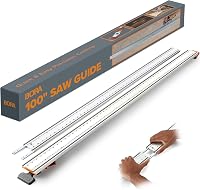
The BORA NGX guide combines a 50-inch clamp edge with a 50-inch extension for a total 100-inch straight edge. BORA describes it as compatible with circular saws, but confirm that your saw base runs cleanly along the guide.
If you are deciding between a circular saw and a track saw, see how a track saw differs from a circular saw with a guide. Owners of compatible Makita or Festool track saws can also compare the best Festool track saw guide rail.
For shorter hand-tool work, a hand saw guide jig can help keep a manual saw on line.
What should you check after the cut?
Check the cut edge for tear-out and measure the finished width before using the panel. Small chips on the hidden face may not matter, but a visible edge may need light sanding or another pass.
If the edge is rough, don't immediately repeat the cut with the same setup. Check the blade condition, support, feed rate, and whether the guide shifted.
Pick a clamped rail for long straight cuts across a sheet, or an edge guide when you need a parallel strip. In either case, test the setup on scrap first and use a blade and cutting method that leave the finish you need.
Frequently asked questions
Which side of plywood should face down when cutting with a circular saw?
With a standard circular saw, the blade teeth enter the top face and exit the bottom, so splintering often shows more on the top. Put the cleaner face down when that suits your project and saw setup.
Check the saw manual and make a test cut on scrap first.
How do you keep plywood from splintering when cutting?
Use a sharp, fine-tooth blade suited to plywood, support the sheet close to the cut, and guide the saw at a steady pace. A shallow scoring pass along the line can help limit tear-out.
Test your blade, cut direction, and setup on scrap from the same panel.
Can you cut plywood with a circular saw without a guide?
Yes, but a circular saw can wander if you steer it by eye over a long cut. For a straighter edge, clamp a straight guide in place or use a compatible rail or rip guide.
Measure the saw's offset from its base edge to position the guide accurately.
How should plywood be supported for a circular saw cut?
Support the panel on a stable surface with the waste side able to separate without pinching the blade. Use sacrificial foam or evenly placed supports that keep the sheet level, and secure it against movement.
Follow the saw manual's safety instructions and keep hands clear of the cut path.