What Is a Hand Sander?
A hand sander is a manual tool that holds sandpaper or an abrasive sponge so you can smooth surfaces with controlled pressure. Common forms include sanding blocks, flexible foam blocks, and contoured auto-body blocks.
On this page (10 sections)
- What is a hand sander used for?
- What are the common forms of hand sanders?
- How does a hand sander differ from a powered sander?
- Which hand sander suits auto body work?
- What grit should you use with a hand sander?
- How do you use a hand sander?
- Can a hand sander work on floors?
- How should you choose a hand sander?
- What is the simplest hand-sander rule?
- Hand sanders work best when you let the abrasive do the cutting. Use light pressure, change grits in stages, and check the surface often before moving to the next finish.
A hand sander is a manual tool that holds sandpaper or an abrasive sponge so you can smooth surfaces with controlled pressure. It is useful for woodworking, drywall repair, paint preparation, metal finishing, furniture work, and small surface corrections.
Unlike a powered sander, a hand sander gives you direct control over pressure, direction, and the amount of material removed. That makes it useful when you need to protect an edge, follow a curve, or stop as soon as a surface feels smooth.
What is a hand sander used for?
A hand sander is used to remove rough fibers, old finish, paint, filler, and small surface marks. It can also prepare a surface for primer, paint, clear coat, or another finishing step.
The abrasive does the cutting while the hand sander helps you hold it evenly. A rigid or semi-rigid block keeps pressure spread across the workpiece, which can produce a flatter result than folding sandpaper around your fingers.
Hand sanding is especially useful for:
- Smoothing wood before staining or painting
- Blending drywall compound and wood filler
- Preparing metal or primer
- Refinishing furniture
- Softening sharp edges
- Sanding small areas after machine sanding
- Working in corners, curves, and recessed areas
Your choice depends on the surface shape, the amount of material to remove, and whether you need dry or wet sanding. Our guide to different types of sanders explains how hand tools compare with powered sanders.
What are the common forms of hand sanders?
The most common hand sanders are sanding blocks, sanding sponges, and shaped auto-body blocks. Each form supports a different balance of flatness, flexibility, grip, and surface coverage.
A sanding block is usually firm enough to spread pressure over a flat area. It can be a simple block that holds sandpaper, a foam block with abrasive already attached, or a reusable sponge block.
A sanding sponge is flexible and comfortable around profiles, edges, and light curves. It may be easier to grip than a loose sheet, but a very soft sponge can follow dents instead of flattening them.
Auto-body blocks are shaped for broad panels, curved surfaces, and recessed details. They often work with adhesive-backed abrasive paper rather than abrasive material built into the block.
What is a sanding block?
A sanding block is a hand sander with a broad face that supports abrasive material. It helps distribute pressure and gives you a more consistent grip than sanding with folded paper alone.
For flat wood, use a block that stays stable as you move it with the grain. Keep the block moving rather than pressing in one place, because concentrated pressure can create low spots.
For a small repair, a compact sponge block may be easier to control. For a large panel, a longer block can cover more area with each stroke.
The BOSHCRAFT set is suited to readers who want several ready-to-use sponge blocks for different surfaces and sanding stages.
It includes 10 pieces, with 4 pieces at 220 grit and 2 pieces at each of the other listed grits. Each block measures 3.9 x 2.8 in, and the set is designed for wet or dry use.
The blocks are washable and reusable, so they fit projects that move through several sanding stages.
Choose it when you want a broad grit range in one compact set. Its highest listed grit is 220, so it is less suited to polishing tasks that need an ultra-fine abrasive.
For more buying guidance, compare best sanding block and sandpaper options by grit range and surface type.
How does a hand sander differ from a powered sander?
A hand sander removes material more slowly but gives you better feedback and control. A powered sander is faster for large areas, while a hand tool is often better for edges, corners, touch-ups, and delicate surfaces.
Hand sanding also produces less machine vibration and does not require a power source. You still need to manage dust, wear eye protection when appropriate, and avoid pressing so hard that you cut through veneer, paint, or a thin filler layer.
Use a powered tool for broad stock removal when the surface allows it. Follow with a hand sander when you need to refine an edge, smooth a transition, or check the surface by feel.
A hand sander is not the same as a drum sander or belt sander. Read our comparison of drum sander vs planer when the job involves flattening boards, and see belt sander vs belt grinder for a different abrasive-tool comparison.
Which hand sander suits auto body work?
Auto-body work usually benefits from a shaped block that follows broad panels and curved details. A flexible block can help spread pressure across filler and paint instead of letting your fingers create narrow sanding tracks.
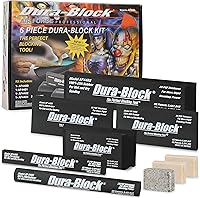
The Dura-Block set is made for automotive bodywork and includes 6 flexible EVA foam blocks. Its shapes include large blocks for panels, smaller blocks for detail areas, a round block for curved or recessed areas, and 2 scruff blocks.
The set is intended for wet or dry sanding and does not soak up water like a sanding sponge. It uses sticky-backed PSA sandpaper tape, which is not included, so you need compatible abrasive material before starting.
Choose this set when the surface changes from broad panels to smaller flares and recessed creases. It is more specialized than a general sanding sponge set, so it may be unnecessary for simple wood projects.
For more detail, see best sanding blocks for auto body.
What grit should you use with a hand sander?
Start with the coarsest grit that removes the defect, then move through finer grits as the surface improves. Coarse abrasives remove material quickly, while fine abrasives reduce scratches and prepare the surface for finishing.
The right progression depends on the material and finish. A damaged surface may need a coarse start, but a smooth painted surface may only need a fine abrasive for light preparation.
Avoid skipping too many grit steps. A fine abrasive may not remove deep scratches from a coarse grit, and heavy pressure can create uneven results.
The Pukamam set is useful when you want a wide range from material removal to fine polishing.
The set includes 2 pieces of each listed grit range, including 80, 120, 180, 240, 320, 400, 500-600, 800-1000, 1200-1500, 2000, 2500, and 3000. Each block measures 3.93 x 2.75 x 0.19 in.
Choose it when you need many grit steps or occasional ultra-fine work. The broad range also means you should label or separate used abrasives so coarse particles do not scratch a surface during finishing.
How do you use a hand sander?
Clean the surface, choose the right grit, keep the tool flat, and sand with light, even strokes. Check your progress often instead of relying on pressure to speed up the job.
For wood, follow the grain during the final sanding stages. On filler or paint, use overlapping strokes and stop when the surface is even enough for the next finish.
Keep abrasive material clean and replace it when it stops cutting. If you use a washable sponge, rinse it as directed and let it dry before storing it.
Our guide to how to use a hand sander covers grip, stroke direction, grit changes, and surface checks.
Can a hand sander work on floors?
A hand sander can handle floor edges, corners, repairs, and small sections, but it is not a practical replacement for a floor sander on a large room. Broad floor sanding needs a tool designed to cover the area efficiently.
A hand block can help refine a transition after machine sanding. Use care near finish layers, thresholds, and corners where it is easy to remove too much material.
For larger wood-floor work, read how to use a drum sander on wood floors before choosing a machine.
How should you choose a hand sander?
Choose a firm block for flat surfaces, a flexible sponge for curves and general repairs, or a shaped auto-body block for panels and recessed details. Then match the abrasive range to the work you expect to do.
Pick the BOSHCRAFT set for general wood, drywall, metal, and filler sanding with grits through 220. Pick Dura-Block when automotive shapes and PSA abrasive tape matter.
Pick Pukamam when you need 80 to 3000 grit and wet or dry flexibility.
The best hand sander is the one that keeps pressure even and matches the surface shape. Choose your block first, then select the grit progression that removes the defect without cutting deeper than necessary.
For woodworking-specific options, compare best sanding block for woodworking.
What is the simplest hand-sander rule?
Use the smallest tool that keeps the abrasive flat and your pressure controlled. A general sponge block suits many household jobs, a shaped foam kit fits auto-body contours, and a wide grit set suits projects that move from rough removal to polishing.
Hand sanders work best when you let the abrasive do the cutting. Use light pressure, change grits in stages, and check the surface often before moving to the next finish.
Frequently asked questions
What is a hand sander used for?
A hand sander holds an abrasive surface so you can smooth wood, drywall, metal, paint, primer, filler, and other surfaces by hand. It suits detail work, edge preparation, small repairs, and jobs where you need more control than a powered sander provides.
Is a sanding block better than sandpaper by hand?
A sanding block usually gives you a flatter grip and spreads pressure across more of the abrasive surface. That can help reduce finger marks and uneven spots.
Loose sandpaper is more flexible for corners, but it can fold or concentrate pressure under your fingertips.
Can you use a hand sander wet or dry?
Some hand sanders and sanding sponges support both wet and dry use, while others are intended for a specific method. Wet sanding can reduce dust and extend abrasive life, but follow the tool and abrasive instructions and keep water away from electrical equipment.