Sanders and Abrasives: The Complete Buying Guide
Different types of sanders suit different jobs: belt sanders remove material quickly, random orbital sanders handle broad surfaces, sheet sanders smooth finishes, and detail sanders reach corners. Match the machine to the surface, removal rate and finish you need.
On this page (13 sections)
- What are the different types of sanders?
- Which sander should you use for a broad, flat surface?
- When is a belt sander the right choice?
- What does a sheet sander do?
- Which sander reaches corners and narrow details?
- What are spindle and drum sanders for?
- What types of sanders work for floors and decks?
- How do you choose a sanding machine for woodworking?
- What sandpaper should you use with each sander?
- How do you get an even sanding result?
- How should you manage dust and safety?
- Explore sanders and abrasives by topic
- Which sander should you choose?
Different types of sanders suit different jobs: belt sanders remove material quickly, random orbital sanders handle broad surfaces, sheet sanders smooth finishes, and detail sanders reach corners. Choose by the surface you need to sand, how much material to remove and how smooth the finish must be.
The main types of electric sanders include belt, random orbital, sheet, detail, spindle and drum sanders. Hand sanding with a block still matters for small corrections and work where a power tool could remove too much.
What are the different types of sanders?
The main difference between sanders is how the abrasive moves and the shape of the work it can reach. That motion affects removal speed, scratch pattern and control.
| Sander type | Abrasive motion | Best suited to |
|---|---|---|
| Belt sander | Continuous loop moves in one direction | Fast removal on broad, flat surfaces |
| Random orbital sander | Disc spins and moves in small orbits | General surface prep and finish work |
| Sheet sander | Rectangular pad vibrates in short orbits | Flat surfaces and controlled finishing |
| Detail sander | Small, often pointed pad vibrates | Corners, edges and tight spaces |
| Oscillating spindle sander | Sleeved drum moves up and down as it spins | Curves and inside contours |
| Drum sander | Wide drum rotates beneath a workpiece | Large flat boards and flooring |
| Sanding block | Abrasive is held flat by hand | Edges, small areas and final touch-ups |
The names can overlap. A detail sander may also be called a palm sander, while “orbital sander” can refer to a sheet sander or a random orbital model.
Check the pad shape and motion before buying.
Which sander should you use for a broad, flat surface?
A random orbital sander is the most flexible handheld choice for many broad wood surfaces. Its disc both spins and moves in small orbits, which helps reduce the visible circular marks that a simple rotating disc can leave.
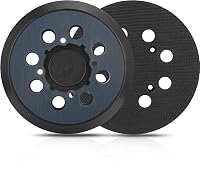
A 5-inch disc is common, though pad sizes and paper attachment methods vary. Hook-and-loop discs make paper changes quick, while adhesive-backed discs use a different system.
Match the abrasive to the pad and keep the paper centered.
A random orbital sander can prepare tabletops, cabinet panels and boards for finish. It is not a substitute for a belt sander when a surface needs substantial material removed, or for a detail sander when the pad cannot reach a tight corner.
For the uses and motion in more detail, see what an orbital sander is for. To compare product options, browse our best random orbital sander for woodworking guide.
When is a belt sander the right choice?
A belt sander is useful when you need to remove material quickly from a large, flat area. Its abrasive belt travels continuously around rollers, so it can level rough boards or strip finish faster than most finishing sanders.
That speed makes control essential. Keep the tool moving with even pressure, follow the grain when practical, and avoid lingering in one spot, where the belt can cut a hollow or leave a deep scratch.
A handheld belt sander is not ideal for delicate finish work or small parts. Choose a lighter finishing sander when you need to preserve edges, and use a sanding block where power sanding would remove too much.
The practical differences are explained in our belt sander vs orbital sander comparison. For handheld models, see the best belt sander for woodworking guide.
What does a sheet sander do?
A sheet sander uses a rectangular vibrating pad and standard abrasive sheets to smooth flat surfaces. Its smaller orbit tends to remove material more slowly than a belt sander, which can make it easier to manage during finish preparation.
Sheet sanders come in different pad sizes, often described by the fraction of a full sheet they hold. The fraction refers to the paper size, not the portion of a board the tool can sand.
Corners can be awkward if the pad is rectangular, and the sanding action may leave a different scratch pattern from a random orbital model. Keep the pad flat and use a suitable grit sequence rather than pressing harder to speed up removal.
For a closer look at the smaller format, read what a 1/3 sheet sander is. Our best sheet sander for finishing guide covers choices for finish work.
Which sander reaches corners and narrow details?
A detail sander has a compact pad that can reach corners, edges and narrow spaces. Many have a pointed triangular pad, and some include a narrow attachment for confined spots.
Detail sanders suit window frames, furniture corners and trim, but the small pad covers little area at once. Use a larger sander for broad panels, then switch to a detail tool for spots the large pad cannot reach.
Compare the best detail sander for woodworking options for corners and trim. For furniture with old finish or hard-to-reach sections, see our best sander for refinishing furniture guide.
What are spindle and drum sanders for?
Spindle and drum sanders are stationary tools for shaping or smoothing larger workpieces. A spindle sander uses a vertical abrasive sleeve to smooth curves and inside edges, while a drum sander uses a broad rotating drum to sand flat stock.
An oscillating spindle moves up and down while rotating. That motion spreads wear across more of the sleeve and is useful for curved cutouts, chair parts and rounded edges.
A drum sander is designed for wide, flat stock and can help bring boards to a consistent thickness or smooth flooring. It takes up more space than a handheld tool, so consider the size and volume of work before choosing one.
See our best oscillating spindle sander guide for curved work and best drum sander for woodworking guide for wide boards.
What types of sanders work for floors and decks?
For floor and deck projects, choose the sander based on the surface area, location and amount of finish to remove. Floor sanders are larger machines designed to cover broad indoor floors, while handheld sanders help with edges, stairs and spot repairs.
A drum floor sander removes material quickly from the main floor area, but it can leave marks if held in one place or used carelessly. An orbital floor sander removes material more gently, though it may take longer for heavy removal.
Edge sanders handle the perimeter where a large floor machine cannot reach.
For decks, a handheld belt or random orbital sander can work on accessible boards and localized rough areas. Check that the surface is dry, secure loose boards first and use dust protection, especially when removing old coatings.
Our best sander for wood decks guide focuses on outdoor boards. For kitchen projects, see the best sander for cabinets guide.
How do you choose a sanding machine for woodworking?
Choose a sanding machine by the shape of the surface and the amount of material you need to remove. A belt sander suits fast stock removal, a random orbital sander is a flexible all-purpose option, and a detail sander handles corners.
Use these questions to narrow the choice:
- Is the surface broad and flat? Consider a random orbital or sheet sander for finishing, or a belt sander for faster removal.
- Does it have corners or narrow details? Use a detail sander, sanding block or hand-folded abrasive.
- Is the edge curved or inside a cutout? An oscillating spindle sander can follow contours.
- Are you sanding a floor or wide board? Consider a dedicated floor or drum sander, with the right experience and dust controls.
- How will you manage dust? Check for a collection bag, port or vacuum connection, then use suitable respiratory protection.
A tool’s OPM or belt speed alone does not determine the finish. Pad size, abrasive grit, pressure, wood species and the condition of the surface all affect the result.
For a broader look at choosing a sanding machine for wood, start with the job and then compare pad shape, dust collection and paper availability.
What sandpaper should you use with each sander?
Use abrasive paper that matches the tool’s pad and the job’s grit needs. Paper that does not fit securely can shift, tear or leave an uneven pattern.
Coarse grits remove material and old coatings faster, while finer grits refine scratches before finishing. Avoid jumping too far between grits, since the next paper may not erase deeper marks from the previous step.
The right sequence varies with the wood, coating and finish. Our guide to what type of sandpaper to use on wood explains how to choose a grit progression, and the best sandpaper for wood roundup compares abrasive options.
Furniture often needs a more careful approach than rough construction lumber. See our guide to the best sandpaper for wood furniture when you are preparing a table, chair or cabinet for a new finish.
How do you get an even sanding result?
An even result comes from using the right grit, keeping the tool moving and checking the surface between passes. Let the abrasive cut without forcing the machine down.
Start on a scrap piece when you are unsure how aggressively a sander will cut. Keep the pad flat, overlap each pass slightly and avoid stopping while the abrasive is touching the surface.
Change paper when it loads with dust or stops cutting well. Vacuum the surface between grit changes so loose particles do not leave new scratches.
On wide boards, check progress under a raking light or by wiping away dust. Marking the surface lightly with pencil can help show missed areas, but use a soft touch so the marks do not become extra sanding work.
How should you manage dust and safety?
Sanding can create fine airborne dust and flying particles, so wear eye protection and a suitable dust mask or respirator for the material and task. Follow the tool manual and coating-removal guidance, especially if an old finish may contain hazardous material.
Connect a vacuum when the tool supports it, and do not assume a dust bag captures everything. Keep the work area ventilated, secure the workpiece and keep cords clear of the abrasive.
Avoid sanding unknown old paint until you have checked the right precautions for your location and material. Do not use a power sander on a surface that can move or catch the pad.
Explore sanders and abrasives by topic
- Best Replacement Pads for Orbital Sanders
- Best Belt Sanders for Metalworking
- Best Sanding Block and Sandpaper Sets
- Best Sanding Disc Kits
Which sander should you choose?
Pick a random orbital sander for general surface prep, a belt sander for faster removal on broad flat stock, and a detail sander for corners. Choose a sheet sander for controlled flat finishing, and a spindle or drum sander when the work shape calls for a stationary machine.
Match the abrasive to the tool, keep dust under control and use a sanding block for small corrections. If your project includes shaping edges before sanding, our guides on using a fixed base router and using a roundover router bit explain those earlier steps.
When measuring a board or sanding area, see how to read centimeters on a tape measure.