Fixed Base Router vs Trim Router: Which Size Do You Need? (November 2026)
Choose a fixed base router for deeper cuts and larger bits, or choose a trim router for lighter edge work and easier handling. The right size depends on your cuts, materials, workspace and need for portability.
On this page (10 sections)
- Fixed base vs trim router: which size do you need?
- How do power and speed compare?
- Which router is easier to control?
- Which router should you choose for hardwood?
- Which product fits each buyer?
- Can you use a fixed base router in a router table?
- Can a trim router go in a router table?
- How do base types change the choice?
- How should you manage dust and setup?
- Fixed base vs trim router: which should you buy?
Choose a full-size fixed base router for deeper cuts, larger bits and demanding hardwood work. Choose a trim router for lighter edge work, easier handling and quick setup.
The fixed base vs trim router decision is mainly about the work you do most often.
A full-size router can give you more motor power and broader control, but it also takes more room and effort to guide. A trim router is easier to carry and position, though its compact design suits lighter cuts.
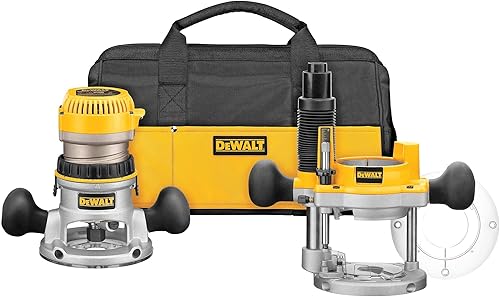
The DEWALT Router is the strongest fit here for full-size routing because it has a 12-amp motor, 2.25 HP maximum motor HP and both fixed and plunge bases. The AVID POWER compact router and FLEX trim router are smaller choices for edge work.

Fixed base vs trim router: which size do you need?
Choose a full-size fixed base router when you need power and depth control. Choose a trim router when the job is mostly edge shaping, laminate trimming or small grooves.
A full-size router gives you more body to hold against the workpiece and more motor capacity for demanding cuts. A compact trim router keeps the tool closer to the surface and can feel easier to guide around corners and narrow edges.
Size should follow the cut, not the label. A large router can be unnecessary for a small roundover, while a trim router can be the wrong choice for a deep profile in hardwood.
For a broader look at size, base types and bit choices, read our guide to wood routers for woodworking.
What does a fixed base router do best?
A fixed base router is best for repeatable depth, stronger cuts and work that benefits from a stable base. You set the cutting depth, lock the base and guide the tool across the material.
The DEWALT Router has a micro-fine depth-adjustment ring that moves in 1/64-inch increments. Its adjustable steel motor cam lock also helps secure depth changes and base changes.
The fixed base design is useful for edge profiles, dados and grooves where the bit must stay at one chosen height. For setup guidance, see how to use a fixed base router.
What does a trim router do best?
A trim router is best for light routing where low weight and close control matter more than maximum motor capacity. It suits small edge profiles, trimming work and shallow cuts.
The AVID POWER compact router weighs 4.4 pounds and has a 6.5-amp, 1.25 HP motor. It includes an edge guide, roller guide, dust hood and 5 router bits, so it can cover several starter tasks.
The FLEX trim router weighs 6 pounds and uses a 24V battery system. Its six speed settings run from 16,000 to 31,000 RPM, and its quick-release collars adjust depth to 1/64 inch.
How do power and speed compare?
Full-size routers generally give you more motor capacity, while trim routers often give you a smaller body and higher speed range. Use both power and speed to match the bit, material and depth of cut.
The DEWALT has a 12-amp electronic variable speed motor with an 8,000–24,000 RPM range. Soft start reduces startup torque, and full feedback control helps maintain speed under load.
The AVID POWER uses a 6.5-amp, 1.25 HP motor with 10,000–32,000 RPM. Its six variable speeds let you lower the setting for hardwood and raise it for some softer materials and laminates.
The FLEX uses a 1.5 max HP brushless motor with 16,000–31,000 RPM. Its cordless design removes the cord from the work area, but the battery and charger are not included.
A higher speed is not automatically better. Large bits generally need a lower speed than small bits, and the safe setting depends on the bit instructions, material and cut.
Which router is easier to control?
A trim router is usually easier to carry and steer for short edge cuts, while a full-size router offers more stability for larger work. Your grip, stance and workpiece support still matter.
A compact body can help when you follow a curved edge or work inside a cabinet. The AVID POWER also has dual LED lights aimed at the cutting path, which can help you follow a layout line in a dim work area.
The FLEX adds a quick-adjust edge guide for parallel cuts along a straight edge. Its spindle stop helps with bit changes and is designed to prevent inadvertent startups.
The DEWALT is heavier and measures 10.1 pounds in its kit configuration. That extra size can feel like a burden on small trim jobs, but its larger motor and base options suit more demanding work.
Keep both hands in the intended grip positions, clamp the workpiece and move the router against the bit's cutting direction. Make shallow passes when the cut is deep or the material is hard.
Which router should you choose for hardwood?
Choose the DEWALT for repeated hardwood routing or deeper profiles. Choose a trim router for shallow hardwood edge work where smaller size matters more.
The DEWALT's 12-amp motor and 2.25 HP maximum motor HP give it the largest motor capacity among these routers. Its speed range starts at 8,000 RPM, which gives more room for matching larger bits.
The AVID POWER can suit smaller hardwood jobs such as rounding an edge or cutting a shallow groove. Use light passes and let the bit do the cutting instead of pushing the compact motor through too much material.
The FLEX may suit cordless furniture and cabinetry work. Its brushless motor and 24V battery system offer a mobile setup, but runtime depends on the battery used and the work conditions.
Choose the bit before choosing the pass depth. A large profile usually needs multiple passes, and a smaller trim router may be more comfortable when each pass removes only a little material.
Which product fits each buyer?
The DEWALT fits the buyer who wants one full-size kit for fixed and plunge work. The AVID POWER fits a budget-minded user starting with compact corded routing, while the FLEX fits an existing FLEX 24V setup.
The DEWALT Router includes the DW618M motor pack, DW6184 fixed base, DW6182 plunge base, 1/4-inch and 1/2-inch collets, a wrench, large-hole sub-base, vacuum adapter and soft carry bag. Its through-the-column dust collection is designed to collect 95% of dust while keeping bit visibility clear.
The AVID POWER compact router has a rack-and-pinion depth system and a quick-lock system for depth and base adjustments. Its aluminum body and base, dust hood and guide options make it a practical choice for small routing jobs.
The WEN Mobile Base is not a router. It supports stationary tools and machines with square bases from 11.8 x 11.8 inches up to 35.4 x 35.4 inches, or rectangular bases up to 51.2 x 19.7 inches.
Use it when shop layout and machine mobility are part of the problem.
The FLEX trim router includes the tool only. Its 1/64-inch depth adjustment, six speed settings and quick-adjust edge guide suit portable furniture and cabinetry work, but you need a FLEX 24V battery and charger separately.
Can you use a fixed base router in a router table?
Yes, a fixed base router is the more natural match for a router table, provided the exact router and table are compatible. A table gives the workpiece a stable surface while the bit stays in a fixed position.
A table can make repeated edge profiles and grooves easier to control. It also changes the safety routine, since the bit is exposed above the table and the workpiece moves toward it.
Follow the table and router instructions for mounting, bit height, guard use and dust collection. Our router table video guide explains the basic workflow, while our guide to the best router table on sale helps with table selection.
The DEWALT has a fixed base and quick-release motor latches for base and bit changes. That makes it the strongest table-oriented choice among these products, but confirm the mounting pattern before buying a table.
Can a trim router go in a router table?
A trim router can work in a small trim router table only when the table is designed for that tool and its bit size. The smaller motor and body can suit light table work, but a trim router is not a full replacement for a table-ready full-size setup.
A compact table can help with small profiles and repeatable edge cuts. It can also reduce the handling benefit that makes a trim router attractive, since the tool becomes part of a fixed station.
If you want a small table project, read how to build a trim router table. Measure the router, base and table opening before planning the mounting method.
Do not assume every trim router accepts every table accessory. Check the exact instructions for mounting, bit clearance, dust collection and safe operation.
How do base types change the choice?
A fixed base keeps the bit at one selected depth, while a plunge base lets you lower the bit into the workpiece during the cut. That difference matters when you start a cut inside a panel rather than at an edge.
The AVID POWER and FLEX products listed here use fixed bases. They suit edge work and cuts that begin at an accessible edge.
The DEWALT includes both fixed and plunge bases. That makes it more flexible for stopped grooves, mortises and other work where you need to enter the material from above.
If you are comparing a compact router with a plunge option, our trim router vs plunge router guide explains where each design fits.
A plunge base adds capability, but it also adds size and weight. Choose it when the work requires it, not because more movement always makes routing easier.
How should you manage dust and setup?
Use a dust hood or vacuum connection where the tool supports it, and clamp the work before routing. Clear visibility helps you follow the layout and see whether the bit is cutting as planned.
The DEWALT plunge base has through-the-column dust collection and includes a vacuum adapter. The AVID POWER includes a dust hood that connects to a standard shop vac.
The FLEX product data identifies the tool, but it does not include a dust hood in the included components. Plan your workspace around the accessories confirmed for the exact tool.
Before starting, mark the cut, choose the bit and set the depth. Check that the collet holds the bit securely, keep the cord or battery clear of the path and make a dry movement over the workpiece with the router off.
Clean dust from the base and vents after use. Store bits safely, inspect the cutting edge before the next job and let the router stop fully before setting it down.
Fixed base vs trim router: which should you buy?
Pick the DEWALT Router if you need one full-size tool for hardwoods, larger routing jobs and both fixed and plunge work. Pick the AVID POWER if you want a lighter corded starter router for compact edge projects.
Choose the FLEX trim router when cordless movement matters and you already have the FLEX 24V battery system. Add the WEN Mobile Base when the real problem is moving a router table or another stationary machine around the shop.
The best fixed base vs trim router choice follows your most common cut. Match the router to the material, bit size, depth and workspace, then choose the smallest tool that can handle that work safely.
Frequently asked questions
What is the main difference between a fixed base and trim router?
A full-size fixed base router usually offers more motor power, a larger body and greater capacity for demanding cuts. A trim router is smaller and easier to guide for edge shaping, laminate trimming and light work.
Choose by bit size, cut depth and material before choosing by motor number alone.
Is a trim router strong enough for hardwood?
A trim router can handle some hardwood edge work when you use a suitable bit, shallow passes and the correct speed. It is not the same choice as a 12-amp full-size router for repeated deep cuts or large profiles.
Make several light passes instead of forcing one deep cut.
Can a trim router replace a fixed base router?
A trim router can replace a fixed base router for light edge work, small roundovers and shallow grooves, but it cannot cover every full-size task. A full-size router gives you more power and broader bit capacity.
The DEWALT kit also includes a plunge base, which expands its range further.
Is a fixed base router better for a router table?
A fixed base router is usually the better starting point for a router table because its motor and base are designed for stable depth control. Check the exact table and router fit before setup.
A mobile base can help move a larger router table around the shop, but it does not replace proper mounting.
Should I buy a cordless or corded trim router?
Choose cordless if you already have the matching battery platform and want freedom from a power cord. Choose corded if you prefer continuous operation without charging or buying a battery and charger.
The FLEX trim router is tool-only and works with FLEX 24V batteries, chargers and tools.