Hand Saw vs Circular Saw: Which Should You Choose? (November 2026)
Choose a hand saw for quiet, controlled cuts without power, and a circular saw for faster straight cuts in boards and sheet goods. The right choice depends on the material, cut length and setup you can manage.
On this page (7 sections)
- Hand saw vs circular saw: what is the main difference?
- Which saw is easier to use for a small job?
- Which saw gives you more control?
- Which saw is better for plywood and lumber?
- How do cut angles and repeat cuts affect the choice?
- What safety and cleanup should you consider?
- Which saw should you choose for your next project?
Choose a hand saw for quiet, controlled cuts without power, and a circular saw for faster straight cuts in boards and sheet goods. The hand saw vs circular saw decision depends on the cut, your work area and how much setup you want.
A hand saw uses your arm to move teeth through the wood. A circular saw is handheld too, but its motor spins a round blade, so “circular saw hand” usually means a handheld circular saw rather than a manual hand saw.
For a broader overview of where each tool fits, see How Do the Main Types of Saws Differ?.

Hand saw vs circular saw: what is the main difference?
A hand saw is manual and simple to set up; a circular saw is powered and better suited to repeated straight cuts. The difference affects pace, noise, control and the support you need around the work.
With a hand saw, you move the blade back and forth through the cut. You can stop at any point and adjust your stroke, though longer cuts take more time and effort.
A circular saw does the cutting with a spinning blade. It can cut boards and sheet goods quickly, but you need to plan the cut, support the material and keep hands clear of the blade path.
Is a circular saw a hand saw?
A circular saw is a handheld power tool, not a traditional hand saw. “Handheld” describes how you hold and guide it; “hand saw” generally means a saw powered by your strokes.
This distinction matters when shopping. A handheld circular saw needs electricity or a battery, while a manual hand saw can be used without either.
Which saw is easier to use for a small job?
A hand saw is often easier for one short cut because it needs no power connection or blade guard setup. A circular saw can save effort when the work includes several longer cuts.
For a quick trim or a short board, the manual saw can be ready as soon as the work is marked and secured. It also makes less noise than a powered saw, which can matter in a shared space.
A circular saw has more setup needs. You must check the blade, set the cutting depth and angle, support the material, and keep the cord or battery and your body positioned safely.
When does the hand saw make more sense?
Choose a hand saw for small cuts, touch-ups and work in places without power. It suits slower jobs where you value simple handling and can control the blade with steady strokes.
The REXBETI 11-Inch Folding Saw has a folding design and an 11-inch blade for pruning and outdoor wood cutting. It is intended for branches and green wood, rather than sheet goods or precision joinery.
When does the circular saw make more sense?
Choose a circular saw when you have several straight cuts to make in lumber or sheet goods. The motor can do the cutting work faster than repeated manual strokes, especially on a long line.
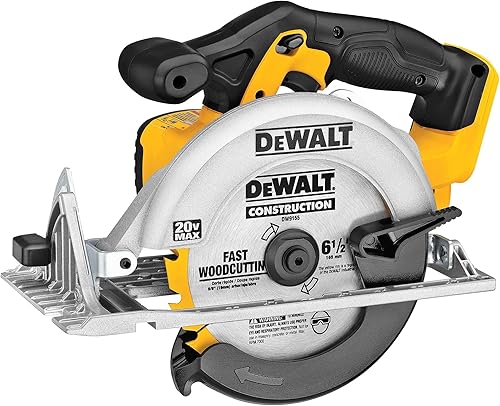
The DEWALT 20V MAX Circular Saw Cordless has a 6-1/2-inch blade and a 0–50° bevel capacity. It runs on a battery, which is sold separately, so check that you have a compatible battery and charger.
Which saw gives you more control?
A hand saw gives direct feedback at the blade; a circular saw offers controlled speed when the work is firmly supported. Neither tool automatically makes a cut accurate.
With a hand saw, you can begin with short strokes and follow the mark as you go. A sharp blade and stable workpiece help prevent wandering, while rushing or twisting the blade can spoil the line.
A circular saw can follow a pencil line or a clamped guide. Its speed makes a stable stance and deliberate feed important, since the blade keeps moving while the trigger is held.
For long guided cuts, a track or straightedge can help the saw follow a line. See How Does a Track Saw Differ from a Circular Saw with a Guide? for how those setups compare.
Which saw is better for plywood and lumber?
A circular saw is usually better for long cuts in plywood and dimensional lumber, while a hand saw is practical for shorter cuts. The material's size and the cut length matter as much as the tool.
A circular saw can travel across a sheet in a straight line, but the sheet needs support across the cut. Arrange supports so the offcut won't drop or bind the blade, and use a guide when a clean straight edge matters.
A hand saw can cut a small piece of plywood or lumber, but long cuts take more strokes and may be harder to keep straight. For repeated precise cuts, consider whether a bench saw or another setup fits your shop better.
The difference between a circular saw and a table saw helps clarify which tool suits portable cutting and which suits a fixed work area. If you are comparing a hand saw with a stationary saw, read hand saw vs table saw as well.
How do cut angles and repeat cuts affect the choice?
A circular saw is more convenient for repeat bevel cuts and longer angle lines; a hand saw can handle occasional angled cuts with careful marking. Choose based on how often you need the angle and how exact it must be.
The DEWALT circular saw has a stated bevel capacity from 0 to 50 degrees. The SKIL 15 Amp 7-1/4 Inch Circular Saw offers 51 degrees of bevel capacity and a positive stop at 45 degrees.
For a small number of simple cuts, mark the angle with a square or bevel gauge and cut slowly by hand. For a batch of matching parts, powered adjustment can make setup easier, but you still need to verify the angle and support each workpiece consistently.
If your main decision is between a circular saw and a miter saw for crosscuts, see circular saw vs miter saw. A miter saw and table saw combo is another comparison when planning a fixed shop setup.
What safety and cleanup should you consider?
A hand saw avoids powered blade movement, while a circular saw requires more careful control of the moving blade, workpiece and power source. Follow the tool manual and use eye and hearing protection appropriate to the task.
Secure the material before cutting with either saw. Keep the cut line clear, position hands away from the blade path and let the tool finish the cut without forcing it.
With a circular saw, check that the guard moves freely and that the blade is suitable for the material. Disconnect power or remove the battery before blade changes or adjustments, and keep cords away from the cut.
A hand saw produces sawdust too, but generally at a slower rate. Sweep or collect dust as needed, and avoid holding small offcuts in your hand while cutting.
A circular saw is for wood and other compatible materials with the correct blade. For masonry or tile, use a suitable tool and blade; this guide to diamond circular saw blades explains the blade category.
Which saw should you choose for your next project?
Pick a hand saw for occasional short cuts and portable manual work; pick a circular saw for longer straight cuts, sheet goods and repeat work. Let the shape and number of cuts decide.
If branch trimming is the real task, a mini chainsaw is a separate powered option. The Seesii Mini Chainsaw has a 6-inch chain and is described for tree trimming and wood cutting, so it fits branch work rather than board cutting.
For sanding after the cut, compare orbital vs random orbital sander to choose a finish tool for the surface.
Choose the hand saw when simplicity and control matter most. Choose the circular saw when you need powered speed across a longer line and can provide a stable, safe setup.
Frequently asked questions
Is a circular saw a hand saw?
A circular saw is a handheld power saw, but it isn't a hand saw in the usual woodworking sense. A hand saw cuts through muscle-powered strokes, while a circular saw uses a motor to spin a round blade.
Both can be guided by hand, but their power, setup and handling differ.
Which saw is better for cutting plywood?
A circular saw is usually the practical choice for long straight cuts in plywood because it can make the cut in fewer passes. Support the sheet on a stable surface, mark the line, clamp a guide if useful and keep the blade path clear.
A hand saw can work for short cuts.
Can a hand saw make accurate cuts?
Yes. A sharp hand saw, a clear layout line and steady strokes can make accurate cuts, especially on shorter boards and trim.
Start slowly to establish the kerf, keep the blade aligned with the mark and support the work so the offcut doesn't pinch the blade.
Do you need a guide for a circular saw?
A guide can help keep a circular saw on a straight line, especially across sheet goods. Clamp a straightedge or use a compatible track system, then account for the distance between the blade and saw base edge.
Check that clamps and supports stay outside the blade path.
Can a mini chainsaw replace a hand saw?
A mini chainsaw can reduce effort for branch trimming, but it doesn't replace a hand saw for general woodworking cuts. It is meant for wood and branch cutting, while a hand saw can suit small, controlled cuts without a battery or motor.
Pick by the material and cut shape.


