9 Best Table Saw Blades for Ripping (November 2026)
The best table saw ripping blades include the DEWALT Table Saw Blade for clean general cuts, the DEWALT 10 in. 24 Tooth General Purpose for mixed rough cuts, and the FOXBC 10-Inch Flat Tooth Ripping Table Saw for dedicated ripping.
On this page (8 sections)
- Which table saw blades for ripping fit different jobs?
- What makes a rip saw blade different?
- Is a dedicated ripping blade better than a combination blade?
- How do kerf and saw power affect a rip cut?
- How do you choose a rip blade for hardwood?
- How can you get straighter, safer rip cuts?
- When should you use another saw blade?
- Which table saw blade for ripping should you choose?
The best table saw blade for ripping is a dedicated 24-tooth blade with flat-top teeth for efficient cuts along the grain. The FOXBC flat-tooth rip blade is the most direct match here, while Freud's 30-tooth glue-line blade suits smoother edges and the DEWALT 24-tooth blade covers broader wood-cutting needs.
Ripping means cutting a board lengthwise, with the cut following the grain. For a portable saw setup, compare circular saw blades for wood.
A dedicated rip blade usually has fewer teeth and larger gullets than a crosscut blade, helping clear chips during a long cut.
If you want to compare blades for other woodworking tasks, see our guide to the best table saw blades for woodworking. For the difference between blade styles, read What Is the Difference Between Rip and Crosscut Saw Blades? and our guide to what ripping and crosscutting mean.
Our picks at a glance
-
1
-
2

-
3
 Best for dedicated ripping
FOXBC 10-Inch Flat Tooth Ripping Table Saw
9.5/10 our score
See it on Amazon
- 4
 Best for fine crosscutsCheck it
- 5
 Check it
Freud Industrial Glue Line Ripping Saw Blade
Best for glue-ready edges - 6
 Check it
WEN BL1032-2 10-Inch 32-Tooth and 60-Tooth Carbide-Tipped
Best for a two-blade setup - 7
 Best for flat-tooth rippingCheck it
- 8
 Check it
Freud LU83R010 Industrial 10-in 50T Thin Kerf
Best for one-blade versatility - 9
 Check it
HARDWIN 10-Inch 50-Tooth Combination Table Saw Blade
Best for mixed plywood cuts
Which table saw blades for ripping fit different jobs?
The right choice depends on whether you prioritize fast stock removal, a smoother edge for joining, or one blade that can handle mixed cuts. Our score weighs specs, features and buyer feedback against what you're shopping for.
| Product | Best for | Diameter | Tooth count | Material | Our score |
|---|---|---|---|---|---|
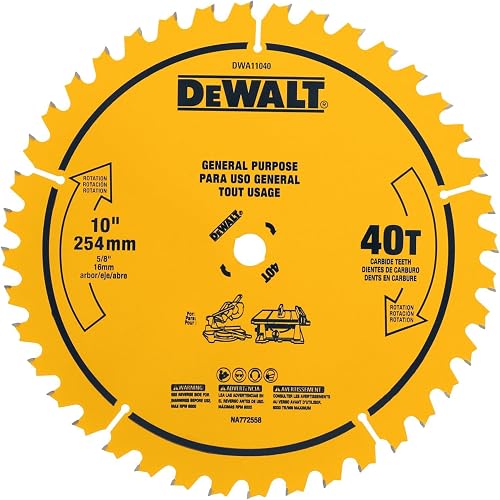
| DEWALT Table Saw Blade | clean general cuts | 10 in | 40 | Wood | 9.7 |
| DEWALT 10 in. 24 Tooth General Purpose | mixed rough cuts | 10 in | 24 | 9.6 | |
| FOXBC 10-Inch Flat Tooth Ripping Table Saw | dedicated ripping | 10 in | 24 flat-top | 9.5 | |
| FOXBC 10-Inch Table Saw Blade | fine crosscuts | 10 in | 80 | 9.4 | |
| Freud Industrial Glue Line Ripping Saw Blade | glue-ready edges | 10 in | 30 | 9.3 | |
| WEN BL1032-2 10-Inch 32-Tooth and 60-Tooth Carbide-Tipped | a two-blade setup | 10 in | 8.8 | ||
| CMT Orange Tools 285.624.10 | flat-tooth ripping | 10 in | 24 flat | 8.6 | |
| Freud LU83R010 Industrial 10-in 50T Thin Kerf | one-blade versatility | 10 in | 50 | 8.3 | |
| HARDWIN 10-Inch 50-Tooth Combination Table Saw Blade | mixed plywood cuts | 10 in | 50 | 8.1 |
How we chose the best table saw blade for ripping
We compared tooth count, stated tooth design, kerf and intended cutting use. Dedicated rip blades rank highly for regular cuts along the grain, while combination and general-purpose blades remain useful when you want fewer blade changes.
A lower tooth count can help clear chips during ripping, but it isn't a substitute for a safe feed rate and a properly aligned saw. Check the blade's fit and your saw's manual before installing it.
Craftsman owners can check which blade wrench fits their saw before a blade change.
DEWALT Table Saw Blade: Best for clean general cuts
- 10 in diameter
- 40 teeth
- Ultra-sharp carbide
- Optimized tooth geometry
A 40-tooth blade gives you a middle ground for wood cuts when a dedicated ripping blade is not the only blade you need.
Pros
- 40 teeth for general cutting
- Carbide-tipped teeth
- Designed for increased accuracy
Cons
- Not a dedicated ripping blade
- Tooth geometry details are limited
The DEWALT Table Saw Blade is a 10 in, 40-tooth wood blade with carbide teeth and tooth geometry designed for increased accuracy. Its tooth count sits between a dedicated low-tooth rip blade and a high-tooth finish blade, making it a reasonable pick for a shop that handles both ripping and general wood cuts.
DEWALT describes the carbide as ultra sharp for clean cutting. The listed material compatibility is wood, and the blade is supplied as a single blade.
This is not the most specialized option for repeated ripping. Pick it if you want a mid-count blade for broader woodwork and don't want the most aggressive tooth count.
Choose this blade for general wood cuts, and use a dedicated rip blade if you spend most of your time resawing boards lengthwise. For more options across woodworking tasks, compare our best table saw blades for woodworking.
DEWALT 10 in. 24 Tooth General Purpose: Best for mixed rough cuts
- 10 in diameter
- 24 teeth
- Carbide teeth
- Hardwood and softwood compatibility
The 24-tooth design suits faster cuts along the grain and also covers a range of other wood materials.
Pros
- Low tooth count for ripping
- Compatible with several wood materials
- Optimized tooth geometry
Cons
- Not described as a dedicated rip blade
- No kerf measurement provided
The DEWALT 10 in. 24 Tooth General Purpose blade has a lower tooth count that suits ripping better than a fine crosscut blade.
It is compatible with hardwood, softwood, trim, plywood, OSB and sheet material, so it can cover more than solid lumber.
DEWALT says its carbide teeth are ultra sharp and that the geometry is designed for increased accuracy. The 24-tooth count is useful when you want to remove material at a steady pace, though this blade is described as general purpose rather than a dedicated rip blade.
Choose it when mixed rough cuts matter as much as ripping. Check the saw's arbor and maximum blade size before fitting it.
FOXBC 10-Inch Flat Tooth Ripping Table Saw: Best for dedicated ripping
- 24 flat-top teeth
- 0.094 in kerf
- 0.071 in plate
- 5/8 in arbor
A purpose-built 24-tooth rip blade with flat-top teeth suits feeding stock along the grain.
Pros
- Dedicated ripping design
- Flat-top teeth
- Thin kerf
Cons
- Check arbor and saw compatibility
- Fewer teeth may leave a rougher edge than a finish blade
The FOXBC 10-Inch Flat Tooth Ripping Table Saw blade is the clearest dedicated rip pick in this group. It combines 24 flat-top teeth with a 0.094 in kerf and a 5/8 in arbor, and FOXBC describes it for quick ripping in hardwood and softwood.
The thin kerf removes less material than a wider cut, which can be useful when the saw has limited power. FOXBC also describes the blade for crosscutting wood and plywood, but its flat-tooth design and rip focus make ripping the main reason to choose it.
Match the arbor and blade diameter to your saw, and confirm that your saw can use a thin-kerf blade with its riving knife. Choose this model for regular cuts along the grain when its dimensions fit your setup.
FOXBC 10-Inch Table Saw Blade: Best for fine crosscuts
- 80 teeth
- ATB tooth design
- 0.098 in kerf
- Wood cutting
This high-tooth-count blade is aimed at smooth crosscuts, so it is a useful companion to a dedicated ripping blade.
Pros
- 80 teeth for fine finishing
- ATB tooth design
- Compatible with named 10 in saw brands
Cons
- Not intended as the main rip blade
- More teeth than needed for routine ripping
The FOXBC 10-Inch Table Saw Blade has 80 ATB teeth and is designed for ultra-finish wood cutting. That makes it a useful counterpart to a rip blade for crosscuts, oak, pine, melamine, plywood and moulding.
Its high tooth count is less suited to long ripping cuts, where chip clearance and steady feed matter. Keep it for finish work, then switch to a lower-tooth-count blade when breaking down boards along the grain.
The blade has a 0.098 in kerf and a 5/8 in arbor. FOXBC names compatibility with several 10 in saw brands, but you should still verify your own saw's requirements.
Freud Industrial Glue Line Ripping Saw Blade: Best for glue-ready edges
- 30 teeth
- Triple-chip tooth design
- 5/8 in arbor
- Perma-Shield coating
The 30-tooth glue-line rip blade is designed for smooth, true-cut surfaces and edge work before glue-ups.
Pros
- Designed for glue-line ripping
- Triple-chip tooth design
- Anti-vibration slots
Cons
- Thick kerf takes more power than a thin-kerf blade
- Check saw capacity and material fit
The Freud Industrial Glue Line Ripping Saw Blade is built for smooth edges before glue-ups. Its 30-tooth triple-chip design is intended to make true-cut surfaces, and Freud describes the blade for hardwood and softwood ripping.
A thick kerf and reinforced plate favor stability under demanding cuts, but they require a saw setup suited to that kerf. Freud also includes laser-cut anti-vibration slots and a non-stick coating to reduce vibration and buildup.
Choose it when edge quality for glue joints matters more than minimizing kerf width. The description gives a material range of 1/8 to 1 in thick, so compare your stock with that range.
WEN BL1032-2 10-Inch 32-Tooth and 60-Tooth Carbide-Tipped: Best for a two-blade setup
- 32-tooth and 60-tooth blades
- 10 in diameter
- 5/8 in arbor
- Thin kerf
The set gives you a lower-tooth-count blade for general wood cutting and a higher-tooth-count option for fine finish work.
Pros
- Two blades for different cuts
- Carbide tipped
- Compatible with many 10 in table saws
Cons
- Neither blade is specified as a dedicated rip blade
- Requires changing blades between tasks
The WEN BL1032-2 set includes a 32-tooth blade for general wood cutting and a 60-tooth blade for fine finish work. It gives you a practical two-blade setup if you switch between ripping and cleaner crosscuts.
Both blades are 10 in with a 5/8 in arbor and thin kerf. WEN says the set works with most 10 in miter saws, jobsite saws and table saws, but check your own saw's manual for fit and limits.
The 32-tooth blade is the more suitable of the pair for ripping, though the set is not described as a dedicated rip package. Pick it if you want a second blade ready for finishing tasks.
CMT Orange Tools 285.624.10: Best for flat-tooth ripping
- 24 flat teeth
- 0.126 in kerf
- 5/8 in arbor
- Wood compatible
This 24-tooth flat rip blade has a wider kerf than the thin-kerf options, so match it to the saw's power and setup.
Pros
- Dedicated ripping blade
- Flat teeth
- 5/8 in arbor
Cons
- Wider kerf than thin-kerf options
- Check saw compatibility before buying
The CMT Orange Tools 285.624.10 is a 10 in ripping blade with 24 flat teeth and a 5/8 in arbor. Its 0.126 in kerf is wider than the thin-kerf FOXBC option, so make sure your saw has the power and clearance for it.
This blade is a focused choice for wood ripping, especially when a wider kerf matches your setup. Its description notes use in industrial woodworking applications, including furniture, kitchen and CNC manufacturing.
Choose it for a dedicated flat-tooth ripping blade when kerf width is not a concern. Confirm blade diameter, arbor and guard fit before use.
Freud LU83R010 Industrial 10-in 50T Thin Kerf: Best for one-blade versatility
- 50 teeth
- Thin kerf
- Combination tooth pattern
- Perma-Shield coating
A combination layout covers both ripping and crosscutting when you prefer one blade for varied shop work.
Pros
- Designed for ripping and crosscutting
- Thin-kerf design
- Anti-vibration slots
Cons
- Less specialized than a dedicated rip blade
- Confirm arbor and saw fit
The Freud LU83R010 uses a 50-tooth combination pattern with one flat-top tooth followed by four ATB teeth. That layout is intended to handle ripping and crosscutting, which can reduce blade changes for varied work.
Its thin-kerf design suits saws where a narrower cut is useful, and Freud describes the blade for wood, chipboard, plywood and laminate. It is less specialized for repeated ripping than a dedicated 24- or 30-tooth blade.
Choose it if versatility matters more than having a blade tuned to one cut direction. For another material-specific choice, see our guide to the table saw blade for metal.
HARDWIN 10-Inch 50-Tooth Combination Table Saw Blade: Best for mixed plywood cuts
- 50 teeth
- ATB design
- 0.098 in kerf
- 5/8 in arbor
This combination blade is described for both ripping and crosscutting, with an ATB pattern suited to varied wood tasks.
Pros
- Combination design
- Thin kerf
- Table saw compatible
Cons
- Not a dedicated ripping blade
- Confirm saw fit and speed limits
The HARDWIN 10-Inch 50-Tooth Combination Table Saw Blade is described for ripping and crosscutting. It has an ATB design, a 0.098 in kerf and a 5/8 in arbor, giving it a mix of features for varied wood cuts.
The blade is a combination option rather than a dedicated rip blade. HARDWIN describes it for hardwood, softwood and plywood, with a maximum speed of 6,000 RPM, so check that speed against your saw's limit.
Choose it for mixed shop work when you want one blade for both cut directions. Confirm the arbor and blade diameter match your saw before fitting it.
What makes a rip saw blade different?
A rip saw blade is designed to cut with the grain, where the fibers run in the same direction as the blade's travel. Lower tooth counts and larger gullets are common because they help clear the chips produced in a long cut.
Flat-top teeth are common on dedicated rip blades. They remove material with a chisel-like action, while many crosscut blades use angled teeth to slice across the fibers for a cleaner edge.
The right choice depends on how often you rip and how smooth the edge needs to be. Read our overview of how rip and crosscut blades differ before choosing a second blade for crosscuts.
Is a dedicated ripping blade better than a combination blade?
A dedicated rip blade is a better fit for repeated cuts along the grain, while a combination blade saves time when your work alternates between ripping and crosscutting. Choose based on the task you do most often and the edge finish you need.
A 24-tooth blade like the FOXBC or CMT is a direct choice for ripping. A 50-tooth combination blade, such as the Freud LU83R010 or HARDWIN, covers more cut types but is less specialized.
If you only own one table saw blade, a combination option can be practical. If you break down boards regularly, a dedicated rip blade and a separate finish blade offer more targeted choices.
How do kerf and saw power affect a rip cut?
Kerf is the width of material removed by the blade, and it affects both waste and the load placed on the saw. A thin-kerf blade removes less material, which can help a lower-powered saw maintain its cut, but you still need a compatible riving knife and stable blade setup.
The FOXBC rip blade has a 0.094 in kerf, while the CMT rip blade has a 0.126 in kerf. Compare those dimensions with your saw's manual and the riving knife before buying.
Do not assume that every thin-kerf blade fits every table saw. Check the arbor, diameter, maximum RPM and blade-to-knife alignment, then make a test cut in scrap using safe feed pressure.
How do you choose a rip blade for hardwood?
For hardwood ripping, choose a blade designed for ripping with a tooth count and kerf your saw can handle. A 24-tooth flat-top blade suits efficient stock removal, while a 30-tooth glue-line blade prioritizes a smoother edge for joining.
A sharp, clean blade and a straight fence matter as much as tooth count. If the saw struggles, the cut burns, or the stock shifts, stop and check alignment, feed pressure and blade condition before continuing.
Use the 30-tooth Freud when edge quality is a priority and your saw accepts its thicker kerf. Pick the FOXBC 24-tooth blade when you want a dedicated thin-kerf rip blade for routine cuts.
How can you get straighter, safer rip cuts?
A straight rip depends on a parallel fence, a blade aligned with the miter slot, and stock held flat against the fence. Check the saw's manual for setup steps and use the guard, riving knife and push stick as directed.
If the blade is out of square, adjust it before cutting. Our instructions explain how to square a table saw blade, which helps reduce binding and uneven cuts.
Use a push block or push stick when your hands would otherwise approach the blade, and keep the offcut clear of the blade path. Do not force the stock through a cut that slows or binds.
When should you use another saw blade?
Use a crosscut or finish blade when you need a cleaner cut across the grain, and choose a material-specific blade when the workpiece is not wood. A rip blade's tooth shape and gullet design are tuned for lengthwise cuts.
For a portable saw, compare our guide to the best portable table saw blades. For plastic, see our best table saw blade for plastic, and for angled crosscuts, browse the best 12 inch miter saw blade.
Metal needs a blade made for the material and the saw's intended use. Review which table saw blade to use for metal before cutting any metal stock.
Which table saw blade for ripping should you choose?
Choose the FOXBC 24-tooth flat-top blade for regular ripping with a thin kerf, or the Freud 30-tooth glue-line blade when smooth edges for joining matter more. Pick a 24-tooth general-purpose blade if your work includes mixed wood cuts, and a combination blade if you prefer one blade for both directions.
Before buying, match the blade diameter, arbor, kerf and RPM limit to your saw. The best rip saw blade is the one that fits your machine and the cut you make most often.
Our top 3 picks at a glance
-
1
-
2
-
3
Best for dedicated ripping
FOXBC 10-Inch Flat Tooth Ripping Table Saw
9.5/10 our score
See it on Amazon
Frequently asked questions
What tooth count works well for ripping wood?
A blade with roughly 24 to 30 teeth is a common choice for ripping because its larger gullets can clear chips as the cut follows the grain. Tooth count alone does not determine cut quality, so also check tooth shape, kerf, saw power and the finish you need.
Are flat-top teeth better for ripping?
Flat-top teeth are common on dedicated ripping blades because they shear wood fibers along the grain and leave a flat cut surface. Some rip blades use other tooth patterns to balance feed speed and edge finish, so look at the blade's stated purpose and design.
Can I use a combination blade for ripping?
Yes. A combination blade can handle both ripping and crosscutting, which can save blade changes for varied shop work.
A dedicated rip blade is more focused on cuts along the grain, so it may suit repeated ripping better.
What should I check before fitting a rip blade?
Match the blade diameter, arbor hole, maximum speed and kerf to your saw. Also check that the blade is intended for the material and that the saw can handle its kerf.
Follow the saw manual and use the riving knife and guard as directed.


