Which Reciprocating Saw Blade Should You Use for Concrete?
For concrete, choose a reciprocating saw blade with an abrasive carbide-grit edge and enough reach for the material. A standard toothed wood or metal blade is not made to cut concrete; check the blade maker’s material guidance and the saw manual before starting.
On this page (8 sections)
- What kind of reciprocating saw blade cuts concrete?
- How do construction and reach affect the choice?
- When is a reciprocating saw the wrong tool?
- How should you prepare for a concrete cut?
- Which blades are not suitable for concrete?
- How do you choose a blade for nearby materials?
- What should you check before buying?
- Which reciprocating saw blade should you use for concrete?
A reciprocating saw blade for concrete needs an abrasive carbide-grit edge and enough reach to clear the cut. Ordinary toothed blades for wood or metal are not made to abrade concrete, and a reciprocating saw is best reserved for short, awkward cuts rather than fast, straight slab work.
Before cutting, check whether the material is plain concrete, masonry, tile, or reinforced concrete. The right blade depends on the material and depth, while dust control and a stable workpiece matter for every cut.
What kind of reciprocating saw blade cuts concrete?
Choose a carbide-grit or other abrasive masonry blade specifically marked for concrete or the masonry material you need to cut. Its edge grinds through the surface instead of slicing with conventional teeth.
Blade labels and maker instructions vary. Confirm the allowed material, cutting method, and maximum depth before use, and make sure the blade shank fits your saw.
A reciprocating saw concrete blade may work for a short opening, a notched edge, or an irregular cut where a larger tool cannot reach. For a long, straight cut through a slab, a tool designed for concrete cutting is usually more suitable.
If the cut includes steel reinforcement, don’t assume a masonry blade can cut both materials. Find out what is embedded and choose a method rated for the whole job.
How do construction and reach affect the choice?
Match the blade’s abrasive construction to the material and its exposed reach to the cut depth. A blade that is too short can bottom out against the saw shoe or fail to clear the back of the work.
Check the blade packaging or maker’s guidance for a stated concrete or masonry use. Don’t infer suitability from a blade’s appearance or from its use on metal, wood, or drywall.
For reach, measure the material where the blade will enter and account for the shoe, blade movement, and any obstruction behind the work. Keep enough blade beyond the edge to avoid binding, but don’t use an unnecessarily long blade that flexes or wanders.
The same selection habit applies to other materials: see how to match a saw blade to the tool and material. For nearby masonry applications, compare the guidance in our best reciprocating saw blade for masonry guide.
Is carbide grit the same as a toothed carbide blade?
No. A carbide-grit edge is abrasive, while a toothed blade has separate cutting teeth.
Concrete calls for an abrasive blade marked for masonry, not a conventional tooth pattern intended for wood or metal.
Use the blade maker’s material label as your guide. “Carbide” alone does not tell you that a blade is suitable for concrete.
When is a reciprocating saw the wrong tool?
Use a different tool when the cut is long, deep, or needs a straight, controlled finish. A reciprocating saw can be useful in tight spots, but its back-and-forth stroke can make it harder to keep a precise line through hard material.
A concrete saw or another tool intended for the job may be a better fit for long cuts. Choose only equipment and accessories designed for the material, and follow their operating instructions.
The tool matters as much as the blade. A reciprocating saw is built for rough, flexible cutting, while a jigsaw and reciprocating saw serve different jobs.
For jigsaw fit questions, see whether scroll saw blades fit a jigsaw.
For demolition where the work is mainly wood, metal, or mixed material, see our guide to the best reciprocating saw demolition blade. For a different abrasive surface, read which reciprocating saw blade to use for tile.
How should you prepare for a concrete cut?
Secure the work and plan for dust before you start. Concrete cutting can create airborne dust, and a loose workpiece or hidden utility can turn a short cut into a hazard.
- Identify the material and check for wiring, plumbing, reinforcement, or other hidden items.
- Support and clamp the work so it cannot shift as the saw strokes.
- Confirm that the blade is made for the material and that the saw accepts its shank.
- Set up the dust-control method required by the tool and blade instructions.
- Wear suitable eye, hearing, and respiratory protection, and keep bystanders out of the cutting area.
- Stop if the blade binds, overheats, or behaves differently than expected.
Follow the tool manual for shoe position, blade installation, and cutting technique. Avoid forcing the saw; excess pressure can make the blade wander or bind.
Which blades are not suitable for concrete?
Wood and metal blades are not substitutes for a concrete blade. Their teeth are designed to cut those materials, not grind abrasive concrete.
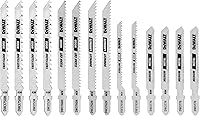
A general-purpose blade set can be useful for its intended mix of wood and metal tasks, but it does not make the included blades suitable for concrete. Our DEWALT reciprocating saw blade set for metal is an example of a set described for metal and woodcutting, not concrete.
Likewise, a circular-saw blade designed for wood should stay with wood-cutting tasks. For metal, choose a metal-cutting circular saw blade rated for that material.
See best circular saw blades for wood for that separate application.
How do you choose a blade for nearby materials?
Use a blade made for the exact material, not one that merely fits the saw. Masonry, tile, drywall, wood, and metal each call for different edge designs and cutting methods.
For small manual cuts in metal, see coping saw blades for metal.
Tile can chip or crack if the blade and technique are wrong. Our guide to a reciprocating saw blade for tile explains how to think about that surface.
Drywall is much softer than concrete and can be damaged by an aggressive blade. See which reciprocating saw blade to use for drywall before opening a wall.
For soft materials cut with a jigsaw, a knife blade for a jigsaw is a separate accessory with a different purpose. Always confirm compatibility and material use on the blade itself.
What should you check before buying?
Confirm material rating, reach, shank fit, and the job’s cut depth before buying. Those four checks help rule out blades that cannot do the cut safely or fit your tool.
Use this quick checklist:
| Check | What to confirm |
|---|---|
| Material | The blade maker names concrete or the specific masonry you’re cutting |
| Edge | It uses an abrasive edge intended for the material |
| Reach | The exposed blade length clears the material and any obstruction |
| Fit | The shank matches your reciprocating saw |
| Reinforcement | The blade and method account for any embedded steel |
| Dust control | You can follow the tool and blade instructions for the work area |
If the material or reinforcement is unknown, pause and identify it before cutting. The blade choice cannot compensate for uncertainty about what lies behind the surface.
Which reciprocating saw blade should you use for concrete?
Choose a masonry-rated abrasive blade with enough reach for the cut, and use a different tool when the job needs a long, straight, or fast cut. If reinforcement is present, verify that your blade and method are rated for it.
For concrete and other masonry jobs, compare our best reciprocating saw blade for masonry guide. If you’re planning another rough cut, the best reciprocating saw demolition blade guide covers a different set of materials.
Frequently asked questions
Can a reciprocating saw cut concrete?
A reciprocating saw can cut some masonry when fitted with a blade designed for that material, but it is usually a slow, rough method. Match the blade’s abrasive construction and reach to the cut, secure the work, control dust, and follow both the saw and blade makers’ instructions.
What is the best reciprocating saw blade for concrete?
The right reciprocating saw blade for concrete has an abrasive edge intended for masonry, often carbide grit, and enough exposed reach to clear the work. Check the maker’s material and use guidance, since blades vary by concrete type, reinforcement, and cut depth.
Can I use a metal reciprocating saw blade on concrete?
No. A metal blade’s teeth are designed to cut metal, not grind abrasive concrete.
Use a blade expressly marked for concrete or masonry, and check whether the material contains reinforcement that calls for a different cutting method.
Can a reciprocating saw cut concrete with rebar?
A masonry blade may abrade concrete, but it is not automatically suited to cutting embedded rebar. Identify what is inside the concrete first, then choose a method and blade rated for both materials or use separate tools as the makers direct.
How do I reduce dust when cutting concrete?
Use the dust-control method required by the tool and blade makers, keep others away from the cutting area, and wear suitable eye, hearing, and respiratory protection. Concrete dust can contain hazardous silica, so follow applicable workplace guidance and avoid dry cutting where the instructions require dust control.