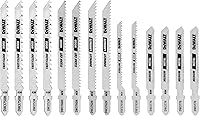
Can You Use Scroll Saw Blades in a Jigsaw?
Usually, no: scroll saw blades don't fit a jigsaws blade clamp. The tools use different mounting systems and blade designs, so use a jigsaw blade made for your saw's clamp.
On this page (9 sections)
- Can you use scroll saw blades for a jigsaw?
- Why don't scroll saw and jigsaw blades interchange?
- Can a jigsaw make the same cuts as a scroll saw?
- How do you check whether a jigsaw blade fits?
- What jigsaw blades can you use instead?
- What should you do if a scroll saw blade won't fit?
- Which blade should you choose for a curved cut?
- Can a jigsaw cut an interior opening?
- What is the safe choice for a blade swap?
Usually, scroll saw blades won't fit in a jigsaw. The tools use different blade mounts, and a blade that doesn't lock securely in the jigsaw clamp isn't a safe substitute.
A jigsaw can cut curves, but it takes a blade designed for that jigsaw. Check the saw's manual and the blade's shank before you buy.
Can you use scroll saw blades for a jigsaw?
In most cases, no. Scroll saw blades attach to scroll saw blade holders, while jigsaw blades fit the clamp built into a jigsaw.
The shank is the part of a blade held by the tool. A jigsaw may take a T-shank or another type, depending on the model.
A scroll saw blade may have a different end or may need a holder that the jigsaw doesn't have.
Don't clamp a blade that sits loosely, slips, or needs an improvised adapter. If the blade isn't explicitly compatible with your saw, choose a jigsaw blade with the right shank.
For a broader look at how the tools differ, read what separates a bandsaw and a scroll saw. They can both follow curves, but they hold and move their blades in different ways.
Why don't scroll saw and jigsaw blades interchange?
Their mounts and cutting setups are different. A scroll saw holds a blade between upper and lower arms, while a jigsaw grips a blade at one end and moves it through the workpiece.
A blade made for one holder may not lock into the other tool. A poor fit can let the blade shift during a cut, which can damage the workpiece or cause you to lose control.
Even similar-looking blades aren't interchangeable based on appearance alone. Match the exact shank type and follow the jigsaw maker's instructions.
A jigsaw also differs from a reciprocating saw in its shape and typical cut setup. See how a jigsaw differs from a reciprocating saw if you're comparing the two tools.
Can a jigsaw make the same cuts as a scroll saw?
A jigsaw can cut curves, but it doesn't turn into a scroll saw when fitted with a narrow blade. The blade must still suit the jigsaw clamp, the workpiece, and the curve you need to make.
A narrow jigsaw blade can help with tighter turns than a wider blade. Move slowly and let the blade follow the curve; forcing a tight turn can bend the blade or spoil the cut.
For hand-cut curves in metal, consider metal coping saw blades.
For an interior cut, check whether your saw supports plunge cutting with the blade you plan to use. Otherwise, drill a starter hole large enough for the blade to pass through, then begin the cut from there.
If your main goal is detailed scrollwork, compare the workpiece size and the type of cut you need with the capabilities of a scroll saw. For general jigsaw cuts, start with jigsaw blades that fit Bosch saws and confirm compatibility with your own model.
Do jigsaw scroll blades fit scroll saws?
A jigsaw blade marketed for curved or scroll cuts still isn't automatically a scroll saw blade. Its shank is made for a jigsaw clamp, and it may not fit the holders on a scroll saw.
The MRCGTCE set includes T101AO jigsaw blades described for curved cuts in wood and other materials. That description concerns the cut style, not compatibility with a scroll saw.
Check the jigsaw's manual and the blade's shank before using any blade. If you want to cut intricate patterns with a scroll saw, choose a blade specifically made for that tool's holders.
For more on that mounting system, see scroll saw blade clamps.
How do you check whether a jigsaw blade fits?
Match the blade shank to the saw's supported clamp type. Check the manual first; if you can't find it, look for the model number and the clamp markings.
Before installing a blade, disconnect the saw from power or remove its battery. Follow the manual's steps to open the clamp, seat the blade fully, and confirm it locks in place.
Check that the blade sits in the clamp without wobble and faces the right direction. Don't run the tool to test a blade that won't lock securely.
Once the shank matches, choose the blade for the cut:
- Material: Use a blade suited to wood, metal, or another material stated for that blade.
- Cut shape: A narrower blade can help with curves; a wider blade is generally suited to straighter cuts.
- Teeth per inch (TPI): Lower TPI blades tend to cut faster and leave a rougher edge. Higher TPI blades tend to cut more slowly and leave a finer edge.
- Length: Use a blade that reaches through the workpiece while keeping enough blade in the material through the cut.
For a compatible saw, the best Ryobi jigsaw blades guide can help narrow options. If you use a DeWalt saw, compare the best DeWalt jigsaw blades and check your model's instructions.
What jigsaw blades can you use instead?
Choose a jigsaw blade with a compatible shank and a cutting style suited to your job. For cement board, see our guide to jigsaw blades for cement board.
A multipurpose set may cover several materials or tooth patterns, while a long blade is useful only when its length and cut style fit the work.
For soft materials, consider a jigsaw knife blade made for that use.
The DEWALT set includes T-shank blades for wood and metal, with high-carbon steel and bi-metal blades and 6, 10, and 18 TPI options. Its stated compatible devices are Bosch and DEWALT jigsaws, so check that your saw accepts T-shank blades before choosing it.
For metal-specific options, see jigsaw blades for metal.
For a different tool, see metal-cutting circular saw blades.
For thicker timber, Janchi's T344D set has 6 in blades with 6 TPI, made for quick cuts in construction timber, softwood, chipboard, and wood-core plywood. Check the material and cut depth against your job, and confirm the blade fits your jigsaw.
If blade reach is your main concern, see long jigsaw blades for wood. For other blade and tool fit questions, our guide to choosing a handle for jigsaw or reciprocating saw blades explains why the shank matters.
What should you do if a scroll saw blade won't fit?
Stop and use a blade that matches your jigsaw's clamp. Don't bend, grind, tape, or wedge an incompatible blade into place.
An improvised fit can shift while the saw is running. Unplug the tool or remove its battery before taking out a blade that won't seat properly.
Check the saw model, supported shank type, and blade packaging together. If the instructions don't confirm compatibility, ask the tool maker or choose a blade that names your saw's supported shank.
The same kind of fit check applies to other saw accessories. For another table saw cut, see table saw blades for ripping.
For example, dado blade sets for table saws must match the saw and the cut the maker allows.
Which blade should you choose for a curved cut?
Choose a jigsaw blade made for curves, with a shank that matches your saw. A narrow blade can turn more easily, but it still needs enough length and the right tooth pattern for the material.
The MRCGTCE set includes T101AO jigsaw blades described for curved cuts in wood, double-sided laminates, particle board, MDF, hardwood, softwood, and plywood. The set also includes other blade types, so check the blade marking and intended material before use.
Guide the saw at a steady pace and don't twist the blade to force a tighter arc. Make a test cut in scrap material if you need to check how the blade follows your intended curve.
Can a jigsaw cut an interior opening?
It can when the saw and blade instructions allow a plunge cut; otherwise, start from a drilled hole. A scroll saw blade isn't a workaround for starting an interior cut with a jigsaw.
For a hole-start method, drill an opening large enough to fit the jigsaw blade, then place the blade inside it before starting the cut. Keep the saw base flat and secure the workpiece before cutting.
Follow the saw manual for plunge cuts and keep hands away from the blade path. If the saw doesn't support the cut, use the starter-hole method or a tool designed for the job.
What is the safe choice for a blade swap?
For scroll saw blades for a jigsaw, the safe choice is a jigsaw blade that matches the saw's clamp and the cut you're making. Scroll saw blades use a different mounting setup, so don't assume a narrow blade or one labeled for scrollwork will fit.
Choose the DEWALT set if you need several T-shank options for wood and metal and your saw accepts that shank. Choose the Janchi set for its stated quick-cut use in thicker wood, or the MRCGTCE set if its curved-cut blade types and shank suit your work.
If you need a dedicated scroll saw for intricate patterns, use scroll saw blades made for its holders. When shopping for a jigsaw replacement, check the saw model, shank, material, tooth pattern, and blade length before buying.
Frequently asked questions
Can you use a scroll saw blade in a jigsaw?
Usually not. A scroll saw blade and a jigsaw blade use different mounting arrangements, and a scroll saw blade may not lock into a jigsaw's clamp.
Use a blade that matches the jigsaw's clamp and the material you're cutting; don't try to make an incompatible blade fit.
Are scroll saw blades and jigsaw blades the same?
No. Scroll saw blades are made for a scroll saw's blade holders, while jigsaw blades are made for a jigsaw's clamp, often with a T-shank or another specified mount.
Some jigsaw blades are marketed for curved cuts, but that doesn't make them interchangeable with scroll saw blades.
Can a jigsaw make scroll cuts?
A jigsaw can make curves and some tight turns when the blade and workpiece suit the cut, but it doesn't use a scroll saw blade. For a cut that starts inside a workpiece, check whether your jigsaw and its blade instructions allow a plunge cut, or drill a starter hole first.
How do I know which blade fits my jigsaw?
Check the saw manual or the markings by the blade clamp for the supported shank type, such as T-shank or U-shank. Then choose a blade suited to the material, thickness, and cut shape, and confirm its shank matches your specific saw.