9 Best Japanese Pull Saws (November 2026)
The best Japanese pull saws for woodworking cuts and joints include the SUIZAN Flush Cut Saw 5" for flush trimming, the RUITOOL Japanese Hand Saw 6 Inch Double for compact general cuts, and the SUIZAN Ryoba Double Edge Saw 9.5" for rip cuts and crosscuts.
On this page (4 sections)
The best Japanese pull saw for most woodworking is the SUIZAN Ryoba Double Edge Saw, with separate edges for rip cuts and crosscuts. Choose a flush cut saw to trim dowels or pegs level with a surface, or a shorter Ryoba for compact work.
Japanese pull saws cut as you draw the blade toward you. Their thin blades and varied tooth patterns suit precise hand work, from flush trimming to joinery.
If you’re deciding between pulling and pushing styles, read How Does a Pull Saw Differ from a Push Saw?.
Our picks at a glance
-
1

-
2
 Best for compact general cuts
RUITOOL Japanese Hand Saw 6 Inch Double
9.6/10 our score
See it on Amazon -
3
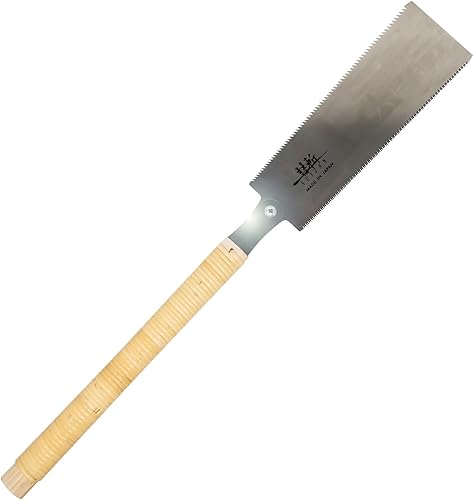
- 4
 Check it
GARTOL Hand Saw for Wood Cutting
Best for a two-saw starter set - 5
 Check it
Temple Tool Co. Japanese Flush Cut Saw
Best for flush cutting pegs - 6
 Check it
JORGENSEN RYOBA 7 Inch Double Edge Japanese
Best for a shorter Ryoba blade - 7
 Check it
JORGENSEN 10 Inch Double Edge Japanese Pull
Best for longer stock - 8
 Best for traditional Ryoba workCheck it
- 9
 Best for coarse and fine cutsCheck it
Which Japanese pull saws fit different woodworking cuts?
A Ryoba fits general rip and crosscut work, while a flush cut saw is made for trimming material level with a nearby surface. These 9 picks cover both styles, with shorter and longer options for different workpieces.
We compared the listed blade styles, tooth patterns, replaceability and included accessories against the cuts woodworkers commonly need. Our score weighs specs, features and buyer feedback against what you’re shopping for.
| Product | Best for | Blade length | Teeth | Use | Our score |
|---|---|---|---|---|---|
| SUIZAN Flush Cut Saw 5" | flush trimming | 5 in | 17 TPI and 25 TPI | Flush cuts | 9.7 |
| RUITOOL Japanese Hand Saw 6 Inch Double | compact general cuts | 6 in | 17 TPI and 14 TPI | Flush and finish cuts | 9.6 |
| SUIZAN Ryoba Double Edge Saw 9.5" | rip cuts and crosscuts | 9.5 in | 9 TPI rip and 15 TPI crosscut | Joinery and board cuts | 9.5 |
| GARTOL Hand Saw for Wood Cutting | a two-saw starter set | 6 in | Flush cuts and joinery | 9.5 | |
| Temple Tool Co. Japanese Flush Cut Saw | flush cutting pegs | 6 in | Pegs, wedges and tenons | 9.3 | |
| JORGENSEN RYOBA 7 Inch Double Edge Japanese | a shorter Ryoba blade | 7 in | 18 TPI and 7–12 TPI | Fine cuts and rip cuts | 9.1 |
| JORGENSEN 10 Inch Double Edge Japanese Pull | longer stock | 10 in | 7–12 TPI and 18 TPI | Rip and crosscut work | 8.8 |
| Temple Tool Japanese Pull Saw | traditional Ryoba work | 9.5 in | Stock sizing and joinery | 8.6 | |
| RUITOOL Japanese Hand Saw | coarse and fine cuts | 10 in | 6–10 TPI and 18 TPI | Rough, semi-fine and fine cuts | 8.3 |
The best Japanese pull saws for specific jobs
Choose a saw by the cut you make most often, then consider blade length and whether you want one edge or two. The picks below are ordered by score.
SUIZAN Flush Cut Saw 5": Best for flush trimming
- 5 in double edge blade
- 17 TPI hardwood edge and 25 TPI softwood edge
- No-set teeth
- Thin flexible blade
The no-set teeth and flexible blade suit trimming dowels, plugs and tenon ends flush to a surface. Two tooth edges cover hardwood and softwood.
Pros
- No-set teeth for flush cuts
- Flexible blade lies flat
- Two tooth edges
Cons
- Fixed blade is not replaceable
- Short blade is intended for compact work
The SUIZAN Flush Cut Saw 5" is for trimming dowels, plugs, wedges and tenon ends flush. Its no-set teeth help cut the excess without scratching the nearby surface, and the thin blade flexes to lie flat.
One edge has 17 TPI teeth for hardwood, while the other has 25 TPI teeth for softwood. At 5 inches, the blade can reach tight spots and handle fine crosscuts in small parts.
The blade is fixed to a beech handle and is not replaceable. Pick this saw when flush trimming is the main job; for boards and joinery cuts, a Ryoba gives you a broader tooth choice.
RUITOOL Japanese Hand Saw 6 Inch Double: Best for compact general cuts
- 6 in double edge blade
- 17 TPI hardwood edge and 14 TPI softwood edge
- SK5 high-carbon steel
- Beechwood handle
A compact double-edge saw for buyers who want separate tooth patterns for different wood and cut needs. Its 6 in blade suits precise work.
Pros
- Compact blade size
- Two tooth edges
- Beechwood handle
Cons
- No replaceable blade detail provided
- Tooth patterns differ from common rip and crosscut labeling
RUITOOL’s 6 inch double-edge saw suits compact work where you want two tooth patterns in one tool. Its 17 TPI edge is for hardwood, and its 14 TPI edge is for softwood.
The 6 inch blade is shorter than the full-size Ryoba options here, which can be easier to control around small parts. The beechwood handle gives it a traditional wood-handle feel.
The teeth are also described as suitable for rip and crosscut work, but the edges are identified by wood type rather than cut direction. Choose this saw when compact size matters, and compare the tooth labels with your usual cuts before buying.
SUIZAN Ryoba Double Edge Saw 9.5": Best for rip cuts and crosscuts
- 9.5 in blade
- 9 TPI rip edge and 15 TPI crosscut edge
- Replaceable blade
- Blade guard included
This Ryoba has clearly defined rip and crosscut edges for general woodworking. The blade can be replaced when worn.
Pros
- Distinct rip and crosscut edges
- Replaceable blade
- Blade guard included
Cons
- Longer blade needs room to work
- Replacement blade is sold separately
The SUIZAN Ryoba is the most straightforward pick for both rip cuts and crosscuts. Its 9.5 inch blade has 9 TPI rip teeth on one edge and 15 TPI crosscut teeth on the other.
That split makes it useful for cutting along the grain, across the grain, and for joinery such as tenons and dovetails. The blade is replaceable, and a zippered bag is included to protect the teeth.
Choose this model if you want one saw for common woodworking cuts and prefer clearly marked edge roles. It needs more room than a compact saw, and the replacement blade is sold separately.
GARTOL Hand Saw for Wood Cutting: Best for a two-saw starter set
- Two saws included
- 6 in flush cut saw
- Double-edged Ryoba saw
- SK5 flexible blades
The set pairs a flush cut saw with a double-edge Ryoba, covering surface trimming and broader woodworking cuts. Both have wooden handles.
Pros
- Two saw styles in one set
- Flush cut and Ryoba uses
- Wooden handles
Cons
- Set takes more storage space than one saw
- Tooth counts vary across the product information
GARTOL’s two-saw set covers both surface trimming and general joinery. It includes a 6 inch flush cut saw and a double-edge Ryoba with crosscut and rip-cut sides.
The flush cut saw is intended for trimming dowels and tenons without damaging the surrounding surface. The Ryoba handles work along or across the grain, so the pair covers more jobs than a single-purpose flush saw.
Choose the set if you’re starting a hand-saw kit and want both styles together. The tooth counts vary across its product information, so focus on the clearly stated distinction between flush cutting and the Ryoba’s two cut directions.
Temple Tool Co. Japanese Flush Cut Saw: Best for flush cutting pegs
- 6 in flush cut saw
- Pull stroke cutting
- Beech handle with brass components
- Case included
A dedicated flush cut saw for trimming pegs, wedges and tenons beside a finished surface. It comes with a case.
Pros
- Made for flush cuts
- Case included
- Wood handle with brass components
Cons
- Single-purpose blade style
- Tooth count is not specified
Temple Tool’s Japanese Flush Cut Saw is a dedicated option for pegs, wedges and tenons beside an adjacent surface. It cuts on the pull stroke and has a beech handle with brass components.
The 6 inch saw comes with a case, which helps protect it between jobs. Its purpose is narrower than a Ryoba’s: use it when you need to remove a small amount of wood flush, rather than size stock or make both rip and crosscuts.
The tooth count is not specified here, so choose by the stated flush-cut role and handle design. For a compact flush saw, compare it with our best small Japanese pull saws.
JORGENSEN RYOBA 7 Inch Double Edge Japanese: Best for a shorter Ryoba blade
- 7 in double edge blade
- 18 TPI hardwood edge
- 7–12 TPI rip edge
- Replaceable blade
The shorter Ryoba combines a fine 18 TPI edge with a gradual-tooth rip edge. The blade is replaceable when it wears.
Pros
- Shorter blade than full-size options
- Two tooth patterns
- Replaceable blade
Cons
- Overall dimensions are given without blade length
- No case detail provided
JORGENSEN’s 7 inch Ryoba suits buyers who want two cut types in a shorter blade. It pairs an 18 TPI hardwood edge with a gradual 7–12 TPI edge for faster rip cuts along the grain.
The blade is replaceable by loosening a screw, and the handle is European beech wood. Its shorter blade is a practical fit when a 9.5 or 10 inch saw feels too long for the parts you usually cut.
Choose it for a compact Ryoba with a clearly described fine edge and rip edge. The stated overall dimensions don’t identify the blade length, so confirm the dimensions that matter for your storage or work area.
JORGENSEN 10 Inch Double Edge Japanese Pull: Best for longer stock
- 10 in blade
- 7–12 TPI rip edge
- 18 TPI fine edge
- Replaceable flexible blade
The longer blade offers a larger cutting area and two tooth patterns for rip and finer cuts. Its flexible blade can be replaced.
Pros
- Long blade for larger work areas
- Two tooth patterns
- Replaceable blade
Cons
- Longer blade needs more clearance
- Handle material is plastic
The 10 inch JORGENSEN has a longer blade for a larger cutting area. One side has gradual 7–12 TPI teeth for rip cuts, while the other has 18 TPI teeth for finer crosscuts.
Its flexible SK5 blade is replaceable, and the handle has a non-slip surface. The longer blade may suit stock that feels cramped under a compact saw, but it needs more clearance for full strokes.
Choose it if you want a long Ryoba-style saw with two tooth patterns. For a shorter or folding option that stores more easily, see our best folding Japanese pull saws.
Temple Tool Japanese Pull Saw: Best for traditional Ryoba work
- 9.5 in double edge blade
- Rip teeth and crosscut teeth
- Wingnut wood handle
- Case included
This general-purpose Ryoba has rip teeth on one edge and crosscut teeth on the other. It suits sizing stock and cutting medium or large joinery.
Pros
- Separate rip and crosscut edges
- Case included
- Wood handle with brass components
Cons
- Tooth counts are not specified
- Blade replacement details are not specified
Temple Tool’s 9.5 inch pull saw is a general-purpose Ryoba for sizing stock and cutting medium or large joinery. It has rip teeth on one edge and crosscut teeth on the other, plus a wingnut wood handle with brass components.
A case is included to protect the saw when stored. The tooth counts and blade replacement details aren’t specified, so this pick is best for shoppers who value the named cut roles and handle materials.
Choose it if you want a traditional double-edge layout for work along and across the grain. If you need a dedicated surface-trimming tool, pick one of the flush cut saws above.
RUITOOL Japanese Hand Saw: Best for coarse and fine cuts
- 10 in double edge blade
- 6–10 TPI coarse edge
- 18 TPI fine edge
- Replaceable blade
A long double-edge saw with a coarse-to-fine rip edge and a separate 18 TPI edge. The blade is replaceable.
Pros
- Coarse and fine tooth options
- Replaceable blade
- Long handle supports one- or two-handed use
Cons
- Tooth direction is not labeled rip and crosscut
- Long blade may be awkward for small parts
RUITOOL’s 10 inch saw combines coarse and fine teeth for varied cutting. The coarse edge gradually changes from 6 to 10 TPI, while the opposite edge has 18 TPI teeth.
The blade is flexible and replaceable, and the long handle supports one- or two-handed use. The tooth edges are described by tooth count rather than explicitly as rip and crosscut, so check that pattern against the work you plan to do.
Choose this saw for a longer blade with a coarse-to-fine range. For occasional flush trimming, a saw with a clearly stated flush-cut design is a more direct fit.
What should you compare before choosing a Japanese saw?
Match the tooth pattern and blade shape to the cut, then check whether the blade length fits your work and storage space. These details matter more than choosing a saw because it is simply called Japanese or pull style.
How does a Japanese pull saw cut?
A Japanese pull saw cuts as you draw it toward you, so guide the blade with a light pull and relax on the return stroke. This lets a thin blade do the cutting without forcing it forward.
If you’re new to the motion, our guide on how to use a Japanese pull saw walks through starting and guiding a cut. A hand saw vs circular saw comparison can help if you’re deciding between hand control and powered cutting.
When should you choose a Ryoba?
Choose a Ryoba when you need both rip and crosscut teeth on one saw. Its two edges let you switch between cutting with the grain and across it without changing tools.
Tooth counts vary by model, so compare the actual edge descriptions. A finer tooth pattern can suit cleaner crosscuts, while a coarser pattern can remove material faster along the grain.
When is a flush cut saw the better choice?
Choose a flush cut saw to trim a peg, plug, dowel or tenon level with a nearby face. Some designs have no-set teeth, which are intended to reduce scratching on the surface beside the cut.
A flush saw is specialized, so it won’t replace a Ryoba for routine board sizing. If your cut follows a curve, a coping saw for woodworking is designed for a different task.
How much blade length do you need?
A shorter blade can suit small parts and tight spaces, while a 9.5 or 10 inch blade offers more reach for larger stock. Leave room for the full pull stroke, and consider where the saw will be stored.
Blade length alone doesn’t tell you how a saw handles. The handle shape, tooth pattern and size of your workpiece all affect control.
How do Japanese hand saws compare with other saw types?
Japanese hand saws give you direct control over a cut, while powered saws can make repeated cuts faster when the setup is right. For large stock or repeated straight cuts, compare band saws for woodworking and the space they require.
After sawing, sanding can refine the surface, but it won’t correct a cut that wanders far from the line. Our guide to different types of sanders explains which sanding tools suit different finishing jobs.
Which Japanese pull saw should you choose?
Choose the SUIZAN Ryoba if you want one saw for rip cuts and crosscuts, and choose the SUIZAN Flush Cut Saw for trimming pegs or dowels level with a surface. Pick the GARTOL set if you want both styles in one purchase, or a shorter Ryoba when compact work is your priority.
Our top 3 picks at a glance
-
1
-
2
Best for compact general cuts
RUITOOL Japanese Hand Saw 6 Inch Double
9.6/10 our score
See it on Amazon -
3
Frequently asked questions
What is the best Japanese pull saw for general woodworking?
A Ryoba is a useful general-purpose choice because it has two tooth edges, often one for rip cuts and one for crosscuts. The SUIZAN 9.5 in Ryoba names those uses directly and has a replaceable blade.
Choose a shorter blade when your workpieces or workspace are small.
What is a Japanese flush cut saw used for?
A flush cut saw trims dowels, pegs, plugs or tenon ends level with a nearby surface. Some designs have no-set teeth and a flexible blade that can lie flat, which helps keep the blade from scratching the surrounding face.
Use light strokes and support the work securely.
What is the difference between a Ryoba and a Dozuki?
A Ryoba has teeth on both edges, commonly for rip cuts and crosscuts. A Dozuki has a stiffening back along the blade and is used for controlled, fine cuts where blade depth is limited.
Pick by the joint and cut you need, then check the blade shape and tooth pattern.
Can a Japanese pull saw cut on the push stroke?
Japanese pull saws are designed to cut as you draw the blade toward you. Keep the return stroke relaxed, then use a light pull to guide the cut.
For a step-by-step approach, see our guide to how to use a Japanese pull saw.
How do you choose a Japanese hand saw for joinery?
Match the teeth to the cut: rip teeth follow the grain, while crosscut teeth sever fibers across it. A Ryoba puts both patterns on one blade, while a flush cut saw is suited to trimming pegs and tenon ends.
For curved profiles, a coping saw for woodworking is a different tool.


