Table Saw With Router Combo: Workshop Setup Guide
The best table saw with router combo setup depends on your space and tools: choose an integrated router table for a shared work surface, an extension for a compatible table saw, or a compact attachment for light detail work.
On this page (12 sections)
- Table Saw With Router Combo: Workshop Setup Guide
- Which table saw and router table combo fits your workshop?
- What does a table saw with router combo actually combine?
- Should you choose an integrated routing setup or a separate table?
- What should you check for router compatibility?
- Which product helps build a compact combo station?
- Can a thin rip jig improve a combo workflow?
- Is a compact rotary tool router table enough?
- How do you arrange a table saw and router table combo safely?
- How do you choose between the 3 setups here?
- What should you measure before buying?
- Final decision: which table saw with router combo should you choose?
Table Saw With Router Combo: Workshop Setup Guide
A table saw with router combo can save floor space when both tools share a stable work area, but the right setup depends on compatibility, stock support and the type of routing you do. An integrated router table suits repeat work, a table saw extension suits a compatible saw, and a compact attachment suits light detail projects.
A table saw handles straight cuts with a circular blade. A router table holds a router below the surface so you can guide wood past a bit for edge profiles, grooves and other cuts.
The word “combo” can describe several different arrangements. It may mean a table saw with a built-in router table, a router table attached to the saw's extension wing, or two portable tools used at the same bench.
Which table saw and router table combo fits your workshop?
The best setup is the one that gives you enough working surface without making either tool difficult to use. Choose by the space you have, the router you own and the stock you plan to route.
| Setup | Best fit | Main advantage | Main trade-off |
|---|---|---|---|
| Integrated table saw and router table | A dedicated workshop station | One shared work area | Less flexible if either tool changes |
| Table saw router table extension | A compatible table saw | Uses existing floor space | Mounting and fit must match |
| Separate portable router table | A changing or rented workspace | Easy to move or store | Needs its own setup area |
| Compact rotary tool table | Light detail work | Small footprint | Limited to light-duty projects |
| Table saw plus routing accessories | Woodworkers who need more control | Keeps tasks separate | Requires more storage and planning |
An integrated routing setup can be efficient, but it should not be chosen by appearance alone. The table must support the workpiece, the fence must adjust correctly and the router must fit the mounting system.
For a broader look at tool choice, compare wood routers for woodworking before deciding whether a table-mounted router belongs in your workshop.
What does a table saw with router combo actually combine?
A combo combines the work area, not the cutting action. The table saw and router remain separate tools with different safety needs, adjustments and cutting paths.
A table saw is built for straight rips, crosscuts and bevel cuts with a circular blade. A router table is built for guided shaping, edge work, grooves and similar operations with a rotating router bit.
The shared table can reduce the amount of bench space you need. It can also make the workflow easier when a project needs both straight sizing and edge treatment.
The trade-off is that the shared area needs careful planning. You need enough clearance to feed material, move around the station and reach the controls without leaning across the active cutting area.
A combo also does not automatically solve dust collection. A router creates chips around the bit, while a table saw sends dust below and behind the blade.
Any shared station should leave room for the correct hose connections and access for cleanup.
Should you choose an integrated routing setup or a separate table?
Choose an integrated setup when space and repeat use matter more than flexibility. Choose a separate router table when you change routers, move tools often or need to keep table saw and routing tasks fully independent.
An integrated setup works well when the saw remains in one position. You can keep common routing accessories nearby and avoid moving a full table between projects.
A separate table gives you more freedom to position the fence and work surface. It can also be easier to replace if your router changes later.
Before choosing, measure:
- The table saw's extension area
- The router table's length and width
- The router's mounting pattern
- The fence travel and opening
- The available room behind and beside the table
- The distance needed to feed long stock
- The location of dust ports and power cords
The table's advertised size does not tell you how much usable support you have around the bit. A smaller table with a clear fence and good access may be easier to use than a larger table crowded by the saw.
See our guide to best router tables for woodworking if you need a separate surface rather than a saw-mounted arrangement.
What should you check for router compatibility?
Router compatibility depends on the router mount, table opening, power connection and clearance below the surface. Confirm the exact router model before buying a table, especially if you want a click-in mount or a built-in lift.
A fixed-base router and a plunge router may not mount in the same way. Some tables are designed around certain router shapes or mounting plates, while others use a more general mounting system.
For model-specific setup guidance, see how to use a Rockler router table.
Check whether the table lets you change bits from above or requires access below. For model-specific steps, see how to use a Ryobi router table.
Also check whether the router can be removed without dismantling the full station.
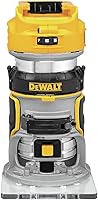
If you already own a DeWalt router, compare options in best router table for DeWalt router. A table that fits the saw may still be a poor choice if the router mount does not match.
A router lift is another compatibility point. A lift can make height changes easier, but the lift, plate and router must work together.
Review best router table lift before assuming a lift will fit your chosen table.
Which product helps build a compact combo station?
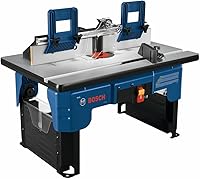
The Bosch RA1141 is the strongest fit here for a portable routing station that can sit beside a table saw. Its 26 in. x 16-1/2 in. laminated MDF top, folding legs and 2-1/2 in. vacuum hose port make it suited to workshops that need a router table they can set up and store.
The Bosch RA1141 is a corded electric router table with a fixed base type and a 15 A rating. Its folding legs help reduce storage demands when the routing surface is not in use.
The laminated MDF top is designed for smooth stock movement. The adjustable laminated MDF face plates provide support around the fence, while the tall fence and 2 adjustable feather boards help guide material.
The click router mounting system is intended to attach and detach quickly without leveling. That matters when you switch between routing and other workshop tasks.
The table also includes onboard storage for router bits and spare parts. A starter pin and guard support curved work pieces, while the bit-height gauge helps with bit setup.
The Bosch suits a woodworker who wants a proper router table near a table saw but does not want a permanent combined cabinet. Its 31.6 lb weight gives it a more substantial presence than a small rotary-tool attachment, while the folding design keeps it portable.
The main trade-off is that it is a router table, not a complete table saw and router unit. You still need a suitable table saw or bench position, and the available mounting method may not match every saw.
If your saw has a compatible extension area, compare this kind of portable table with the best router table extension for table saw.
Can a thin rip jig improve a combo workflow?
A thin rip jig can improve repeat narrow-strip cuts, but it is an accessory for the cutting process rather than a router table. The GOINGMAKE Thin Rip Jig suits woodworkers who want consistent narrow strips from a table saw, band saw or compatible router table.
The GOINGMAKE guide fits 3/8 in x 3/4 in T slots, U-shaped slots and 1/4 in x 3/8 in T slots. Its adjustable range extends from 2-5/8 in to 8 in from the center of the miter slot to the blade.
The guide has inch and millimeter laser scales, which give you two ways to set the distance. The zero adjustment design helps establish the starting position before repeating the cut.
Its one-way roller bearing is designed to let the workpiece move forward while helping prevent kickback. You still need to use the table saw correctly, keep the workpiece controlled and follow the saw's safety procedures.
The guide can make a combo station more useful when your projects need repeated narrow strips for edging, splines or small parts. It does not add routing power, create a router table or replace a fence.
The GOINGMAKE is best for a workshop that already has a compatible table saw, band saw or router table slot. Its 490 g weight and hand-powered design make it easier to store than a larger station.
The trade-off is that compatibility depends on the slot dimensions. Measure the slot before buying, and do not assume that every table saw uses the same track size.
For a broader comparison of combined router tables, see best router table combo.
Is a compact rotary tool router table enough?
A compact rotary tool table is enough for light-duty detail work, not large stock or demanding full-size routing. The Dremel 231 suits small workbench projects that need grooves, slots, edge treatment or sanding with a compatible Dremel rotary tool.
The Dremel 231 converts a compatible corded rotary tool into a bench-mounted precision wood shaper. It fits Dremel models 100, 200, 3000, 4000, 8220, 8240, 8250 and 8260.
Its 8 in. x 6 in. worktable takes much less room than a full-size router table. The compact size can suit a small bench where a Bosch RA1141 would be difficult to store.
The 3-way adjustable fence helps guide detail work. A depth adjustment screw lets you set the cut depth, and the plastic knobs include screwdriver slots for assembly.
This table can handle slots, grooves, edge work and sanding on conventional or irregular shapes. Its role is different from a full-size router table, so it is better suited to small parts and light-duty work.
The Dremel 231 is a sensible choice if you already use one of the compatible rotary tools and need a compact attachment. It is less suitable for broad panels, large workpieces or tasks that need the support of a full-size table.
Its main trade-off is capacity. The small surface makes it easy to store, but it gives you less room to support material than the Bosch table.
How do you arrange a table saw and router table combo safely?
Arrange the station so the stock path stays clear and each tool can be controlled without reaching across the other cutting area. Stable support, clear access and correct dust connections matter more than putting both tools as close together as possible.
Start by placing the table saw where you can feed and receive long boards. A router table placed at the end of an extension can save space, but it should not block the saw's outfeed path.
Keep the router fence square to the work surface and check that the bit opening supports the work. Use feather boards, push tools and guards suited to the operation.
Before routing, confirm that the router is firmly mounted and the bit is seated correctly. Set the bit height with the router switched off, then make a test cut on suitable scrap.
Before sawing, confirm that the thin rip jig or other guide is locked into the correct track. Keep hands away from the blade and use the saw's normal guard and control procedures.
A shared station also needs an orderly power plan. Avoid cords crossing the feed path, and make sure the switch for one tool cannot be mistaken for the other.
Dust collection should be planned before the station is fixed in place. The Bosch RA1141 has a 2-1/2 in. vacuum hose port, while the Dremel attachment is a compact open work surface.
Use the connection that matches the tool and keep the work area clear during changes.
How do you choose between the 3 setups here?
Choose the Bosch RA1141 when you want the most complete portable routing surface. Its 26 in. x 16-1/2 in. top, folding legs, tall fence, feather boards and click mounting system make it the most capable option here for regular router-table work.
Choose the GOINGMAKE jig when your main need is repeat narrow strips on a compatible table saw, band saw or router table. It adds precision to a narrow-cut workflow but does not replace a routing surface.
Choose the Dremel 231 when your work is small and detail-focused. Its 8 in. x 6 in. table and compatibility with specified Dremel models make it a compact solution, but it is not a substitute for a full-size router table.
The best table saw router combo is not always the setup with the most functions. It is the arrangement that fits your tools, leaves enough room for safe stock movement and matches the size of the work you actually make.
What should you measure before buying?
Measure the tools and the room before choosing a table saw and router table combo. The critical measurements are the router mount, table footprint, track size, fence travel, stock path and storage space.
Write down the table saw's full width with its extensions in place. Then measure the space available for a router table without reducing safe infeed or outfeed support.
For a table-mounted router, measure the router body and mounting plate area. Check the table opening, plate fit and access needed for height adjustment.
For a thin rip jig, measure the miter slot or T-track rather than relying on the saw's brand name. The GOINGMAKE guide has specified slot sizes, so those dimensions need to match.
For a compact attachment, measure the workbench area and the parts you plan to route. A small table can be an advantage when the project is small, but a limitation when the stock is wide or long.
Also measure storage space for fences, feather boards, bits, jigs and hoses. A setup that fits the bench may still become frustrating if every accessory has to be moved before each use.
Final decision: which table saw with router combo should you choose?
Choose the Bosch RA1141 for a portable, full-size routing station beside your table saw. Choose the GOINGMAKE Thin Rip Jig for consistent narrow strips in compatible tracks, and choose the Dremel 231 for compact, light-duty detail work.
If you want a true integrated setup, confirm the saw and router table dimensions before buying. If you want flexibility, a separate portable table often gives you more control over placement and future tool changes.
The right table saw with router combo is the one that matches your workshop's space and your most common cuts. Start with compatibility, then check support, dust collection and storage before choosing the layout.
Frequently asked questions
What is the best table saw with router combo setup for a small workshop?
A compact router table or a table saw extension usually suits a small workshop because it adds routing space without requiring another full-size stand. Check the table saw's available mounting area, the router's compatibility, the fence arrangement and the space needed to feed stock safely before choosing an integrated setup.
Can a router table attach to any table saw?
No. Compatibility depends on the table saw's extension area, mounting pattern, available clearance and the router table's dimensions.
Check the exact table saw and router table instructions before drilling, modifying or mounting anything.
A separate portable router table may be easier when the saw's design does not support an extension.
Is a router table the same as a table saw?
No. A table saw uses a circular blade to make straight cuts, while a router table holds a router below a work surface for edge profiles, grooves and other guided cuts.
A combo setup places both tools in one work area, but each tool still needs its own guard, fence and operating procedure.
What should I check before buying a router table and table saw combo?
Check the available floor and bench space, router compatibility, mounting method, table size, fence adjustment, dust port, electrical access and how the setup affects stock support. Also confirm that the table saw and router can be used without interfering with each other's controls or cutting paths.
Can a Dremel rotary tool replace a full-size router in a combo setup?
A Dremel rotary tool can power a compact attachment for light-duty detail work, but it is not the same as a full-size router table. The Dremel 231 has an 8 in. x 6 in. worktable and fits specific Dremel models, so it suits small grooves, slots, edges and similar projects rather than large stock.